 Follow Us on Google News


 Follow Us on Google Discover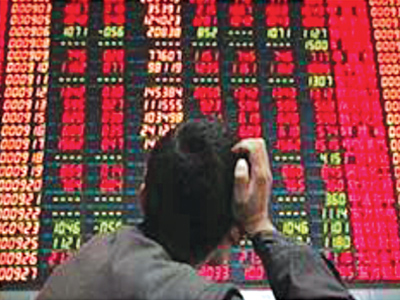
 Signs of stabilization in China’s currency and financial markets boosted global stocks yesterday even as oil hovered near multiyear lows, as investors paused to question whether the year’s sharp losses were overdone.
Futures pointed to a 1.2 per cent opening gain for the S&P 500. Changes in futures don’t necessarily reflect market moves after the opening bell.
Germany’s export-heavy DAX gained 2.5 per cent halfway through the trading day, and the Stoxx Europe 600 index added 1.8 per cent, led by the recently hit auto sector.
The moves followed a relatively upbeat session in China, where the Shanghai Composite Index closed 0.2 per cent higher as China’s currency steadied for a third straight session.
Moves to weaken China’s currency last week sparked turbulence in its stock markets and spread fears world-wide that its economy was slowing faster than expected. But after a shaky start to the year, stocks have begun to find their footing somewhat as China’s regulators moved to reassure investors.
Bets that the yuan will slump 10 per cent or more against the dollar are “ridiculous and impossible,” a senior Chinese economic official said late Monday.

“China’s economy is weak, but no weaker than we already knew,” said Simon Cox, investment strategist at BNY Mellon Investment Management, in a note. “Just as global markets staged a relief rally in October 2015, they may recover their composure after the recent selloff,” he said.
Adding to the momentum, Brent crude oil edged up 0.7 per cent to $32.10 a barrel, recovering from sharp losses early in the European session that sent it below the $32 mark.
Still, crude oil prices hovered around 12-year lows. A stronger dollar and failure to stem a global glut of supply have weighed on oil prices in recent months, while mounting concerns about China’s slowing growth have magnified fears about demand from the world’s second-largest economy.
While lower oil prices are traditionally viewed as a boon for consumers and the economy more broadly, recent moves downward have raised the specter of bankruptcies in the energy sector, weighing on broader indexes.
Australia’s commodity-heavy S&P/ASX 200 fell 0.1 per cent.
Elsewhere in Asia, Japan’s Nikkei Stock Average dropped 2.7 per cent as it reopened from a holiday, tracking Monday’s losses in the region.
Traditional haven assets lost a bit of ground yesterday as investors returned to equities. Gold lost one per cent at $1,085.90 an ounce, also weighed by a stronger dollar.
In currencies, the dollar was up 0.3 per cent against the yen at ¥117.9530, while the euro was down 0.2% against the dollar at $1.0837.
The British pound fell 0.8 per cent against the dollar to $1.4434, its lowest level since 2010, as unexpectedly weak U.K. industrial data added to concerns about the manufacturing sector. The Bank of England will hold its first policy meeting of the year this week, and economists forecast no change to benchmark interest rates.
Yesterday’s moves came after the Dow industrials snapped a losing streak on Monday in a rocky session.
After U.S. markets closed, aluminum maker Alcoa unofficially kicked off the fourth-quarter earnings season as it swung to a loss. Corporate profits are expected to take a hit from the stronger dollar, slowing Chinese growth and sliding oil prices.

