 Follow Us on Google News
 Follow Us on Google Discover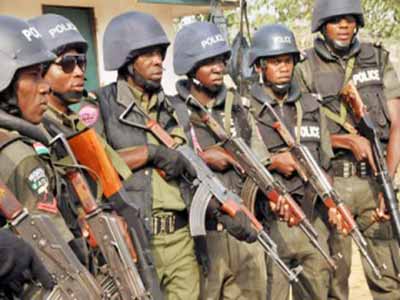

WHILE there have always been cases in which men and women in uniform had clashes with the unarmed members of the civilian population, the recent spate of such incidents, with fatal consequences, has compelled calls for solutions including the possibility of psychiatric assessments for uniformed personnel who bear arms. Not only is the suggestion for periodic mental assessment for all personnel justified, there is need for thorough identification of those susceptible to influences, who must, therefore, be subjected not only to psychological evaluation but even treatment.
There was the case of a drunken police officer, unhappy with the way he was rebuked by three young men at a football viewing bar, shot and killed them and then turned the weapon on himself. There was a jealous police sergeant who killed his colleague and his own erstwhile girlfriend. He then proceeded to kill himself. There have been cases of fatal shootings at checkpoints, for refusal to give a demanded amount, as meagre as 100 Naira. There was the killing of a tri-cyclist, for arguing with an Assistant Superintendent of Police who shot him in the chest at close range. The cases are legion.
No doubt, the human being is innately stubborn in the exercise of God-given free will, the capacity to choose and decide what to think, say or do. This can be used to heal or to hurt, to do good or bad, to say yes or no. The unpredictability of the direction in which anyone chooses to use this attribute has been the dread of tyrants from time immemorial. There is ever the latent potential of remaining silent when questioned, of refusing to be silent when bellowed to do so, of saying no to an order and of resistance. This endowment could be irksome to those whose duty it is to maintain public order. Hence the possibility exists for clashes between law enforcement agents and the rest of society.
However, such instances are an embarrassment to the officers. As this newspaper has repeatedly noted, cases of police brutality are too rampant for a sane society, especially as little efforts are made to bring the offending officers to book, thus encouraging worse crimes or high-handedness on their part. Certainly, the law must be enforced. But given the frequency of the total incidents involving the police and members of the public, it behoves the police authorities to re-train their personnel. Police officers should learn civilised ways of dealing with unarmed civilians without resort to shooting.
The populace has always been aware that the law enforcement personnel carry firearms. However, only in a state of emergency should they be found among the civilians. From the civility of the colonial days when policemen were not to carry arms but had only their traditional batons, circumstances have forced the nation to an over-militarised policing such that there is now the Mobile Police (popularly known as “kill and go”), on account of their ruthlessness in quashing civilian uprisings and protests. Over time, the security demands of the nation have even extended to the carrying of weapons by members of such uniformed services as Immigration, Customs Services, Civil Defence Corps, etc. Even so, there must be care in the manner law enforcement officers use weapons.

Uniformed personnel, by training and experience should also be master psychologists capable of accurate reading of a person. They should know those in their ranks with the latent potential for aberrant behaviour. There are also others known to be prone to alcoholism, substance abuse and some with mood swings who are susceptible to violent snapping at the least provocation. These are the ones to be kept under close scrutiny. The authorities should, therefore, keep these types away from bearing firearms; especially prohibiting them from duty that would entail interaction with civilians. No doubt, policemen need a re-orientation from their fixation on violence. This should begin at the point of recruitment. There should be new curricula in the police training schools to reflect the ethos of the society, the sanctity of life and the dignity of all. The pre-disposition of the officers to brutality can also be reduced by restricting the use of fire-arms to special units, while those who deal with the public directly should not carry weapons to combat crime. Technology should be embraced and deployed appropriately. Of course, this costs a lot of money which the country must be ready to spend to maintain law and order.
Given the large number of men and women in uniform, the mental assessment and rigorous physical checks done at recruitment and training, is good. Against the background of unnecessary killing by mentally unbalanced officers recently, however, the Police Service should do more. All cases of psychological imbalance need to be identified, referred for appropriate treatment or dismissal, if irredeemable.

