 Follow Us on Google News
 Follow Us on Google Discover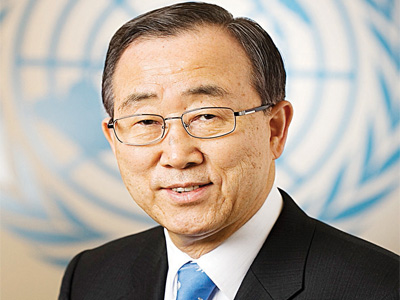

As World Radio Day is being celebrated globally today, radio has been identified as a tool to bring relief and safe lives during emergencies and disaster. This position was highlighted in the messages to mark this year’s World Radio Day, with the theme, ‘Radio in times of emergency and disaster’ by the Secretary General of the United Nations, Mr. Ban Ki-moon and the Director-General of United Nations Educational, Scientific and Cultural Organisation (UNESCO), Ms Irina Bokova.
Ki-moon stated that, in times of crisis and emergency, radio can be a lifeline, because for people in shattered societies, or caught in catastrophe, or desperately seeking news, radio brings lifesaving information.
“Radio can help in emergency response operations – and it can assist with rebuilding. Through community radio, local people can raise their voices and be heard. This year, as we start carrying out the Sustainable Development Goals, let us resolve to use radio for human progress. In the lead-up to the World Humanitarian Summit this May, let us find ways for radio to do even more to help people in emergencies. On this World Radio Day, let us resolve to prove that radio saves lives,” the UN Secretary General said.
On her part, Bokova noted that humanitarian emergencies and disasters are increasing worldwide, with terrible consequences for human lives, sometimes reducing years of development to dust. She however stated that amidst the ruins and in the face of an emergency, radio is often the first medium for survival as its durability is an incomparable advantage, often enabling it to resist shocks and retransmit messages of protection and prevention to as many people as possible, better and faster than other media, saving lives.
“Its proximity, simplicity and low cost also make the radio a medium that promotes community living, providing a way to strengthen social ties and ensure people’s participation in humanitarian programmes and the discussions that inform them. Innumerable accounts by victims describe how the radio has enabled separated families to find each other, make contact and regain hope. Community radio is a perfect example of this and must be supported.”
She maintained that the power of the radio also relies on journalists, who are some of the first on the scene to witness events and give a voice to local actors and victims, to raise awareness and mobilize resources, without which there is no effective humanitarian action.

“They play a crucial role in presenting the facts, avoiding the sensationalism or manipulation of public debate. That is why nothing must call into question the right to be informed or the safety of journalists.”
She disclosed that UNESCO has set up early warning systems for tsunamis, floods and droughts, as well as monitoring systems for earthquakes and landslides, besides providing worldwide technical assistance for all types of risk. “When protected sites are endangered, UNESCO steps in to save cultural and historical references. At all of these levels, by its ability to inform, relay messages and contribute to debate and reflection, even in times of crisis, the radio is an indispensable ally.
“Today, we call upon public authorities and stakeholders in development and humanitarian action to strengthen the links between the radio and emergency response so that the voices of the men and women, victims, rescue workers and journalists, who we hear at such times over the transistor, the mobile phone or the computer, may be the voices of life and hope…” the UNESCO DG said.
In Nigeria, some media civil societies, Institute for Media and Society and Media Right Agenda would be holding a tweet-a-thon conference to mark the day, highlighting the importance and how radio help safe lives during crisis and emergencies. The celebration in Nigeria would be unique considering there is a Defense Radio set up in the midst of the country grappling with tackling insurgency. So, this might be an opportunity to take stock to see how radio has been used optimally for the good of the citizens in the fight against insurgency. Also, the Goodluck Jonathan administration approved 17 community radio stations, no doubt this would help to spread the front tiers and allow the use of radio to spread vital information to the communities during crises and emergencies.
Speaking on the theme, Ralph Akinfeleye, a professor of Mass Communication as the University of Lagos, said that there is no theme that aptly describes what is happening in Nigeria because the country has crisis and disaster all around; insurgency, kidnapping and vandalisation.
He therefore admonished that radio should be used as an instrument to add value and minimise or prevent crisis. “Also, it is apt that after 12 years of struggle, at the eve of the departure of Jonathan, he approved the establishment of 17 community radio stations. So, radio is expanding and should be used as tools for prevention of crisis,” he said.

