 Follow Us on Google News
 Follow Us on Google Discover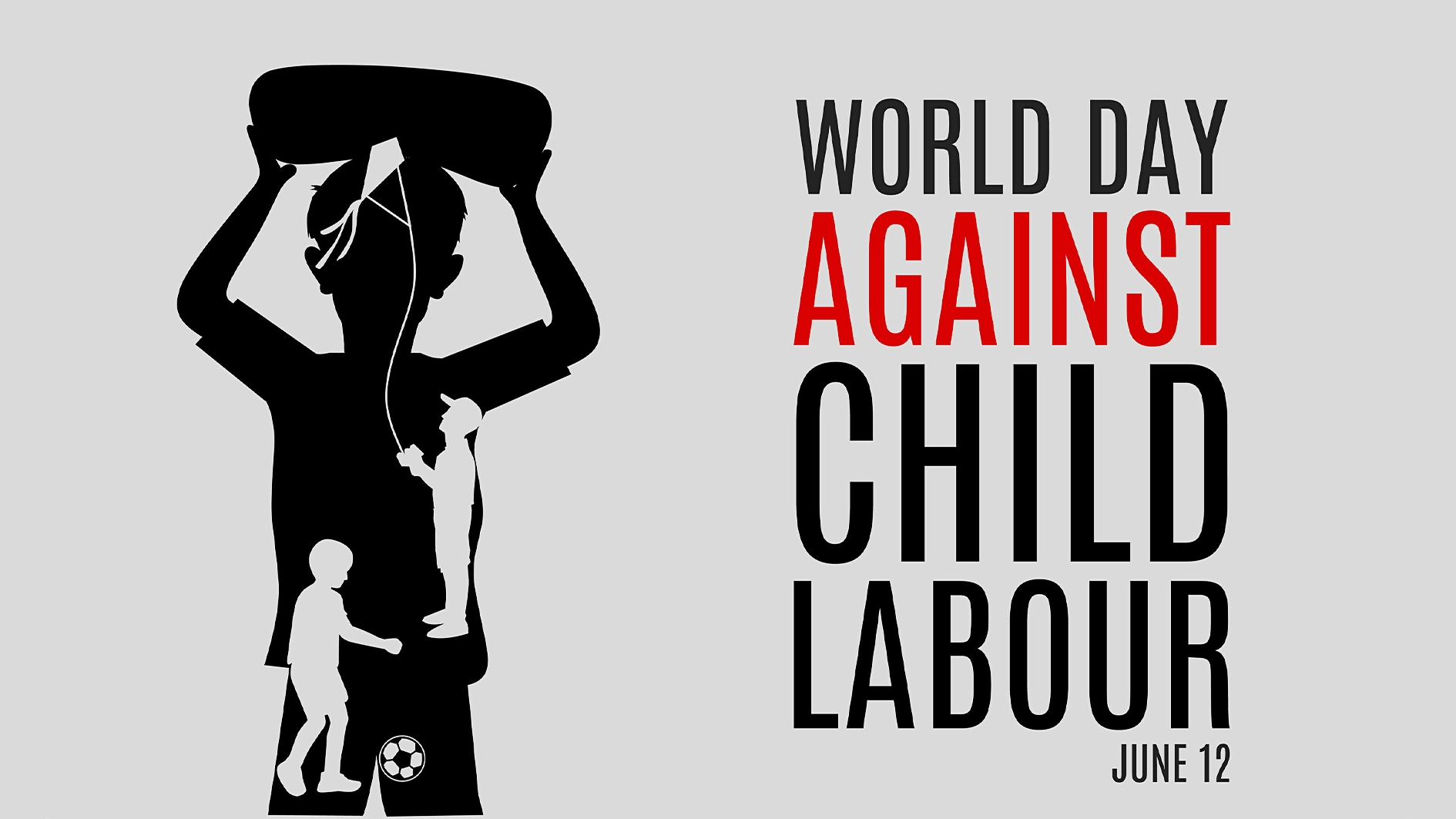
As officials, labour leaders and activists gathered in Geneva recently to mark the World Day Against Child Labour, a sea of raised red cards sent a clear message to the world that child labour has no place in modern society, writes GLORIA NWAFOR.
The symbolism was powerful. Yet, behind the show of solidarity lies a troubling reality. With less than four years to the 2030 deadline for ending child labour under the Sustainable Development Goals (SDGs), millions of children across the globe continue to spend their days on farms, mines and workshops instead of classrooms and playgrounds.
While the Federal Government of Nigeria has renewed its commitment to eliminate child labour by 2030, the scale of the problem remains daunting. According to the Nigeria Child Labour Survey 2022, approximately 25 million Nigerian children between the ages of five and 17 are engaged in child labour, representing nearly four out of every 10 children in that age bracket.
The figures become even more alarming in rural communities, where the ratio of victims is 50 per cent.
These are not merely statistics. They represent children carrying heavy loads on farms, working long hours in domestic service, digging in artisanal mining sites and participating in economic activities that expose them to physical harm, exploitation and long-term developmental risks.
At the International Labour Conference organised by the International Labour Organisation (ILO) in Geneva, the message from global leaders was that although progress has been made, there is still much more to be done.

ILO Director-General, Gilbert Houngbo, described the persistence of child labour as an unacceptable denial of childhood itself.
Nearly 138 million children remain trapped in child labour globally, including 54 million engaged in hazardous work. For Houngbo and other advocates, the figures underscore the urgency of moving beyond declarations and translating commitments into concrete action.
This year’s campaign theme, ‘Red Card to Child Labour: Fair Play for Children, Decent Work for Adults’, reflects a growing recognition that child labour is often a symptom of broader economic and social failures.
Poverty remains the single biggest driver. For many families struggling to survive, children’s earnings — however meagre — can mean the difference between eating and going hungry. Limited access to quality education, weak social protection systems and inadequate enforcement of labour laws further deepen the crisis.
In Nigeria, these factors intersect with a vast informal economy where regulation is often weak and exploitation difficult to detect.
The result is a system in which child labour becomes normalised, particularly in agriculture, domestic work and small-scale mining.
Although government officials point to policy reforms and international partnerships as evidence of progress, experts argue that implementation remains the country’s greatest challenge.
Director of the Labour Inspectorate Department at the Federal Ministry of Labour and Employment, Magaji Ademu, recently reaffirmed Nigeria’s commitment to ending child labour and implementing resolutions agreed upon at international forums.
He hinted that the government is reviewing the National Policy on Child Labour and is developing a new National Action Plan for the Elimination of Child Labour covering the period from 2026 to 2030.
The proposed framework seeks to build on previous interventions while aligning with regional and global initiatives, including the Marrakech Global Framework for Action and child protection strategies across West Africa.
Yet policy frameworks alone cannot rescue children from exploitative work.
Labour advocates say a significant gap remains between legislation and enforcement.
Nigeria’s legal framework itself presents contradictions. While the Labour Act permits certain forms of employment from the age of 12, the Child Rights Act and the Universal Basic Education Act effectively prohibit child labour among children below 18.
Such inconsistencies create loopholes that can be exploited by employers and make enforcement much more difficult.
Compounding the problem is the shortage of labour inspectors and the limited reach of regulatory agencies, particularly in remote rural areas where child labour is most prevalent.
For organised labour, the issue extends beyond economics. Nigeria Labour Congress President, Joe Ajaero, argued that child labour is fundamentally a social justice concern.
According to him, no society can claim to promote decent work while millions of children remain trapped in dangerous and degrading conditions.
His position reflects a broader consensus among labour groups, which continue to push for stronger enforcement of child protection laws, improved access to quality education and expanded social safety nets for vulnerable households.
Employers’ groups have also pledged support for responsible workplace practices and compliance with labour regulations.
But, stakeholders acknowledge that voluntary commitment from the private sector must be matched by monitoring and accountability mechanisms.
Beyond the economic and legal dimensions lies another, often overlooked consequence of child labour: the impact on mental health.
Research increasingly shows that children exposed to exploitative working conditions face elevated risks of chronic stress, anxiety, depression, and psychological trauma.
Long hours of work, exposure to abuse, and the burden of adult responsibilities can disrupt emotional development and leave lasting scars that persist well into adulthood.
Yet mental health remains largely absent from many child labour interventions, which traditionally focus on education, law enforcement, and economic support.
For child rights advocates, this omission highlights the need for a more holistic approach, one that recognises children not simply as economic actors but as individuals whose emotional and psychological well-being requires protection.
Indeed, some states are attempting to strengthen their response.
In Lagos, authorities have intensified rescue operations through the state’s task force on environmental and special offences, working alongside law enforcement agencies to identify trafficked and exploited children.
Officials insist that with sustained investment in education, community engagement, and economic empowerment, the state can become a model for child protection.
Whether such efforts can be replicated nationwide remains an open question.
As the countdown to 2030 continues, the challenge facing Nigeria is not a lack of commitment. The country has policies, action plans and international partnerships. What remains uncertain is whether those commitments can be translated into measurable results at the scale required.
For millions of Nigerian children still working instead of learning, the answer cannot come soon enough.
The red cards raised in Geneva may have symbolised global resolve. But unless governments move decisively to address poverty, strengthen institutions, and protect vulnerable families, the final whistle on child labour may still be a long way off.

