 Follow Us on Google News
 Follow Us on Google Discover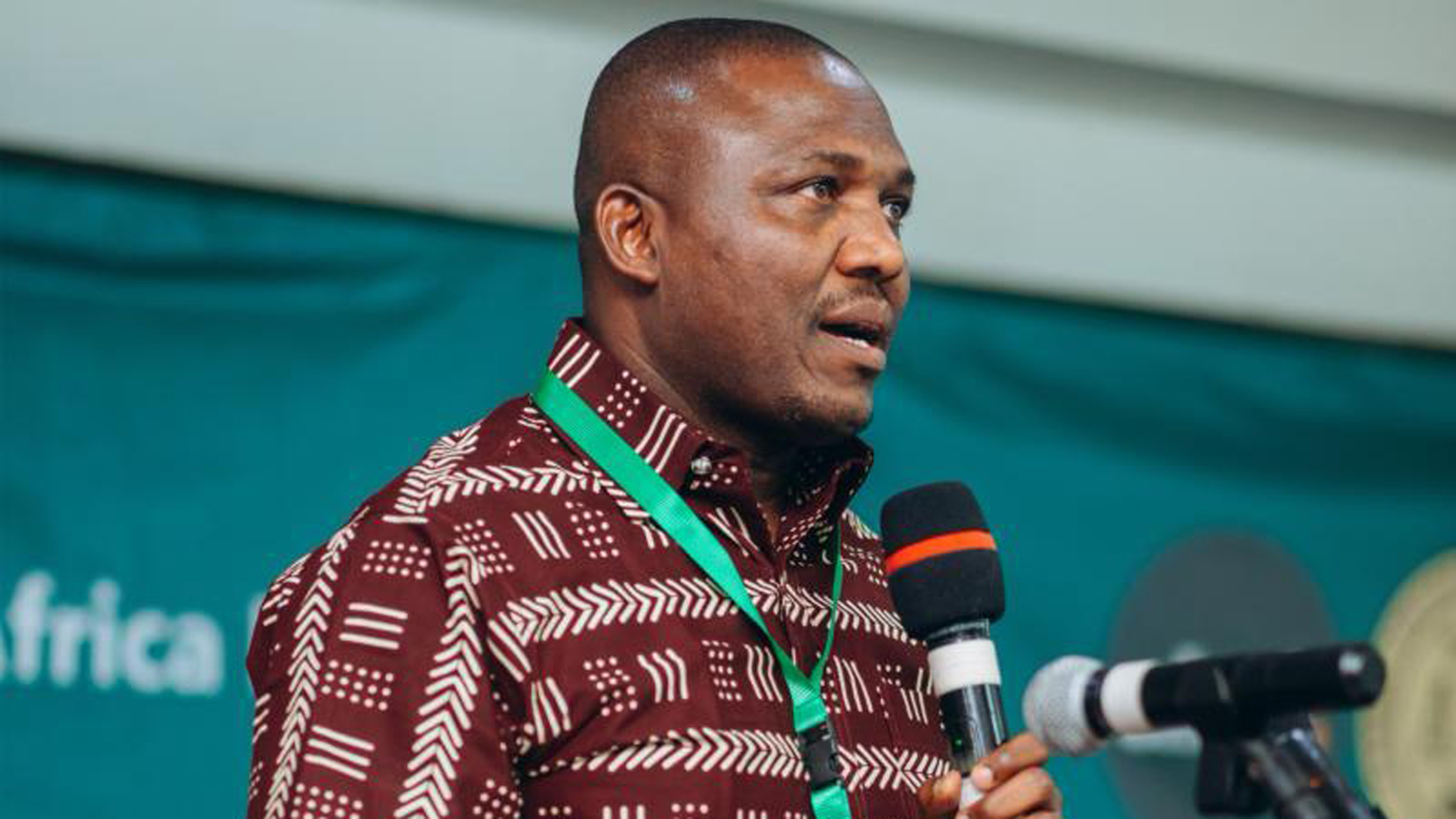
As climate change, artificial intelligence, demographic shifts, industrialisation and the race for critical minerals are reshaping economies globally, the General Secretary of ITUC-Africa, Joel Odigie, in an interview with COLLINS OLAYINKA during the Just Transition Platform (JTP) meeting in Gaborone, Botswana, insisted governments in Africa must adapt to emerging changes by creating jobs instead of widening poverty and inequality.
What is the link between just transition, job creation and job retention?
The starting point is that employment cannot be separated from environmental stability. Job creation, job retention and long-term economic growth depend on whether societies can preserve ecological systems.
Rising global temperatures, recurrent floods, droughts and other extreme weather events are already disrupting production systems, damaging infrastructure and reducing productivity across sectors such as agriculture, transport, manufacturing and services. Many of these impacts are linked to human activity and industrial patterns over time.
From this perspective, climate instability is not just an environmental issue but a direct labour market risk. If ecosystems collapse or become increasingly unstable, economic systems also weaken, and employment becomes less secure. This is why organised labour often argues that “there are no jobs on a dead planet.” The point being made is that climate protection is a precondition for protecting livelihoods.
Is just transition only about shifting from fossil fuels to renewable energy?
No. A narrow focus on the energy transition overlooks the broader structural changes underway in global and African economies. Just transition should be understood as a bundle of interconnected transitions that all shape employment outcomes.
First is the energy transition, which involves moving away from dependence on fossil fuels toward renewable and low-carbon systems. This includes solar, wind, hydro and other clean energy sources, but also extends to the blue economy, where oceans, fisheries and marine ecosystems are increasingly affected by climate change and must be sustainably managed.

Second is the economic structure transition, particularly the shift from informal to formal economies.
In many African countries, a large share of employment is still informal, characterised by low productivity, limited protections and weak access to finance. A just transition in this sense involves gradually moving workers and enterprises into formal, regulated, and more productive sectors, including industrial and service-based economies.
Third is the demographic transition, which presents contrasting labour challenges. Some regions are experiencing ageing populations with shrinking workforces, while many African societies face a youth bulge with high unemployment or underemployment. Each situation requires different labour market responses, from retirement systems and productivity adjustments in ageing economies to massive job creation and skills development in younger populations.
Fourth is the digital transition, driven by rapid technological change, automation, data systems and artificial intelligence. This transition is reshaping entire industries, changing skill requirements, and displacing some forms of labour while creating new categories of work. The challenge is how to manage disruption while expanding access to digital skills and opportunities.
Fifth, in the African context, there is the mineral and industrial transition. Africa holds significant deposits of critical minerals needed for global energy and technological transitions. The key issue is whether the continent continues to export raw materials or moves toward value addition, beneficiation, and industrialisation. This determines whether Africa captures jobs and value or remains locked into extractive economic models.
Taken together, the transitions are not separate agendas. They overlap and interact, and all of them directly determine employment outcomes.
What makes these transitions ‘just’ rather than disruptive?
A transition becomes ‘just’ when it protects people during periods of economic restructuring and ensures that the benefits of change are broadly shared.
Three core pillars define this: First is skills development. Workers must be equipped with the relevant capabilities for emerging sectors such as renewable energy, digital industries, advanced manufacturing, and green infrastructure. Without skills upgrading, transitions simply produce unemployment rather than new opportunities.
Second is financing. Economic transformation requires large-scale investment in infrastructure, education, industrial policy and enterprise development. Without adequate financing, particularly in developing economies, transitions remain theoretical rather than practical.
Third is social protection. This is the stabilising mechanism that ensures people do not fall into poverty during periods of change. It includes unemployment support, health coverage, income support mechanisms, and broader safety nets. Social protection is what allows societies to move from one economic system to another without deep social dislocation.
In practical terms, social protection is what makes it possible for workers to survive the “in-between period” where old jobs are disappearing and new ones are not yet fully established.
Why is financing such a major constraint in just transition debates?
Financing is one of the most contested and unresolved issues in global climate and development discussions.
Many developing countries argue that commitments made by developed economies — particularly in relation to climate finance, adaptation funding and development assistance – are not being fulfilled at the scale required. This creates a trust deficit in global negotiations.
At the same time, overseas development assistance is shrinking in many donor countries. Where funding exists, it is increasingly being restructured. A growing share is being channelled through private-sector instruments, investment partnerships, or blended-finance models rather than direct public transfers.
There is also a noticeable shift in global priorities. In some cases, development funding is being redirected toward security and military-related spending rather than long-term development cooperation.
For many African economies, this creates a structural gap between needs and available resources. The scale of climate adaptation, infrastructure development, industrialisation and job creation required is significantly larger than current funding flows.
What role does African unity play in addressing the challenges?
A central argument is that fragmented national approaches weaken Africa’s ability to negotiate and implement large-scale economic transformation.
When countries act individually, their bargaining power in global financial, trade and climate negotiations is limited. When they act collectively, they are more likely to influence outcomes and secure better terms.
This is why continental integration is emphasised – not as a replacement for national sovereignty, but as a way of strengthening it. Sovereignty is seen as more effective when it is coordinated into a collective continental position.
In practical terms, institutions such as the African Union are seen as key platforms for building common positions on industrial policy, climate finance, labour standards and development strategy.
The argument is that Africa cannot effectively manage multiple transitions—climate, digital, industrial and demographic – if it remains economically fragmented.
How do governance and transparency concerns fit into this discussion?
Governance and accountability challenges are widely acknowledged, particularly in resource-rich economies where corruption, weak institutions and mismanagement can undermine development outcomes.
However, the argument also places these issues within a broader historical and structural context. Many African economies were built around extractive systems that prioritised resource export over industrial development. This has shaped institutional weaknesses over time.
There is also the view that external geopolitical and economic pressures have influenced governance outcomes, particularly in countries rich in strategic resources. In some cases, political instability and institutional breakdown have coincided with periods of intense competition over natural resources.
This does not remove responsibility from domestic actors. Instead, it suggests a dual reality: internal governance reforms are necessary, but external structural conditions also matter.
Therefore, improving transparency and accountability must go hand in hand with reforming global economic relations that shape incentives and outcomes in resource-dependent economies.
What is the argument around global inequality and reparative justice?
Reparative justice is increasingly framed as part of the broader climate and development debate.
The core argument is that historical processes, particularly slavery, colonial extraction and unequal industrial development, have contributed to long-term global inequality. These historical dynamics continue to shape present-day economic disparities.
Reparative justice is therefore not presented as revenge or symbolic recognition alone. It is framed as a structural conversation about fairness in global development systems, including financing, trade relations and climate responsibility.
There is also a link to emissions history. Countries that industrialised earlier and contributed most to greenhouse gas emissions are seen as having a responsibility to support those now facing the most severe climate impacts with fewer resources.
What role do labour movements and civil society play in this agenda?
Labour movements and civil society actors position themselves as both partners in policy development and as accountability mechanisms.
Their role includes several dimensions: They engage with governments and continental institutions to shape policy frameworks on labour, climate and industrial development. They contribute technical input and policy proposals to ensure that workers’ interests are represented in transition planning.
They also participate in structured policy processes within African regional institutions, ensuring that labour perspectives are integrated into continental strategies.
At the same time, they maintain an independent role in monitoring governance and implementation. Support for governments does not eliminate the responsibility to challenge corruption, mismanagement or policy failure.
This dual role – collaboration and accountability – is seen as essential to achieving credible and inclusive transitions.
There is also increasing emphasis on coordination between labour unions, civil society organisations and progressive political actors to build stronger alignment around shared development objectives.
How is this agenda being operationalised at the continental level?
Implementation is being pursued through structured engagement with African institutional processes.
Key technical platforms under the African Union are central to this work. These include specialised committees that focus on economic development, trade, industry, labour and social affairs.
For example, AU structures such as the Specialised Technical Committee on Economic Affairs and the Committee on Labour, Employment and Social Affairs provide forums where member states and stakeholders align positions on employment, industrialisation and social policy.
Meetings of these bodies, such as those scheduled in cities like Abidjan and Windhoek, serve as platforms to consolidate African positions and coordinate policy approaches.
Labour and civil society actors participate in these processes to ensure that policy discussions reflect real labour market conditions and social realities, while also contributing alternative proposals where necessary.
What is the overall conclusion of this perspective?
The central conclusion is that job creation and job retention in Africa cannot be treated as isolated economic objectives. They are directly shaped by multiple simultaneous transitions: climate and energy transition, digital transformation, demographic change, economic formalisation, and mineral-based industrial transformation.
A just transition is therefore not a single policy intervention but a comprehensive development framework. It requires climate stability as a foundation for economic activity; coordinated management of multiple structural transitions; large-scale investment in skills, financing and infrastructure; strong social protection systems to protect workers during change; improved governance and accountability; reform of global financial and economic systems and stronger continental unity to improve bargaining power and policy coherence.
Ultimately, the argument is that Africa’s ability to generate and sustain decent work depends on whether it can manage these transitions collectively, strategically and with a strong emphasis on equity both within countries and in the global system.

