 Follow Us on Google News


 Follow Us on Google Discover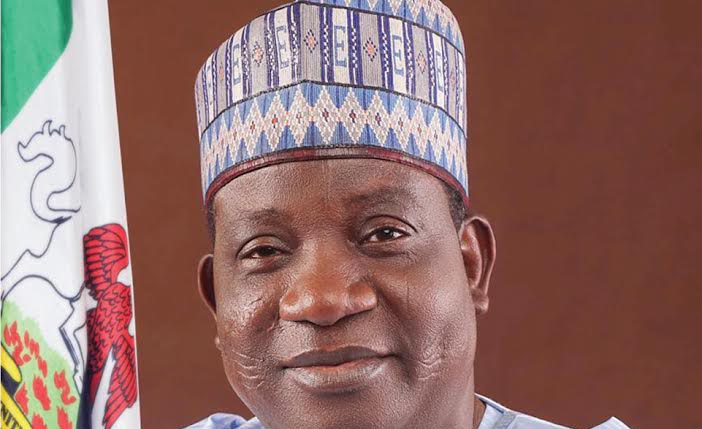

Given the critical role labour plays in the life of an administration and backlog of decisive issues, stakeholders have said the new Minister of Labour and Employment already has his work cut out,Gloria Nwafor reports.
President Bola Tinubu had on Wednesday, last week, released the portfolio of ministers, where the immediate past governor of Plateau State and ex-Director-General of the All Progressives Congress (APC) presidential campaign, Simon Lalong, was appointed the Minister of Labour and Employment.
[ad]
Tinubu equally appointed a politician, who is a prominent member of the Federal House of Representatives and Nigerian businesswoman, Nkiruka Onyejeocha, as the Minister of State, Labour and Employment.
A former Labour Minister, Emeka Wogu, in an interview had described the Ministry of Labour as quite central and strategic to the national economy “because a strike that is prolonged can bring down the economy. Like in other countries, it is a key ministry. After the Ministry of Budget and National Planning, the next is Labour because Labour is central to the economy of every nation.”
To this end, stakeholders in the sector have said that Lalong, who is a lawyer, must be a manager of men, a human resource guru, a mediation expert and a top-notch conciliator because, by the position, he is the Conciliator-in-Chief of the country.
Specifically, they said he should not be seen to favour any party whether government as employer, private sector employers or employees in any circumstance when there is a dispute between parties, while he must be above board, having the ability to work as a government official without being a government officer.
To be an effective minister, considering the nature of the job, they said he must not be an office minister, but rather a factory minister who visits factories frequently and holds stakeholders’ meetings with employers and workers to know their challenges.

From the employers’ side, Director-General of the Nigeria Employers’ Consultative Association (NECA), Adewale-Smatt Oyerinde, said the minister came at a time when the nation needed deliberate and focused interventions, especially on palliative talks to cushion the effect of subsidy removal on Nigerians.
He said the body looks forward to working with him to drive the economy out of the woods and also fast-track the total reform of the nation’s industrial relations system.
“He should facilitate a more robust industrial relations environment, fast-track the review of the National Industrial Relations Policy, given the new labour law and commence the process that will lead to the formation of the National Minimum Wage committee,” he said.
According to the Deputy President of the Trade Union Congress of Nigeria (TUC), Dr. Tommy Okon, he should develop a culture of being labour friendly, because it is the engine that drives the economy.
[ad]
He said when there is industrial peace and harmony, productivity strives and the economy automatically booms.
While not being political, Okon said the minister needed to see himself as the father of both the employers and the employees.
He said this is paramount, being the fact that labour, as a custodian of industrial relations and workers’ welfare, should inform his policy direction.
Noting that some of the challenges facing labour administration in the country were a result of obsolete labour laws, he said Lalong needed to critically look at the review bills that have been sent to the Office of the Attorney-General of the Federation for drafting, to see how he could facilitate and fast track the passage of the bills into law.
“His task is very important because he is coming when the national minimum wage would be discussed, which is a constitutional matter. There is a need for a symbiotic relationship with organised labour and he should avoid interference in labour matters unduly. He needs to understand the working dynamics of labour administration in the country. He should take into cognisance International Labour Organisation (ILO) conventions, recommendations and protocols in dealing with labour matters,” he said.
On Lalong being a lawyer, Okon said labour administration is not about legality, stating that a minister could be a lawyer and make meaningless contributions to labour administration.
“It deals more with morality. You don’t deal with labour administration within the context of legality, you must blend legality and morality for you to make any meaningful headway. It is not about reading the constitution or the law, but the certification of having human consideration and the moral element of it.
“Many labour ministers were not necessarily lawyers but were able to make a meaningful impact in labour administration. He needs to work with professionals in the ministry and listen to professional advice as it is going to help his policy direction in labour administration.
“The whole essence is to have industrial peace and harmony in the country, which is the perfect bedrock for productivity and the minister must play that central role to ensure this comes to effect.
“He should not see the labour unions as enemies in progress, but rather as partners in restoring socioeconomic stability.
“Ministers should not be given portfolios to compensate them. That should not be the yardstick to measure their performances. We measure their performances based on the turnover and reality on the ground. The fundamental thing is that he should create a symbiotic relationship between government and labour unions to ensure there is socioeconomic stability to aid productivity across sectors of the economy,” he said.
[ad]
Also, a former President of the Human Capital Providers Association of Nigeria (HuCaPAN), licensed recruiter of informal sector workers, Aderemi Adegboyega, advised Lalong that if he wants to succeed as Minister of Labour and Employment, he should first assemble thoroughbred professionals and practitioners in Labour management.
He said this is pertinent to chart a course for Labour centres and unions activities, engagement and existence guidelines in line with the law.
He said he must strengthen the respect for the ministry and institutions in apprehension on the resolution of disputes.
“He must discuss with employers’ organisation how to make employers retain and maintain numbers, create jobs by incentivising staff numbers, non-retrenchment and tax payment, as well as engage NECA on how to speed up the work of the tripartite.
“The minister must inspect factories and engage employers as well as workers about working conditions. In this regard, the Factory Inspectorate Department of the ministry must be strengthened. Sadly, the department is grossly understaffed. The few inspectors are only based in Abuja. In all the state offices of the ministry, you can hardly find one factory inspector.
“One of the greatest challenges confronting the labour sector in Nigeria is an upsurge in indecent employment practices. These practices include casualisation, outsourcing, contract staffing, opposition to the unionisation of workers, and non-payment of salaries and other benefits.
“There are issues of abuse whether sexual or otherwise, unsafe working conditions and so on. Nigeria’s workplaces are gradually becoming slave camps for slave drivers.
“There is a growing trend where employers convert full-time employees to casual workers with total disregard to rules and extant labour laws. We cannot continue like this.
“Working with stakeholders especially organised Labour and NECA, the new minister must put an end to this menace and chart a way forward for decent employment policy and practice,” he added.
[ad]

