 Follow Us on Google News


 Follow Us on Google Discover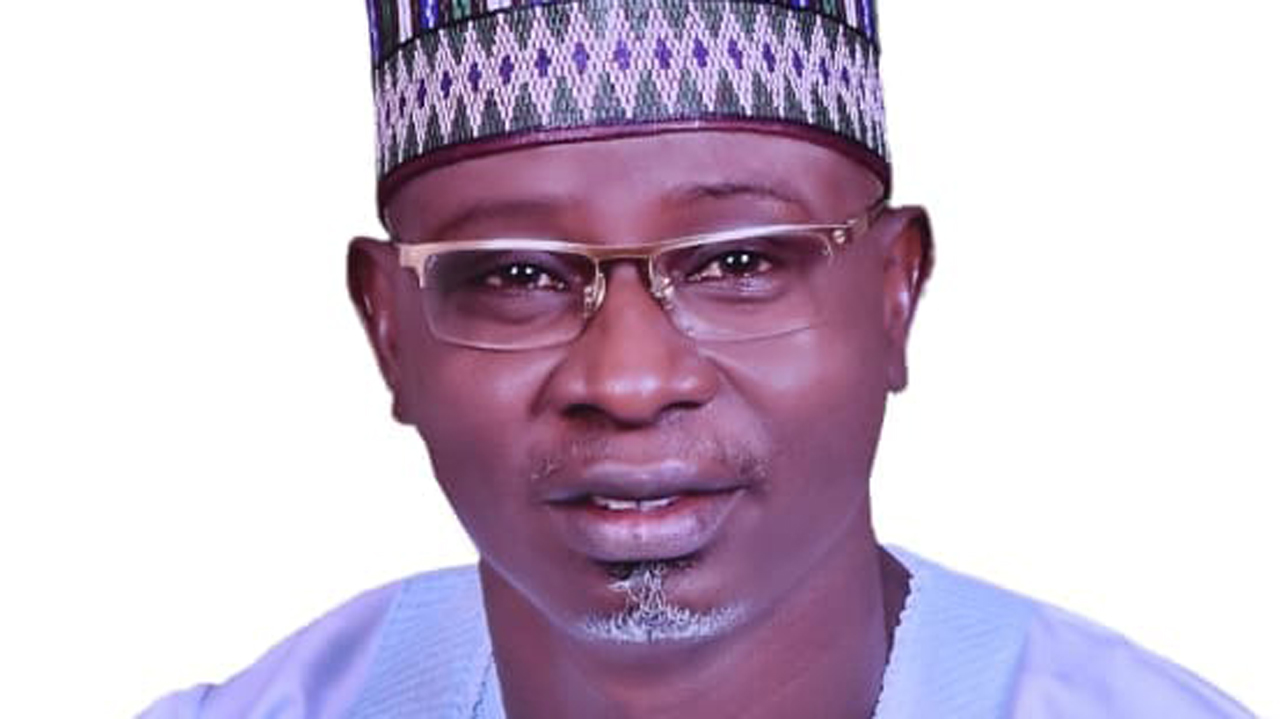

The Senior Staff Association of Nigerian Universities (SSANU) has condemned the blanket dissolution of governing councils of federal universities by the Federal Government.
[ad]
President of the union, Mohammed Ibrahim, said the action is illegal and inimical to the growth and proper functioning and management of universities in Nigeria, as the appointment of the governing councils is tenured in line with the extant laws as gazetted.
For the avoidance of doubt, SSANU insisted that the enabling law provides that governing councils can only be dissolved on proven cases of corruption and incompetence.
The Universities (Miscellaneous Provisions) (Amendment) Act 2003 amended the Universities (Miscellaneous Provisions) Act No. 11 of 1993 and made new provisions, among other things, for the autonomy, management and re-organisation of universities in Nigeria section 2AA as stated below, otherwise called the University Autonomy Act.
“NEC, therefore, rejects in totality the dissolution and calls on government to reinstate the dissolved governing councils without further delay, as the action of dissolution is a breach and infraction on the extant law that established them. NEC further demands that the Governing Council of Nigerian universities be exempted and listed among statutory commissions, councils and agencies to forestall any arbitrary dissolution of University Governing Councils in Nigeria,” it said.
[ad]
The union also faulted the interference of the Office of the Head of Service, which it scheduled of accuser of systematically trying to infringe on the autonomy of Governing Councils of Universities by usurping their powers and functions, especially in the areas of appointments and promotions.
It explained that at no time has the Head of Service been part of the promotion and appointments of staff of universities, adding, “Promotion in the system ends with Councils of universities, where a representative of the Federal Ministry of Education is also a member. NEC in session demands that councils of universities should be allowed to perform their functions devoid of interference by the Office of the Head of Service of the Federation or its agents for that matter.”
SSANU also said the Federal Government is yet to redeem the N50 billion collective bargaining agreement with the Joint Action Committee of SAANU and NASU.

It added: “Arising from the collective bargaining agreements signed between the JAC of SSANU and NASU and the Federal Government, government had promised to have promised to release the sum of N50 billion for payment of outstanding earned allowances to universities and inter-university centres. This agreement is yet to be fulfilled.”
SSANU stated that while it is not averse to the introduction of the student loan to deserving students who are desirous of higher education, it however frowns at the conditions and modalities of accessing the Loan.
[ad]
It noted: “The conditions are too stringent for any civil servant’s child/ward to fulfill. More so, SSANU as a critical stakeholder in the university system should be involved in the management of the scheme. We request that the conditions for the acquisition of the loan should be reviewed to enable interested students to access and repay same.”
While urging the Federal Government to release the four months’ salaries of its members, SAANU insisted that labour law legalises the right of workers to embark on industrial action in compliance with the provision regulations of the law.
It added: “The Labour Act 2005 section 31(6) as amended gives rights to Labour Unions to embark on strikes in line with laid down procedures. It would be recalled that government had reneged on collective bargaining agreements with the union leading to the industrial action. SSANU complied with, and followed all industrial protocol before embarking on the strike.”
The union stated that it is aware that salaries for the four months in contention were prepared, but yet to the paid. Four years after the national minimum wage law was passed, SSANU said its members in 11 universities are yet to receive the pay rise.
[ad]

