 Follow Us on Google News
 Follow Us on Google Discover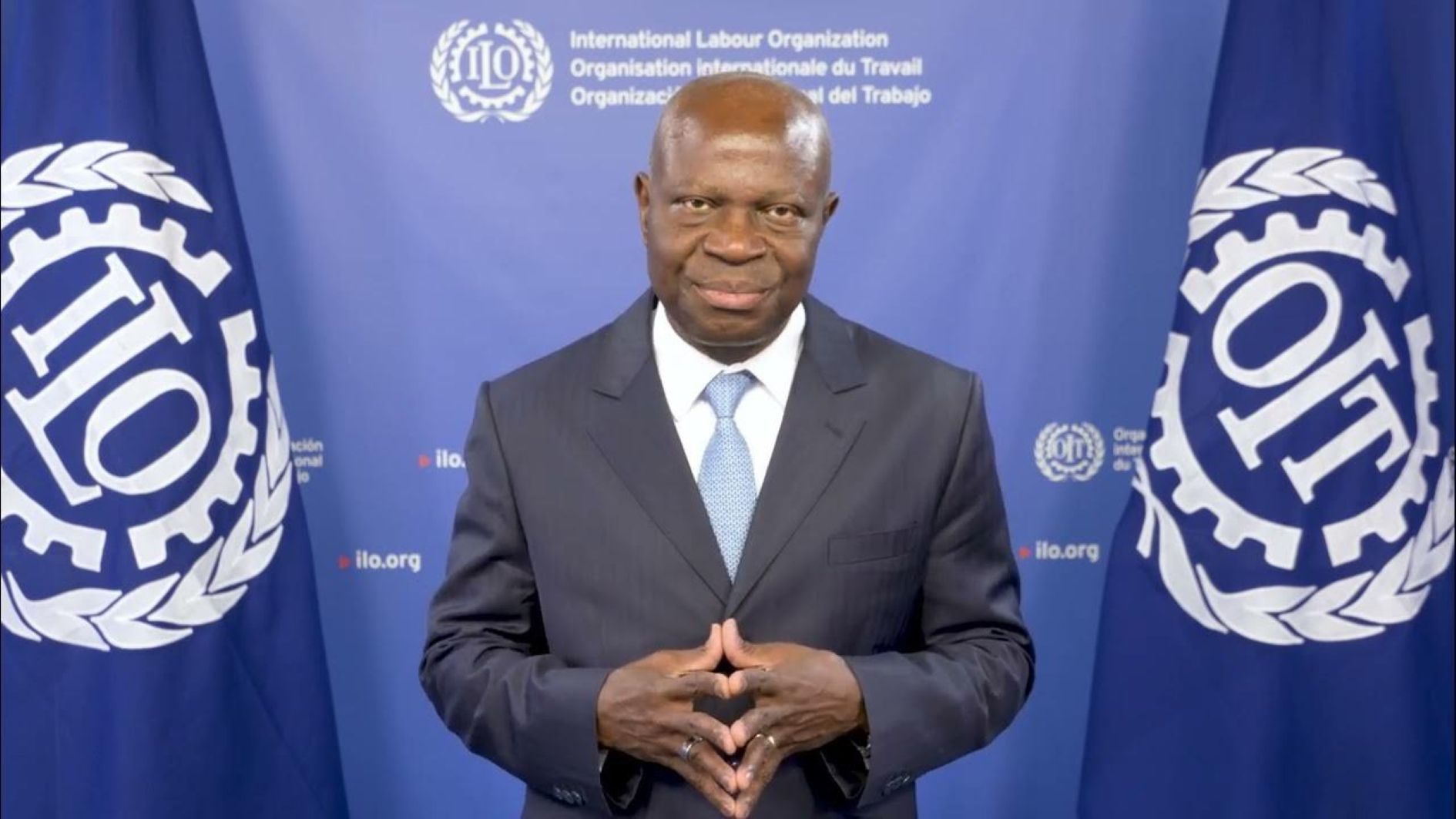
Women globally still earn about 18 per cent less than men, with the gender pay gap narrowing by only two percentage points over the past decade, the International Labour Organisation (ILO) has said.
The ILO said the pace of improvement remained too slow to deliver meaningful progress towards equal pay, warning that closing the gender pay gap would remain a distant prospect without faster action.
ILO Director-General Gilbert Houngbo said the reduction of only two percentage points in 10 years was inadequate, stressing that equal pay was fundamental to gender equality and social justice in the world of work.
“A reduction of just two percentage points in ten years is simply not enough,” Houngbo said, calling for faster action to turn equal-pay commitments into measurable results.
The latest ILO estimates, released on September 18 to mark International Equal Pay Day, showed significant differences across countries and income groups.
In high-income countries, the gender pay gap narrowed by about 2.5 percentage points over the past decade, compared with two percentage points in lower-middle-income countries and one percentage point in upper-middle-income countries.

Senior Gender Specialist at the ILO, Emanuela Pozzan, said the variations demonstrated that progress was possible where policies were tailored to specific labour-market conditions.
She said millions of women whose work sustains families, businesses and communities remained undervalued, requiring governments, employers and workers to accelerate action.
The ILO attributed persistent pay disparities to wider structural inequalities in the labour market, including unequal access to employment and career progression, occupational segregation, unequal distribution of paid and unpaid care responsibilities, discrimination and the undervaluation of women’s work.
Chief of the ILO Gender, Equality, Diversity and Inclusion Branch, Chidi King, said governments, employers and workers needed to act in a coordinated manner to remove the structural barriers sustaining pay inequality.
According to her, social dialogue, including collective bargaining, could help address the undervaluation of women’s work, strengthen pay transparency and create fairer wage structures while giving women a greater voice in decisions affecting their economic lives.
The ILO identified stronger pay transparency, objective and gender-neutral job evaluation, effective wage policies, collective bargaining, enforcement of equality legislation, and investment in care systems and social protection as measures capable of accelerating progress.
Equal pay for work of equal value is a fundamental ILO principle and is enshrined in the Equal Remuneration Convention, 1951 (No. 100).
The ILO said International Equal Pay Day, recognised by the United Nations General Assembly in 2019 and commemorated annually on September 18, should serve not only as a measure of progress but also as a trigger for stronger action.
At the current pace of decline of about 0.2 percentage points annually, the organisation said, achieving gender pay equality would remain a distant goal.
The Equal Pay International Coalition (EPIC), a partnership involving the ILO, UN Women and the OECD, marked this year’s International Equal Pay Day with an international gathering in Dublin hosted by the Government of Ireland.
The meeting brought together governments, employers’ and workers’ organisations, civil society, businesses and academics to assess progress and identify policy measures to accelerate equal pay for work of equal value.
The discussions followed a resolution adopted at the 2026 International Labour Conference on the ILO’s transformative agenda for gender equality in the world of work, which reaffirmed member states’ commitment to closing the gender pay gap.
The ILO said stronger partnerships, development cooperation and multilateral action remained necessary to ensure that women’s work was fairly valued and equal pay became a reality for workers globally.

