 Follow Us on Google News


 Follow Us on Google Discover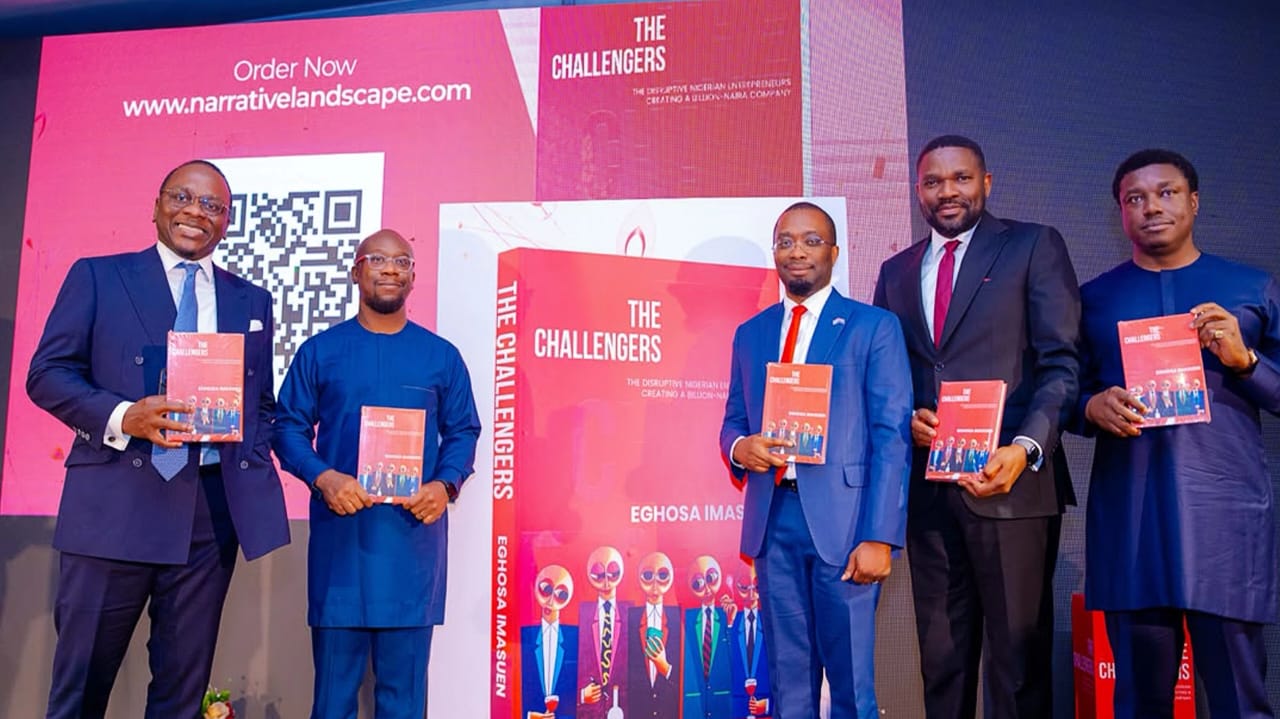
The importance of trust and partnership in building businesses that can survive beyond their founders took centre stage as Nigerian author, Eghosa Imasuen, unveiled The Challengers: The Disruptive Nigerian Entrepreneurs Creating a Billion-Naira Company, a book chronicling the journey of the five founders of VFD Group.
The book examines how the founders built the company around shared ownership, collaboration and a long-term commitment to working together, offering insights into the challenges of building an institution in an environment where businesses often depend heavily on their founders.
Reviewing the book, Chairman of BusinessDay, Dr Richard Ikiebe, said Nigeria’s greatest entrepreneurial deficit may not be a shortage of finance, but a lack of trust needed to sustain partnerships and build enduring institutions.
According to him, the story of the VFD founders goes beyond their financial success, as it highlights the role of trust, shared responsibility and disciplined governance in creating an organisation capable of surviving beyond the individuals who established it.
“In The Challengers, Eghosa Imasuen has given us a book that deserves to be argued with, not merely read or reviewed,” Ikiebe said.
He noted that long before the founders accumulated financial wealth, they had spent years building confidence in one another, sharing risks and responsibilities.

“The company is the narrative; the institution is the subject,” he said, stressing that the real significance of the VFD story lies in how the founders approached institution-building rather than simply creating a successful company.
Ikiebe argued that this was particularly relevant to Nigeria, where partnerships and corporate institutions can be weakened by a lack of trust and excessive dependence on individuals.
“Perhaps Nigeria’s greatest entrepreneurial deficit is not a shortage of finance but of trust: the foundation that sustains partnerships and builds enduring institutions,” he said.
He also challenged the description of VFD Group simply as another disruptive company in the technology and financial services space, arguing that the founders’ bigger disruption was institutional.
According to him, the VFD model demonstrates how shared ownership, collaborative leadership and disciplined governance can provide an alternative to the one-founder model that remains common in African businesses.
Ikiebe further argued that governance should be regarded as a business strategy rather than merely a compliance requirement.
“Nigeria rarely lacks laws; it lacks organisations willing to place systems above personalities,” he said.
He added that unchecked ego, rather than money, often poses a greater threat to the survival of institutions.
“Money rarely destroys institutions; unchecked ego more often does,” Ikiebe said.
The reviewer also raised questions about whether the principles demonstrated by the VFD founders could be applied beyond business to other institutions, including universities, media organisations, professional associations, political movements and government.
“Nations, after all, are remembered not for the brilliance of their founders, but for the strength of the institutions they leave behind,” he said.
Ikiebe said the long-term test for VFD Group would therefore not only be its financial success, but whether it can preserve the principles on which it was founded after its founders have left.

