 Follow Us on Google News


 Follow Us on Google Discover
Oyindamola is a sculptor of vessels that carry memory. Working with two elemental traditions, hand-built clay and woven aso oke, she creates works that are both intimate and ceremonial, containers of form and meaning. Her art is deeply thoughtful and calming: a quiet meditation on slow craft, on the relationships between disciplines, and on what they tell us about broader cultural and social norms in the places that produced them. Conceptually rooted, yet always moving beyond theory, this is work that is touchingly humanistic.
What strikes me immediately is her command of materials. Clay, with its weight of earth and ritual, is shaped into forms that are at once robust and vulnerable. Aso oke, a Yoruba textile with centuries of cultural and ceremonial significance, is wrapped, tied, or draped around these vessels, bringing with it histories of adornment, identity, and dignity. Together, these elements do not simply decorate but converse a dialogue between permanence and transience, between body and spirit, between tradition and contemporary reinterpretation.
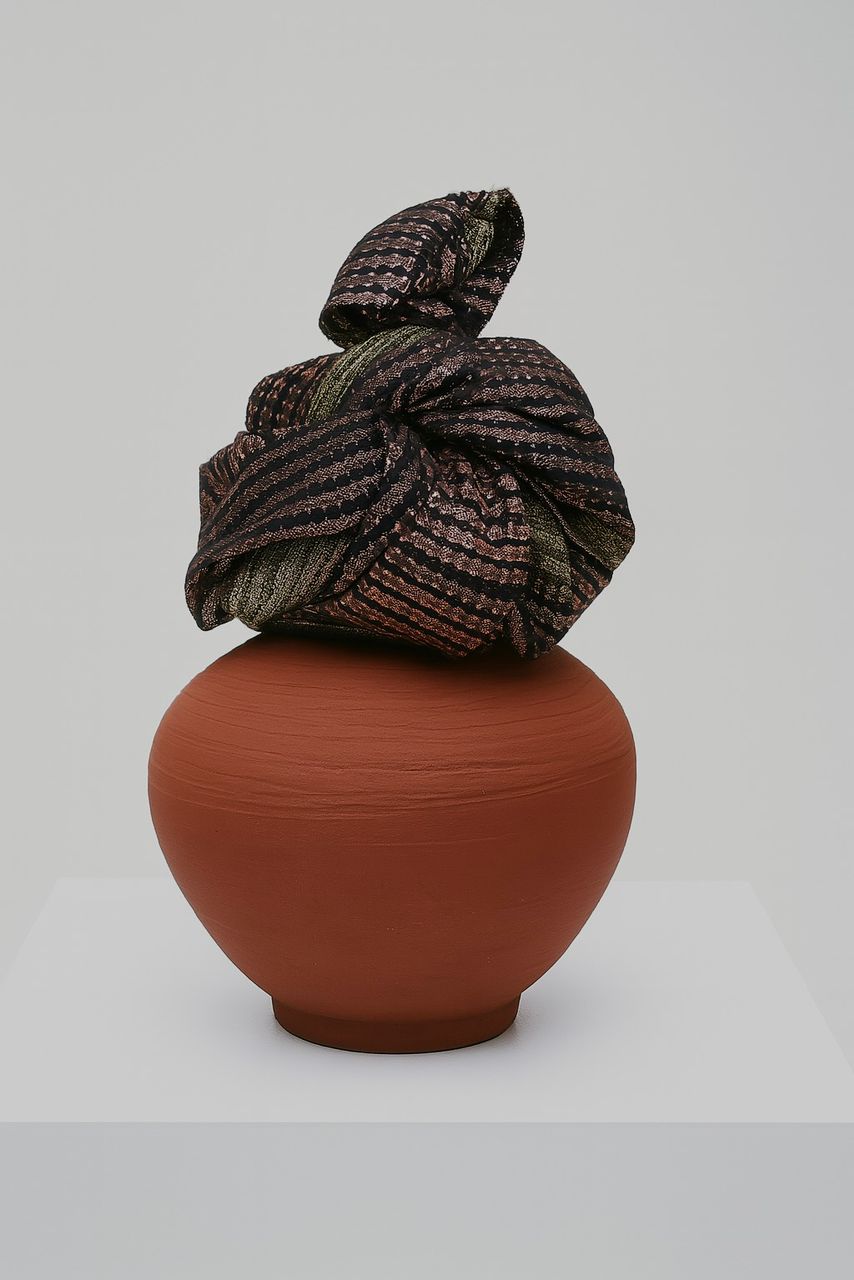
This dialogue is vividly embodied in Ori, meaning “head” in Yoruba. Here, clay becomes portraiture, the vessel transformed into a sculptural crown. The headtie of aso oke, with its elegance and pride, is elevated into a symbol of destiny and selfhood. The work honours Yoruba womanhood, its head as the seat of identity and spiritual consciousness, while also speaking more universally of how adornment and ritual shape who we are. The power of Ori lies in its poise and restraint: a simple form charged with cultural weight, a vessel that carries pride as much as it carries memory.
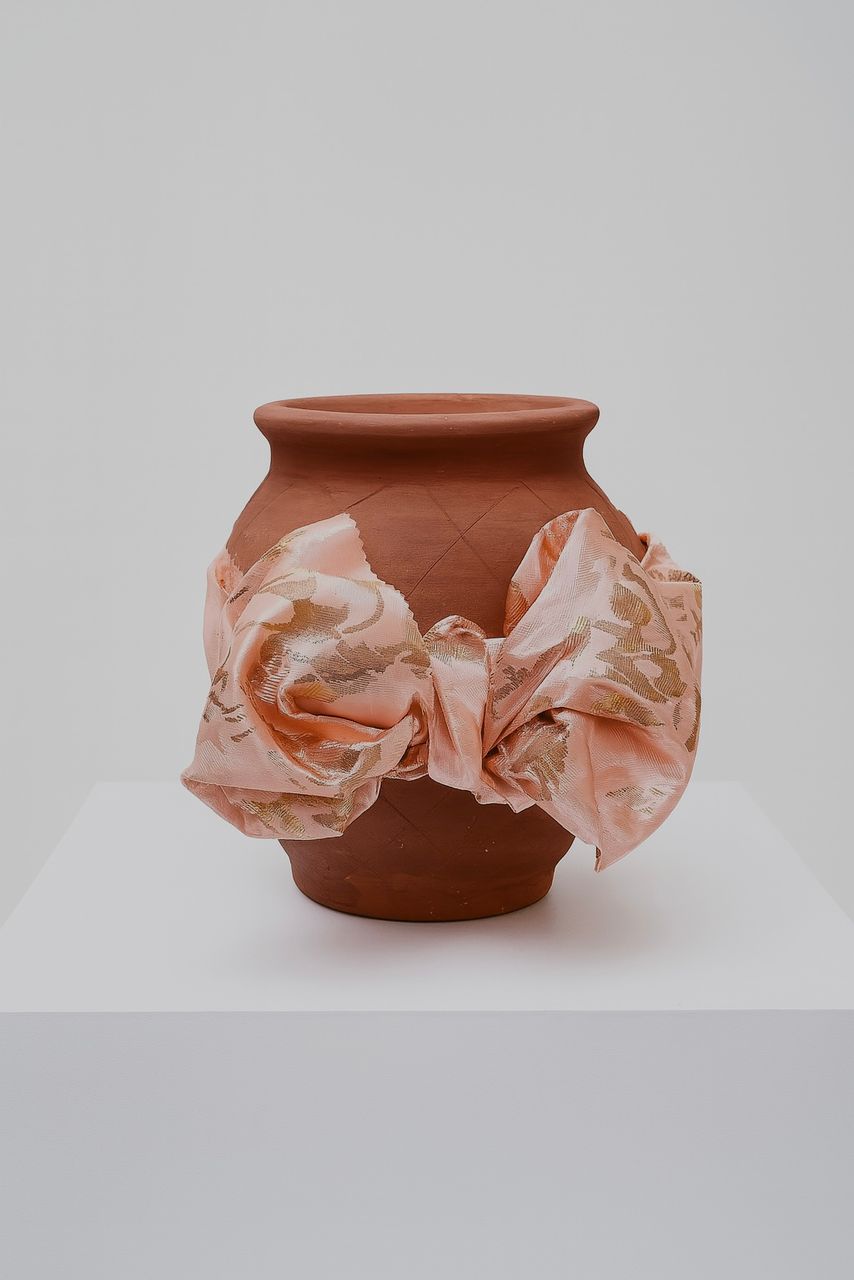
If Ori speaks to identity and pride, Oja turns toward care. Its cloth is tied tightly around a clay vessel as if to cradle a child, recalling the maternal act of carrying babies on the back. It is a gesture at once functional and symbolic, embodying tenderness, strength, and resilience. The pot becomes a surrogate child, fragile yet enduring, while the fabric knot embodies precision, protection, and love. This elevation of the everyday into cultural monumentality is at the heart of Oyindamola’s practice: intimate gestures transfigured into sculptural form.
These are not simply objects, but presences. Each textile fold is like an embrace, each clay surface like skin remembered. What moves me about Oyindamola’s work is its ability to speak across boundaries — grounded in Yoruba heritage yet resonating universally. We see in these vessels the themes of identity and care, of belonging and continuity, experienced through the textures of a culture that has carried them with dignity.
Her practice belongs to a wider conversation about slow craft in the 21st century. At a time when speed and disposability dominate, these vessels return us to the ethics of slowness and attention. The making is meditative, intentional, and ethical: a refusal of haste, a reclaiming of presence. This is not nostalgia but reinvention, a living heritage speaking in contemporary form.

Oyindamola’s achievement is to shape not only clay, but a language of cultural survival and transformation. Her vessels stand quietly, but with great resonance. Crafted in silence, held in fire, they testify to the enduring bond between hand, material, and spirit, a relationship that, in her work, feels both ancient and urgently contemporary.

