 Follow Us on Google News
 Follow Us on Google Discover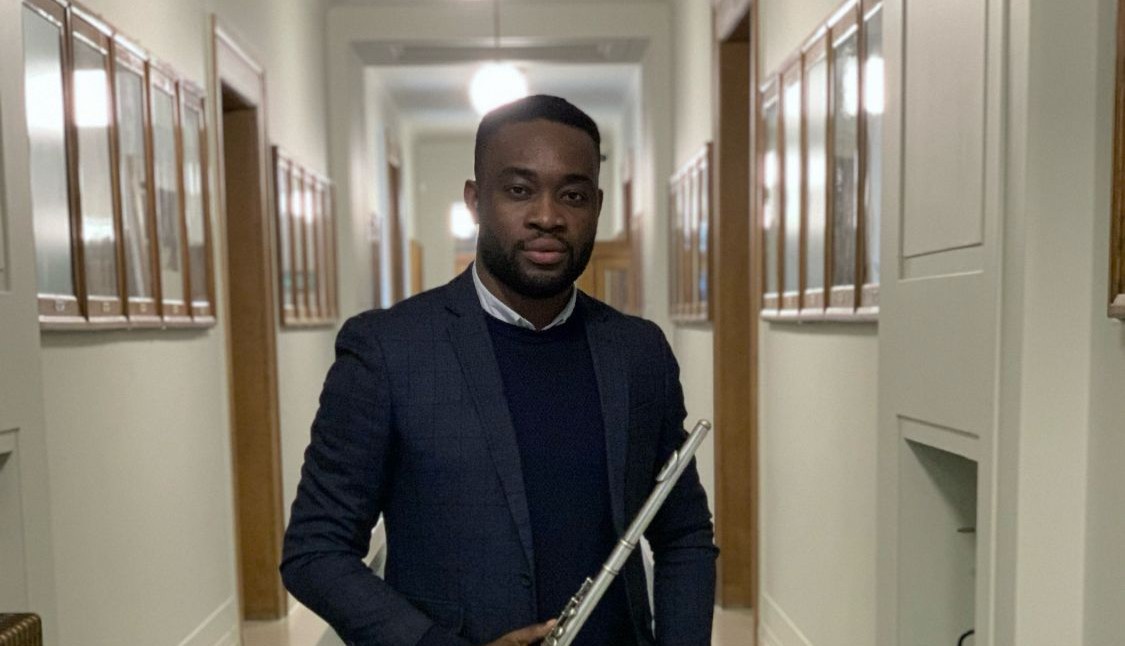
During one of my fated swipes across YouTube for Nigerian performances at the hallowed O2 Arena in the United Kingdom, I stumbled upon Asake’s sold-out concert from August this year. Like many people, I expected to be drawn into the spectacle—the lights, the crowd, the choreography, and the raw energy that has become synonymous with Asake’s live performances. Yet, somewhere within that beautifully layered production, one particular harmony quietly caught my attention: the flute.
On the surface, flutes have hardly had their moment in contemporary Afrobeats, especially in large-scale live productions where drums, horns and electric guitars naturally dominate the sonic landscape. Coincidentally, after discovering that my favourite US rapper, André 3000, is releasing a flute-centred project, my ears have become unusually sensitive to the instrument lately. Naturally, they perked up once the flute began cutting through Asake’s orchestral medley. Rather than functioning as a decorative layer, it became a subtle but powerful device for transition, emotional pacing and tonal balance within the performance.
Dare Omotayo’s display on the flute immediately stood out. Between roughly the 23rd and 40th minute of the performance, his playing quietly ignited sections of the medley without ever competing for attention. It takes remarkable discipline for an instrumentalist to resist the temptation of overplaying in a concert of that scale, but Omotayo seemed to understand exactly where the music needed space and where it needed colour.
Most of the songs performed during that medley, from Ototo to Nzaza, Baba God and Trabaye, move between contrasting emotional landscapes. One moment the music feels celebratory; the next, it slips into reflection. Yet Asake’s unmistakable Fuji-inspired vocal phrasing remains the emotional anchor throughout. Omotayo’s flute complemented that vocal character beautifully. Through measured vibrato and thoughtful phrasing, his playing seemed less interested in stealing the spotlight than in reinforcing the emotional centre of each song. Particularly during Baba God, the dialogue between the flute and violin created delicate layers that gently softened the transitions between sections of the arrangement.
That isn’t to say the performance was flawless.
There were moments where the sheer force of the live percussion and the density of the ensemble inevitably swallowed parts of the flute’s voice. In a production this ambitious, that is perhaps unavoidable. Yet even when the instrument momentarily disappeared beneath the weight of the arrangement, Omotayo’s embouchure and tonal control allowed it to re-emerge with remarkable clarity. His brief improvisatory passage immediately after the medley provided not only dramatic relief but also one of the concert’s most effective musical transitions, reconnecting the audience with the orchestra before the performance moved forward.
During Trabaye, another subtle detail caught my attention. Omotayo’s phrasing beneath Asake’s refrain, “Mo fẹ́ trabaye, yé mo fẹ́ trabaye…”, quietly widened the emotional space around the vocals. It wasn’t an intrusive performance. Rather, it functioned like careful brushstrokes on an already compelling painting, enriching the harmony without distracting from its focal point.
By the time the medley ended, curiosity had gotten the better of me.
Who exactly was this flautist?
Like every music enthusiast eventually does after stumbling upon a performance they cannot quite explain, I started digging.
What I discovered surprised me.
The musician behind the flute was Dare Omotayo Richard, a composer, arranger, Co-Founder and Artistic Director of Dulcis Ensemble, the five-member chamber ensemble responsible for the orchestral textures that merged seamlessly with The Compozers during Asake’s O2 performance. What I had assumed was simply the work of an accomplished session musician turned out to be something considerably more interesting.
Digging a little deeper revealed that Omotayo’s responsibilities extended well beyond performance.
Before stepping onto one of the world’s most celebrated stages, he had led the five-member Dulcis Ensemble through rehearsals, shaping the ensemble’s preparation before it merged with The Compozers for the live production. What intrigued me even more was discovering that the chamber treatment of the Nzaza–Baba God–Trabaye medley wasn’t simply lifted from the original recordings. Omotayo had reimagined the flute and string parts for the medley, adapting them specifically for Dulcis Ensemble’s instrumentation and the demands of a live arena performance. Suddenly, many of the musical decisions I had admired throughout the concert no longer felt accidental; they reflected the thinking of someone contributing creatively long before the first note was played on stage.
That discovery made Omotayo’s contribution to the O2 performance even more compelling. As Artistic Director of Dulcis Ensemble, his role extends well beyond performance, encompassing repertoire selection, rehearsal direction, artistic interpretation and the development of arrangements when productions require them. Those responsibilities are rarely visible to audiences, yet they often determine whether a performance merely sounds good or leaves a lasting emotional impression.
Perhaps that was my biggest takeaway from watching the performance. The more I learnt about Omotayo, the clearer it became that his contribution to the evening had begun long before he ever lifted the flute to his lips.
The conversation around contemporary African live music understandably celebrates charismatic frontmen, gifted producers and energetic bands. Yet performances of this calibre are equally sustained by artists working just outside the brightest lights—musicians whose creative decisions quietly shape what audiences ultimately hear.
For this writer, Dare Omotayo Richard represents one of those musicians. And if performances like this continue to demonstrate anything, it is that the future of African live music may depend just as much on the people thoughtfully building its musical architecture as on those standing at its centre.
Dare Omotayo is a classically trained professional flautist with more than a decade of versatile performance experience spanning classical, jazz, pop, hip-hop, African traditional and contemporary genres. An accomplished performer, composer, arranger and conductor, he is recognised for his leadership in orchestral, chamber music and educational projects across Africa and Europe.

