 Follow Us on Google News


 Follow Us on Google Discover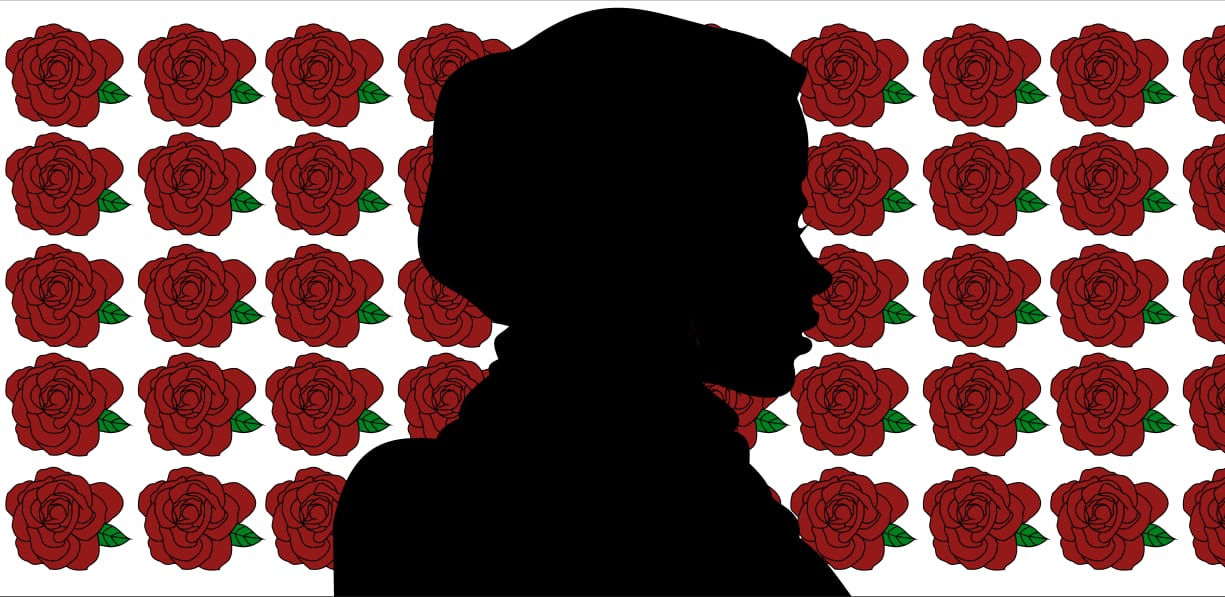
The artist Sef Adeola has carved a niche for himself in magazine illustration. His work is instantly recognisable: Silhouettes inspired by African cave art and early Egyptian imagery, layered with vibrant patterns that echo Yoruba textile traditions and the ornamental flourishes of William Morris.
His illustrations are not just images on a page; they are visual narratives that deepen and extend the stories they accompany, capturing the soul of the text while also standing differently as independent works of art.
They are more of cultural tool, the bridge between word and image, past and present. His silhouettes echo ancestral cave art, his patterns honour Yoruba textile traditions, and his narratives engage directly with the lived experiences of African people.
In doing so, he positions himself not just as an illustrator of stories, but as a storyteller in his own right. “It’s like wind to fire.” For him, though fire can exist on its own, “the wind strengthens it.”
That philosophy has guided his artistic practice, particularly, in his collaborations with literary magazines such as Lolwe, The Continent, Minority Africa, and The Believer. Through his work, he has helped to redefine the role of visual art in African literature, amplifying voices and narratives that would have remained confined to text.
His breakthrough moment came in 2019/2020, when Lolwe magazine, founded by the writer Troy Onyango, approached him to illustrate its very first issue.

At that time, Adeola had already completed a cover commission for The Believer, published by the University of Nevada, Las Vegas. But the Lolwe assignment was something altogether different in scale and ambition.
“It was my first bulky commission,” he recalls. With The Believer, it was one piece for the cover. But with Lolwe, he was asked to illustrate every single piece in the magazine: poetry, short stories, and essays.
Initially, he thought the request was for a cover illustration only. However, when Onyango explained that he envisioned art for each piece, Adeola realised the challenge before him was magnitude.
“It was long, tedious, at times overwhelming,” he admits. “But I loved and enjoyed every bit of it.” In fact, his pioneering work with Lolwe may have been one of the first times an illustrator in Nigeria had been commissioned to produce visuals for every story in a literary magazine. Traditionally, illustrators were invited to design covers, not create artwork for the individual texts within.
Poetry and fiction came more naturally to him. Essays, however, proved to be a stumbling block. “Essays were challenging because they aren’t a genre I consume often,” he explains. “I like to capture the heart of a story, and essays didn’t always lend themselves easily to that approach.”
Fortunately, the first issue contained more poems and short stories than essays, allowing him to focus on the genres where he felt most at home.
One of the most difficult pieces to illustrate is the poetry of Precious Arinze. The poems are intensely personal, confessional, and laden with pain. Adeola remembers reaching out to Onyango, asking whether the poetry was fictional. It wasn’t. That acknowledgement weighed on him as he created the visuals.
“They are powerful and confessional pieces of writing,” he says. “Illustrating them required me to engage with that pain.” The question of artistic balance between an illustrator’s voice and the writer’s vision does not trouble Adeola: For him, there is no balancing act. The illustrator’s role is to serve the text.
“The illustrator assists the writer’s vision,” he insists. “He provides a visual context for the written word. Illustration shines when it accompanies the text, although it can also stand on its own.”
Since Adeola began illustrating in 2018, he has seen a growth in African literary magazines, particularly in Nigeria. This growth, he believes, has expanded opportunities for illustrators.
“When I started, there weren’t many illustrators in the literary space,” he says. “Magazines would commission visual artists like painters instead. But the ecosystem has expanded dramatically. The early success of Lolwe, and Troy Onyango’s vision of blending literature with visual art, played a big role in this shift.”
Illustration, he argues, has not only amplified African literary voices but also contributed to the growth of the ecosystem itself. Borrowing from the scientific concept of ‘chunking’, he analyses sub-themes within a narrative, grief, heartbreak, loss, emptiness, and finds ways to represent them individually before weaving them into a unified visual narrative.
“It’s about solving each component step by step,” he says. Colour also plays a crucial role in his process and with a background in graphic design; Adeola has a deep understanding of colour psychology—blue for calm, red for danger or love, green for wealth. But he is not afraid to subvert these associations. “Sometimes you can twist a colour’s traditional connotation on its head for effect,” he explains. “Colours have contrasting connotations, and that tension can add depth to the work.”
Beyond literary illustration, Adeola is also passionate about typography. He has already created five display typefaces and has published one, ONIGUN. Another is slated for release soon. Typography, like illustration, allows him to blend narrative and form, reinforcing his broader mission of embedding storytelling into every medium he touches.
When asked, which African writers he would most like to illustrate, Adeola’s list is long and illustrious. Among them are Okogbule Wonodi, Christopher Okigbo, Léopold Sédar Senghor and Buchi Emecheta. He also names Wole Soyinka’s The Lion and the Jewel as a dream project. The reasons vary, but the underlying thread is resonance, the way their words speak to him on a personal level.

