 Follow Us on Google News


 Follow Us on Google Discover
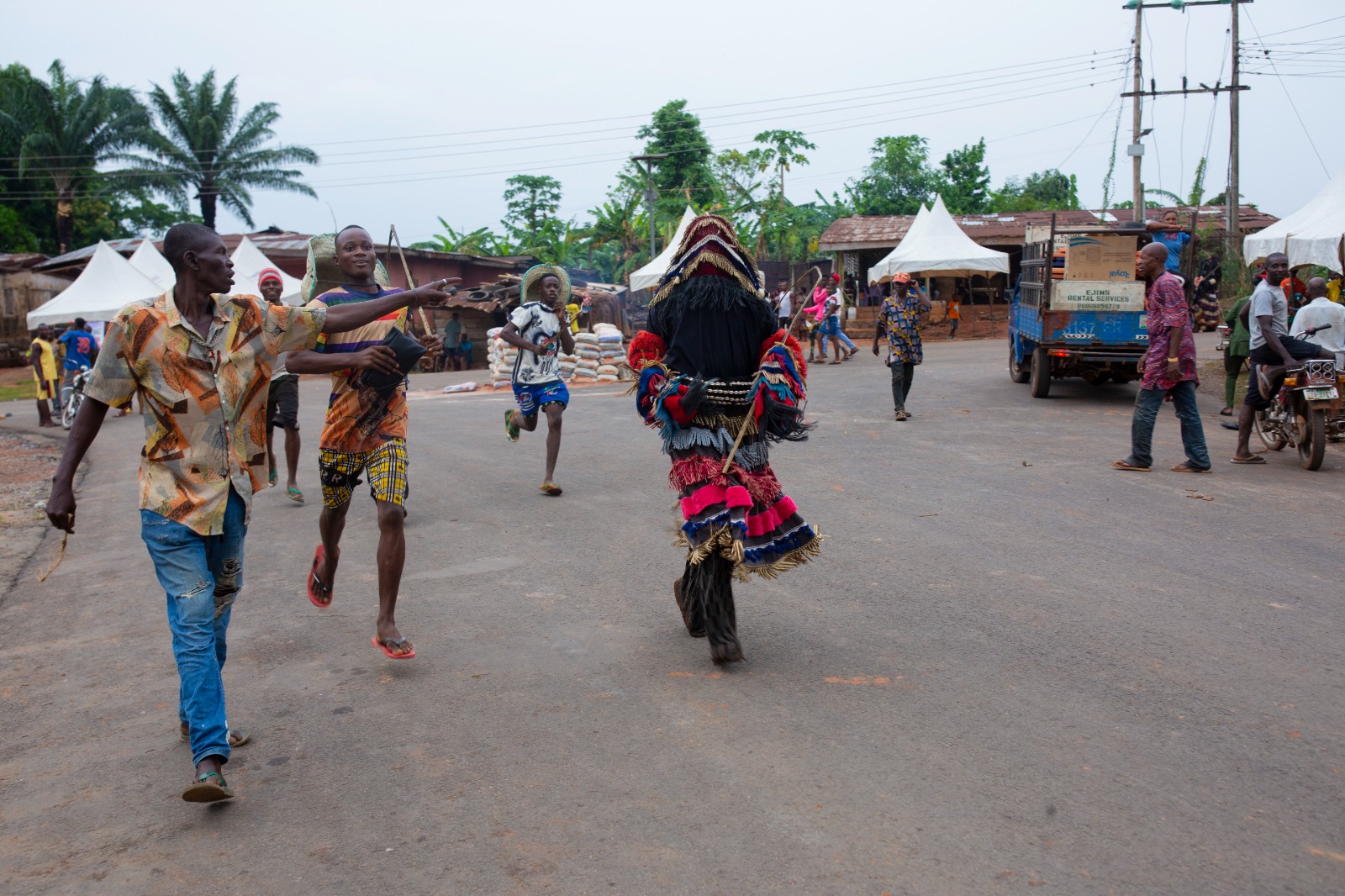 What happens when a culture loses its storytellers? Who preserves the legacy of a people if not those who live within its history? These are questions that resonate deeply in Nigeria’s ongoing cultural discourse, and few have answered them as compellingly as Emmanuel Solate. In his recent article, Ikeji Festival 2024: Celebrating Unity, Ancestors, and Sustenance, Solate not only documents the annual Ikeji Festival of Arochukwu but also contextualizes its enduring significance in an era where cultural erosion is a looming threat. His work is a clarion call for the preservation of traditions, blending historical insight with contemporary reflection.
[ad]
The Ikeji Festival, an age-old celebration among the Arochukwu people of Abia State, is steeped in symbolism. Marking the end of the agricultural year, it is a thanksgiving ritual that honors the ancestors and acknowledges the land’s bounty. Solate’s portrayal of the festival is immersive, bringing to life the pulsating beats of the ikoro drum, the flamboyant masquerades, and the communal spirit that binds the people together. His ability to paint a vivid picture of the event, while simultaneously interrogating the cultural shifts that threaten its continuity, makes his work a vital piece of ethnographic storytelling.
One of the most striking elements of Solate’s article is his exploration of the festival’s deeper meanings. He doesn’t merely describe the revelry; he delves into the philosophy that underpins it. The Ikeji Festival is not just about feasting and performance—it is a spiritual bridge between the living and the departed. It is a reaffirmation of unity, a moment when the diaspora returns home to reconnect with their roots. In an age where many African traditions are being diluted by globalization, Solate’s narrative underscores the urgency of cultural preservation.
Beyond the festival itself, Solate raises critical questions about the commercialization of indigenous traditions. He acknowledges that modernization is inevitable but cautions against the loss of authenticity. The influx of corporate sponsorships, the rebranding of rituals for tourist consumption, and the encroachment of Western influences threaten to strip the Ikeji Festival of its original essence. His article serves as both an appreciation and a warning—a celebration of what remains and a call to protect what is left.
Solate’s advocacy for cultural sustainability extends beyond the written word. As a filmmaker, researcher, and creative entrepreneur, he is a vocal proponent of the arts as a medium for cultural expression. His contributions to the upcoming Cultural Canvas, Arts, and Festival Exhibition are an extension of his literary and cinematic endeavors. The exhibition, a melting pot of artistic interpretations, is set to showcase indigenous narratives through film, photography, and performance. It is here that his work will transcend text, becoming a visual and auditory experience that immerses audiences in the beauty of Nigeria’s heritage.
At the heart of Solate’s mission is the belief that storytelling—whether through writing, film, or exhibitions—is a tool for empowerment. His work challenges younger generations to embrace their cultural identity not as a relic of the past but as a living, evolving force. The Ikeji Festival is a metaphor for this ideology: tradition and modernity need not be opposing forces; rather, they can coexist in a dynamic, symbiotic relationship.
As the Cultural Canvas, Arts, and Festival Exhibition approaches, Solate’s message is more pertinent than ever. Culture is not self-sustaining; it thrives when nurtured and shared. His work reminds us that the preservation of heritage is not the sole responsibility of historians or custodians—it is a collective duty. Through his writing, filmmaking, and advocacy, Emmanuel Solate is not just chronicling culture; he is ensuring that it endures.

In a world that is constantly changing, voices like Solate’s serve as cultural sentinels, urging us to look back even as we move forward. The Ikeji Festival is more than a celebration—it is a statement of identity. And thanks to storytellers like Emmanuel Solate, that identity will not fade into obscurity but will continue to resonate for generations to come.
[ad]

