 Follow Us on Google News
 Follow Us on Google Discover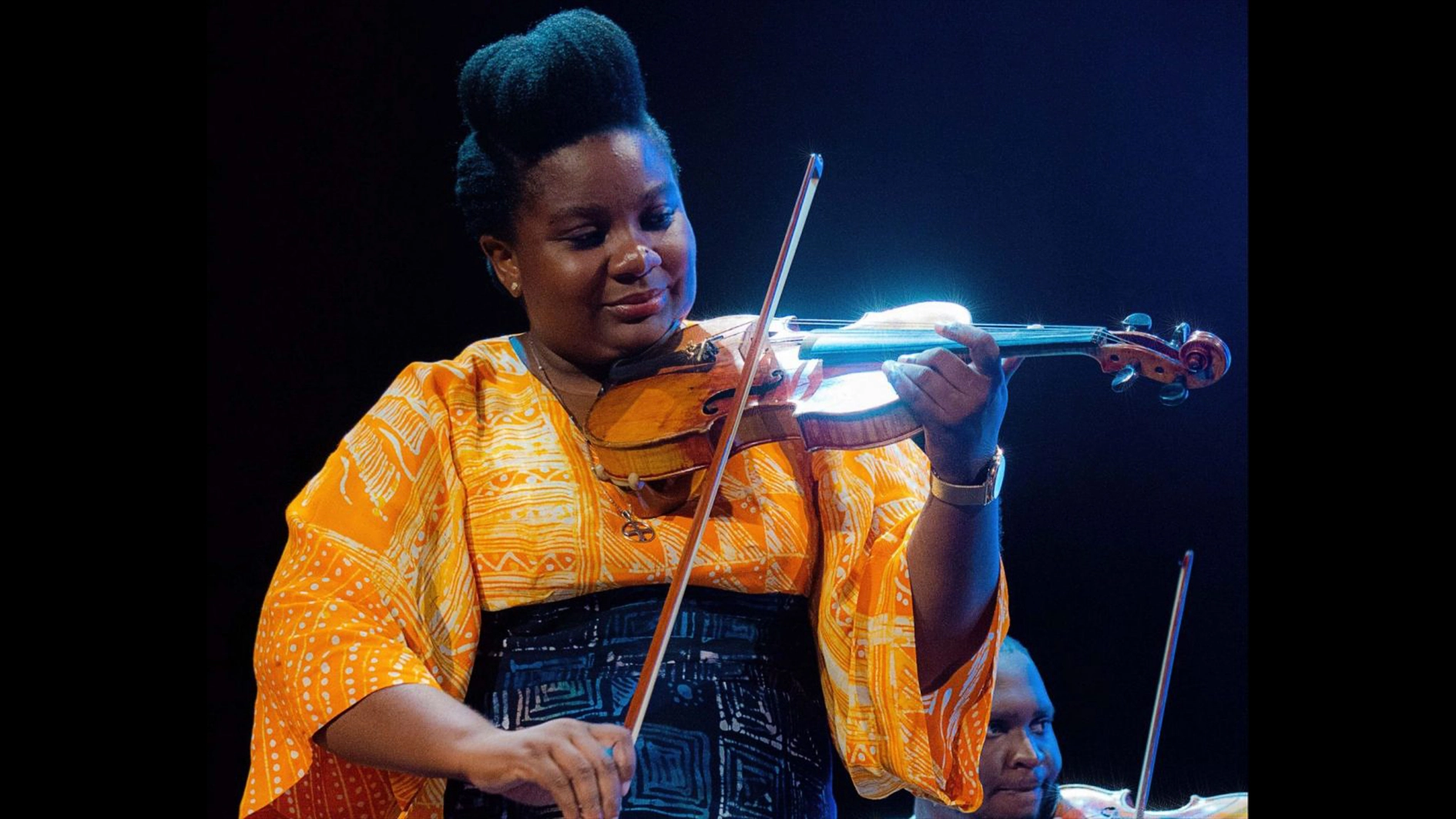
One of the forms of art brought to Nigeria by Europe’s infiltration of the continent is opera. By definition, opera is a unified performance, which combines various art forms, basically music and drama. However, as an art form, it has not enjoyed deep rooted appreciation as a performance art.
Founder/CEO of Vesta Orchestra and Opera Foundation, Rosalyn Aninyei, is one person who is burning the flame of opera.
Having lived and worked in Vienna, Austria for over a decade, inspired by the vibrant musical culture of the city, the violinist is looking to create a world standard stage for the many talented performing arts professionals in Nigeria. She returned home to Nigeria in 2016 to found the Vesta Orchestra and Opera Foundation in 2016. “We are 10 this year, and would be rolling out beautiful operatic and musical works to celebrate,” she says.
Recently, Aninyei re-imagined Wole Soyinka’s The Trials of Brother Jero as an opera. The opera is a groundbreaking adaptation of Wole Soyinka’s classic play, set which debuted at the National Theatre in Iganmu, Lagos. Directed by Aninyei and produced by Vesta Orchestra, the opera featured a 50-man orchestra, 25-man chorus, and aims to bring Soyinka’s satirical work to a broader international audience.
She hopes this production will contribute to the future of Opera and musical theatre in Nigeria. The violinist adds, “I hope the government would join us as we try to provide more affordable performance houses. The current state of things puts things out of our reach financially.”
When she was asked reason for this, an art form, she smiles, “I believe we have very many stories to tell. Some we have told and retold 1000 times. This is a timeless story. I grew up going to the National Arts Theatre with my mum and siblings to watch various plays and even then, as a music student, I wanted to hear more instruments and more music in these plays. Going to the opera in Vienna repeatedly as an adult, it occurred to me that there would be people in Nigeria like me, who enjoy the drama, spectacle and music of opera.”

On the choice of Lagos as the ideal city for the premiere? Aninyei had this to say: “The National Arts Theatre is domiciled. Growing up, the theatre was the gathering point for art performance in West Africa. I felt to begin this journey here, would be the natural thing to do.”
Why did she feel it was the right time to stage this work in Lagos?
“I wanted to hear more instruments and more music in these plays. Going to the opera in Vienna repeatedly as an adult, it occurred to her that there would be people in Nigeria like her, who enjoy the drama, spectacle and music of opera,” she confesses.
She wanted audiences to go away with their hearts full of beautiful music and their minds recharged by joy. The audience was elated. On the opening night, “We had laughter from start to finish,” she reveals.
In transforming a satirical play into an operatic experience, she consulted with composer Dr Seun Owoaje on how to begin. He told her Librettist would need to take the play from story to verses and then he can compose music to the verses. She also consulted songwriter/composer Kehinde Oretimehin and he wrote the Libretto, after which, Owoaje composed the music.
To preserve the humour, satire, and social criticism of the original play while adding music and operatic form, there was a continuous melody with recitatives and arias in every scene, and the orchestra driving the entire narrative home. The singing and continuous music element in opera added an intense emotional dimension, which just speaking may not convey.
The collaboration between the music team, cast, choreographers and designers was smooth from start to finish. “Most of us had performed Jero at some point in school. It is a familiar story, and the humorous nature made it easy to approach our goal in harmony.”
“Opera as an art form, is full of drama and humour. Nigerians are equally full of drama and humour. This was an easy marriage . What new dimensions does opera bring to ‘Brother Jero’ that spoken theatre may not?”
What were the biggest creative risks in adapting such a well-known literary work?
Aninyei explains, “in Opera, you do not get to hear everything being sung. We also could not take the entire book into Libretto, as the songs would have been too many. So we had to see which scenes to summarise and which to perform in their entirety. A few criticisms have come about one or two scenes missing a bit of dialogue, but on the whole, I believe the story was properly performed. Without loopholes.”
What were the biggest production challenges in mounting an Opera of this scale?
She says, “This was my first time directing, and I chose an Opera. Potential sponsors did not understand what I was talking about, seeing as the art form is not common to us. So funding was a major issue. Now that we have an example, it is my hope that going back to them produces a positive response the second time around.”
Aninyei saw it as both social commentary and entertainment. But made the commentary even more contemporary, by the sheer fact of this new iteration of the book.
“Nigerians performing an Opera of a Nigerian work. Beautiful,” she quips.
She hopes this opera will spark about faith, power, and performance in public life. She sees see this as part of a broader movement to reinterpret African literary classics for contemporary audiences. “It definitely is the case for the Vesta Orchestra. We will be telling more of our Nigerian stories as Musicals and Operas. There is a hunger for African stories globally. We must be the ones to tell them,” Aninyei says.
“I had a lot of young people call me from LASU, UNILAG, OAU, University of Ibadan theatre arts departments, all looking to come watch the show. Why, I asked? Their answers were all the same. They want something different. They are interested in new iterations of our stories. They want to be there when the first full Opera of a Nigerian work is performed.
It tells me people need us to approach ‘Nigeria’ anew,” she remarks.
Already, there are plans to tour the production or take it to international festivals. She is filled with gratitude for the level of talent the country has.
“Around every street corner is a genius; and my work allows me interact with many of them,” she confesses.
Born Rosalyn Awelekanma, she is a graduate of International Development with a Master’s in International Business. She studied Violin at the Vienna Conservatorium School of Music, and Essentials in Orchestra Management at the Juilliard School, New York. She is a member of the League of American Orchestras.

