 Follow Us on Google News


 Follow Us on Google Discover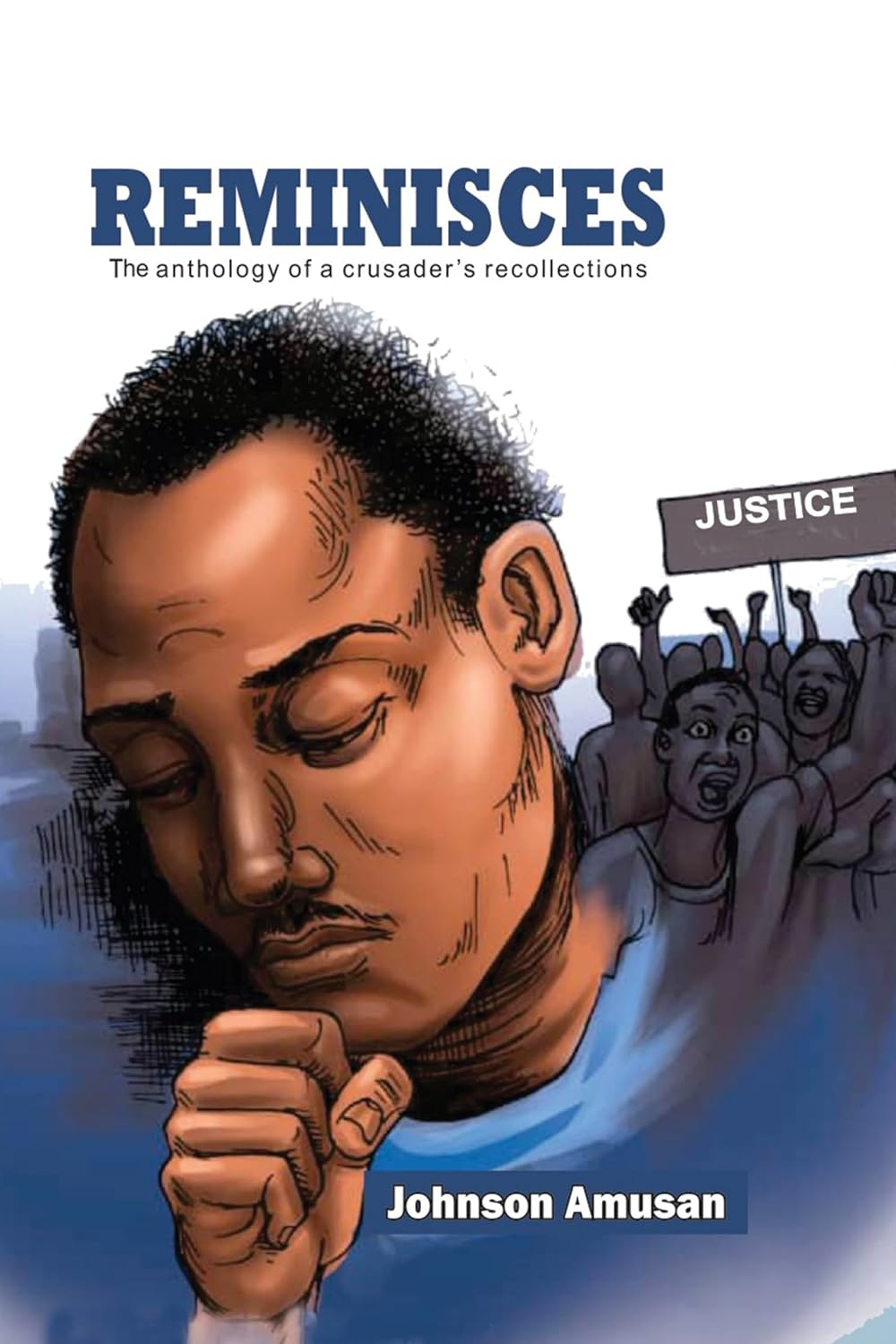
In Reminisces: The Anthology of a Crusader’s Recollections, Johnson Amusan offers readers a catalogue of verse that stretches across memory, protest, lamentation and tenderness.
At 84 pages, the anthology is not only a poetic record but also a reflection of the contradictions of a nation and the resilience of its people. The book is divided into five chapters, each exploring different shades of human experience. Amusan moves from ‘innocence’ to ‘melancholy’, from the fires of ‘activism’ to the resilience of ‘hope’, and finally to the gentleness of ‘love’. Across these shifts, the poet maintains a voice that is unflinchingly candid, a voice that is at once personal and national.
The first chapter, Innocence, sets the tone with poems that dwell on childhood, environment and cultural identity. Works such as My Mother and The African Child highlight affection, nurture and the vibrancy of early life.
In Eko, Amusan paints an impressionistic portrait of Lagos, capturing both its energy and its disorder. Even in these early pieces, where childhood and play might be expected to dominate, the undercurrent of hardship and societal imbalance is present.
Thissignals to the reader that Amusan’s recollections, even when rooted in beauty, cannot escape the shadows of a difficult society. From this stage, the poet moves into Melancholy, a chapter that deepens his exploration of loss, despair and the contradictions of existence. Poems such as Song of Sorrow, Crossroads and Life invite readers into moments of reflection on the fragility of being.
In What an Epoch, Amusan laments the irresponsibility of world leaders in an age marked by destructive inventions and political turmoil. This piece, like others in the section, emphasises the loneliness of individuals caught in vast structures of power and violence.

In I Remember All, nostalgia turns bittersweet as memories of a troubled past blend with faint hope for redemption. Through these verses, Amusan establishes himself as a poet unwilling to romanticise history; instead, he excavates it, showing scars that continue to define present realities.
It is in Activism, the third chapter, that Amusan’s crusading voice rises to its loudest pitch. This section reads like a poetic manifesto, where silence becomes impossible in the face of oppression. In Silence Peace, he revisits the brutal years of military dictatorship in Nigeria, invoking the haunting memories of Kudirat Abiola and Ken Saro-Wiwa.
The tone is both elegiac and enraged, reminding readers of voices cut short and lives wasted by authoritarianism. Concentration Camp shifts the lens to the rot in education, describing institutions where exploitation and despair thrive instead of enlightenment.
It Must Stop becomes a refrain of insistence against corruption, decaying infrastructure and social neglect. These poems are not abstract musings; they are blunt protests, written with the urgency of a citizen refusing to accept silence as peace.
The chapter further includes The Slumbering Giant, a parody of Nigeria’s claim as the giant of Africa. Amusan questions the validity of this title when the leaders are barren of ideas and youths are wasted by unemployment and poverty. The use of “her” for the nation underscores his sensitivity to language, though it also raises questions of gendered representation in literature. Still, his intention is clear: Nigeria cannot continue to posture as a giant while the people languish in want.
Other poems such as Shades of a Coin, The Bushman and Rain, Go Away expand this critique, tackling nepotism, the hypocrisy of modern civilisation and the symbolic violence of neo-colonialism. Destiny is particularly striking for its refrain of vision: thieves as kings, fraudsters as kingmakers, the brilliant made subordinates to the mediocre. Such lines resonate deeply with contemporary frustrations about governance and justice.
Amusan’s skill in code-mixing, weaving Yoruba phrases into English lines, enriches some of these poems. In Wundia Meji, for instance, the interplay of language adds layers of cultural depth and irony, showing how indigenous forms still serve as vital vehicles for truth-telling.
In Reminiscences: The Anthology of a Crusader’s Recollections, Johnson Amusan has produced a body of work that functions as memoir, protest and love letter. It is a book that laments, but also one that dreams. Above all, it is a testament to the poet’s refusal to be silent in the face of injustice and his insistence that even amid ruins, love and hope endure. In these pages, the reader encounters the soul of a crusader whose recollections are not only his own but those of a nation still searching for redemption.

