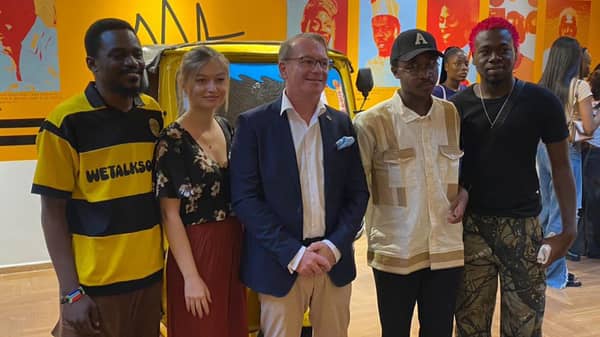
The Alliance Française de Lagos/Mike Adenuga Centre recently played hos to the opening of Mara Mania, an immersive and innovative exhibition documenting the rise of Mara, one of Lagos’ most dynamic underground music and dance movements.
The exhibition, which runs until December 20, is a partnership between the Embassy of France in Nigeria, Alliance Française de Lagos, Creation Africa Nigeria, Kadima, WeTalkSound and Improv. It features interactive installations, archival materials, and multimedia displays chronicling the genre’s evolution from Lagos Mainland streets to international recognition.
Speaking at the opening, Consul General of France to Nigeria, Laurent Favier, expressed his fascination with the movement. “I was very astonished to learn that Mara means ‘street’ or ‘madness’. Considering the sound of the music, I was not surprised to see that the BPMs are crazy, are speedy,” Favier said, adding that the French Embassy’s support through the Creation Africa Fund reflects its commitment to amplifying youth-led cultural expressions.
Co-curators Anthony Dike and Marianne Ournac worked directly with the Mara community to ensure authentic representation. “It was very important for us to engage with the Mara community, as well as with people that work within the music space,” Dike explained. The team collaborated closely with Kadima, a central figure in the movement, who approved all research and documentation before inclusion.
Every TikTok dancer featured in the exhibition signed consent forms, and all artists received proper attribution—a deliberate effort to center community voices in the storytelling process.
The exhibition is structured as a journey through “bus stops,” with each section exploring different aspects of mara culture. The timeline is presented as the “Mara Forex,” styled after trading charts to reflect the movement’s ups and downs while referencing forex trading, an activity some community members engage in.
Key pioneers featured include the late Odogwu Mara, DJ YK Mule, DJ Cora, and DJ Khalipha. The exhibition highlights a significant milestone: DJ Khalipha’s recent performance at Uganda’s Nyege Nyege Festival, where world-renowned producer Skrillex played his music, signalling Mara’s growing global reach.
Interactive installations allow visitors to experience Mara firsthand. The ‘wall at the edge’ uses projection software to let visitors learn dance moves by superimposing their image over a dancer’s. A charging centre installation displays TikTok videos on phones wired together with generator cables, mirroring the neighbourhood charging stations where many Mara creators power their devices to produce content.
“People need to take their phones sometimes to charging centres to charge them so that they are able to create videos like this,” Dike noted, explaining the installation’s connection to Lagos’ infrastructural realities.
A Keke Napep stationed in the exhibition invites visitors to cover it with stickers, recreating the decorated tricycles common on Lagos streets. Another station features MPC machines loaded with stems from DJ Khalipha, allowing attendees to create their own Mara beats while watching the software convert sound into visual audio spectrums.
When asked why document Mara now, Dike emphasized the importance of cultural preservation. “It’s not about why now. It’s about being mindful and showing up,” he said. “Our job is to pay attention to something that is happening and being able to tell a story about it so it doesn’t disappear.”
Mara’s roots trace back to 2007, when artists began experimenting with departures from traditional Afrobeat. Influences from artists like Daddy Showkey and movements like Shaku Shaku and Zanku helped shape the genre, which gained widespread recognition in the 2020s.
The opening continued Friday evening at Freedom Park with the Mara Mania Live showcase, featuring performances by leading mara DJs and dancers and the premiere of a WeTalkSound documentary on the movement.
Visitors leave with personalized postcards created using stamps representing different mara elements—music, dance, sound, or favourite artists. The takeaway reflects the exhibition’s goal of fostering contribution, not just consumption.
The exhibition demonstrates how underground movements can be documented in institutional spaces while maintaining authenticity and centering the communities that created them.