In an era when technology often distances us from our roots, Zainab Odemwingie demonstrates that technology can also enable profound reconnections with the past through her ‘Aruan the Giant’. This ground-breaking Virtual Reality (VR) work created by the digital artist transports viewers into the heart of ancient Benin City. The immersive experience exemplifies what VR can achieve when artistic vision meets cultural reverence.
I have, for over a decade, advocated—through my publications, artworks, and exhibition reviews—for the inclusion and promotion of digital tools in art practice and exhibition. This project is a direct response to that call.
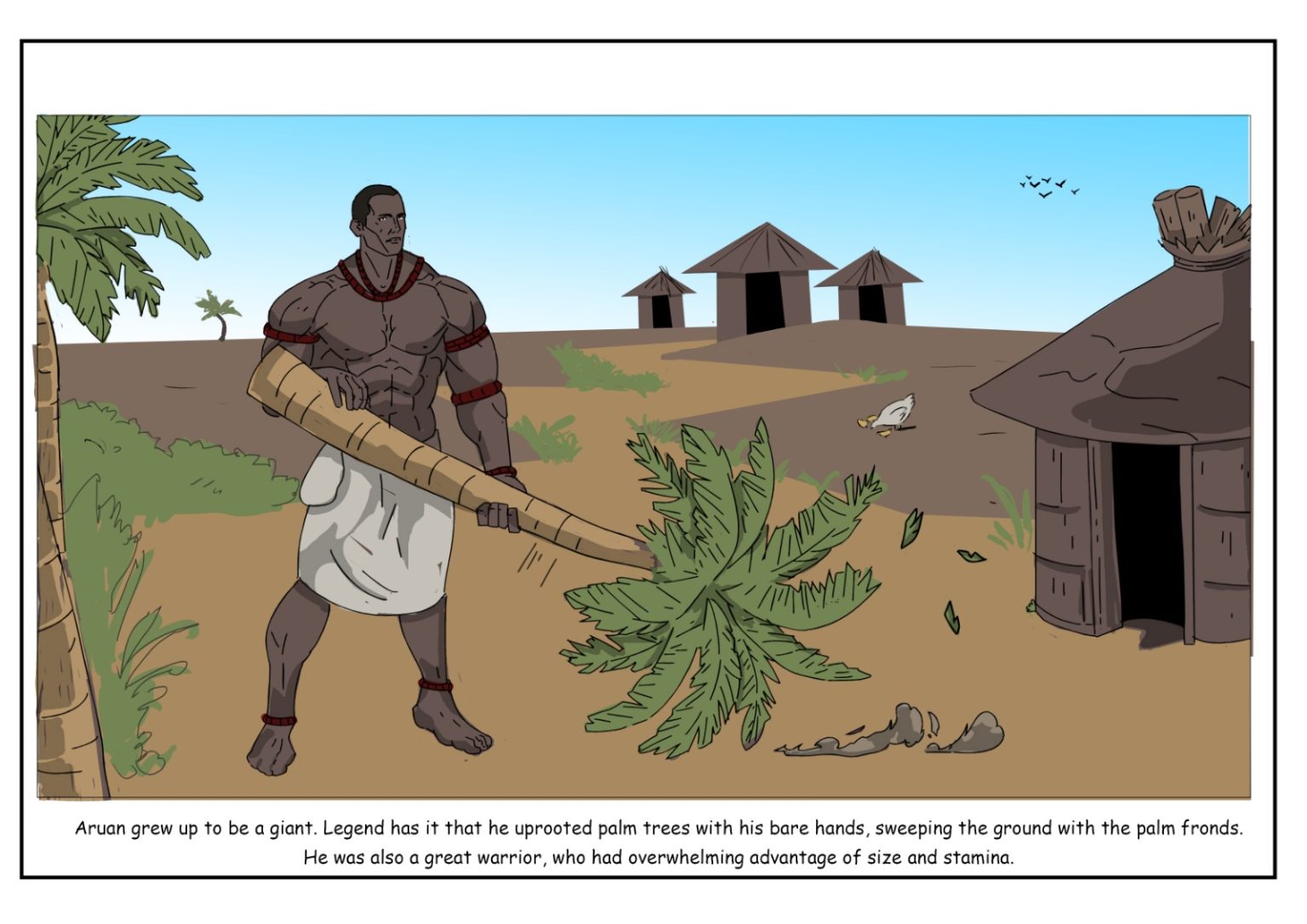
One scene of the three-minute recorded experience places the viewer within the palace, while another shows Aruan gently sweeping the compound with a palm tree. Aruan the Giant arrives at a crucial moment for virtual reality as an artistic medium for culture and heritage preservation. After years in which technological promise often outpaced meaningful content, projects such as this reveal what becomes possible when creators prioritise substance. This is real artistry that happens to employ virtual reality as its canvas, reshaping how we relate to culture.
The environmental detail—the colours, the textures, the surface patterns, and the dress code—has been executed with artistry and cultural inclination. The genius of Aruan the Giant lies in its positioning of the viewer alongside the giant himself. These virtual encounters invite genuine participation, demonstrating how, through contemporary media, culture can be transmitted across countless generations. This understanding presents the work with global applicability while remaining firmly rooted in its cultural origins of Africa.
The project further demonstrates that when language flows naturally through dialogue—supported by subtitles where and when necessary—Extended Reality can be effectively used to preserve the intangible aspects of cultural heritage. The artist here clearly understands the need to construct a bridge across time and distance. The decision to use virtual reality (VR) acknowledges that culture is not merely observed, but felt, practiced, and lived. While the narrative structure the recorded experience follows a linear path, the experiential design allows users to explore at their own pace, enhancing engagement. The visual design deserves particular acclaim. The inclusion of a short folkloric account of the giant deepens understanding and engagement, adding a meta-layer that enriches rather than interrupts the primary experience. In this way, the project models how technology can facilitate cross-cultural dialogue rather than appropriation.
For diaspora communities, ‘Aruan the Giant’ and similar projects, offer something invaluable: an opportunity to reconnect with traditions that geography, history, and circumstance may have placed beyond physical reach. For other viewers, the project provides a window into worldviews and practices that deserve far greater visibility in our increasingly interconnected world. For virtual reality itself, it establishes a new benchmark for cultural experiences, offering insights into questions of identity. Long after the experience ends, users carry with them sounds, images, and emotional impressions that remain vivid. Zainab’s ‘Aruan the Giant’ is a landmark achievement that signals virtual reality’s emergence as a serious artistic medium capable of fostering genuine human connection across boundaries that too often divide us. This is novel in Africa and globally.
Painting and Other Arts
Zainab is an artist with a rare combination of skills, carefully curating her subjects with emotional timbre. She served as Lead Curator for the recently concluded Jephthah Ohiomokhare Sickle Cell Foundation exhibition, organised as part of a public advocacy blood-donation drive held at Rock Event Center, Abuja on 15 December 2025.
Zainab trained at the Department of Fine and Applied Arts, University of Nigeria, and has a solid foundation in works across a wide range of media to create impactful pieces that reach audiences both physically and virtually. These distinctive capabilities have set her apart. Although originally trained as a visual communicator, her practice now spans oil-on-canvas paintings exhibited internationally—such as Faces of Ancestry (2021), shown at TEDx, Abuja and the Njabala Foundation Exhibition in Uganda, and My African Baby (2025), exhibited at the Boomer Gallery, London—to comics like ‘Aruan the Giant Prince of Benin Kingdom’ and animated films. She also integrates QR codes into her artworks, enabling viewers have deeper cultural context and symbolic engagement and interpretation.
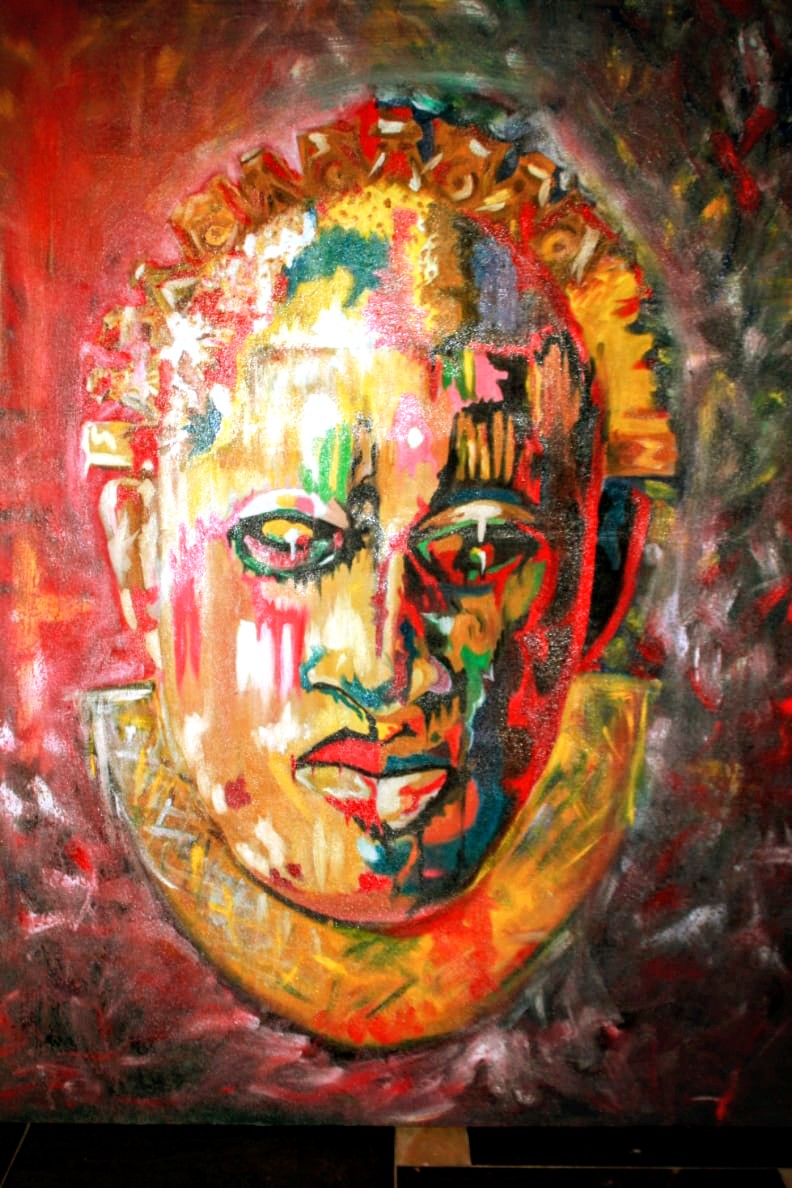
Zainab consistently pushes boundaries and as a role model for female artists will leave deliberate footprints in the art scene. She inspires designers working with culturally inspired textiles and fashion accessories, and she continues to expand virtual experiences through collaborations with industry experts and historians. These projects aim to include ceremonies, events, ancient architecture, dances, musical instruments, and other cultural elements at risk of extinction. She is currently developing a series of paintings on Benin artefacts, a body of work poised to set new standards and shape future narratives.
The use of Extended Reality in her practice creates worlds that breathe with life, activity, and purpose—worlds that enable genuine participation. Users can learn language, dances, and oral histories; listen to stories shared under moonlit courtyards around bonfires; or sit beneath the shade of trees as elders recount origin myths and moral lessons passed down through generations. Through haptic feedback, users may even feel the vibration of ceremonial drums, transforming the physical body into part of the narrative. Such ceremonial practices must, however, be presented with appropriate context and gravity, never reduced to spectacle or entertainment.
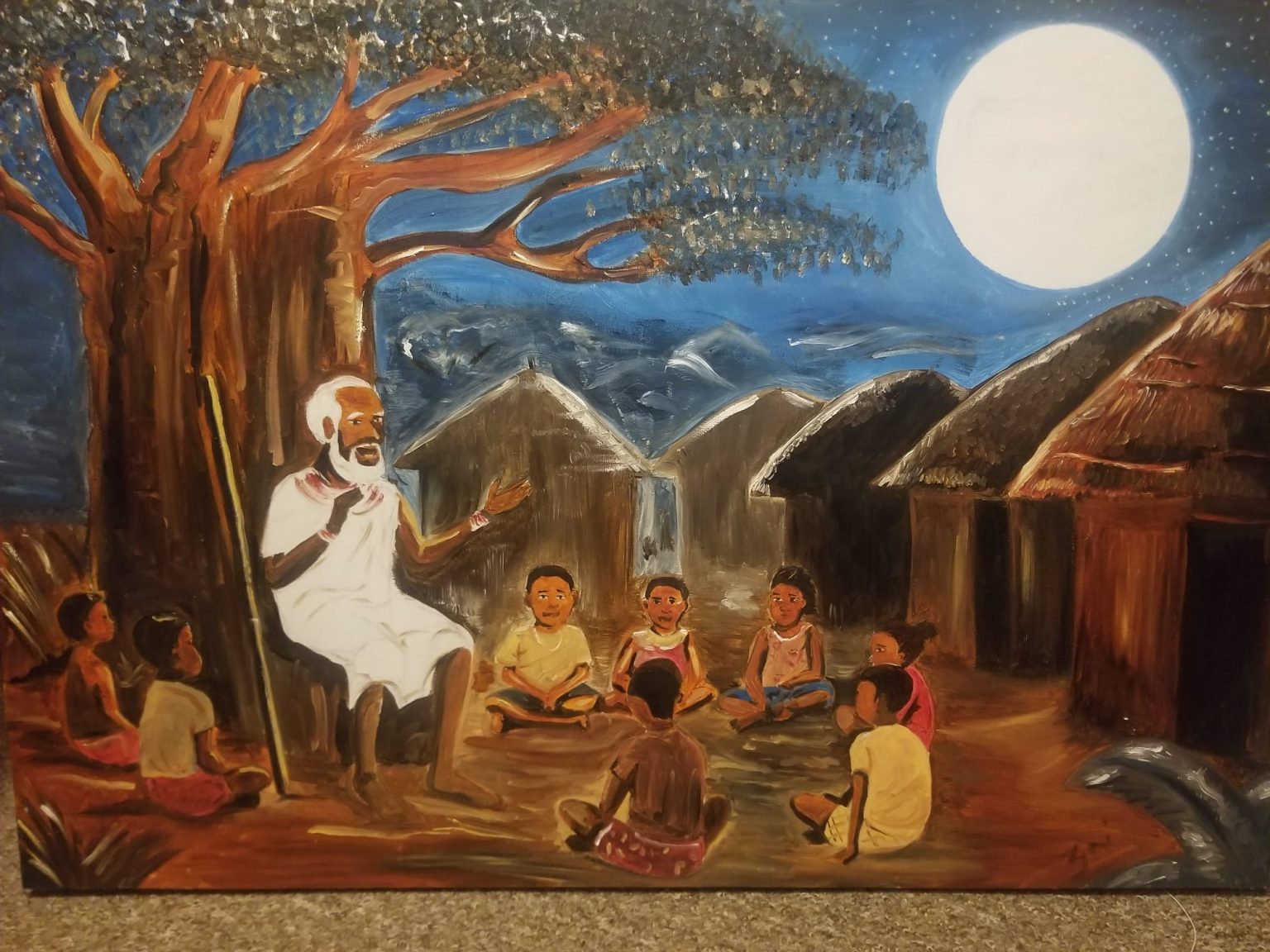
For example, participation in an age-grade ceremony—watching symbolic patterns painted onto one’s virtual arms while elders sing blessings—dissolves the boundary between observer and participant. When combined with spatial audio and carefully calibrated acoustic properties, the result is complete auditory immersion that supports and enhances every visual element. This portal can further extend into explorations of pre-colonial trade routes and systems of exchange.
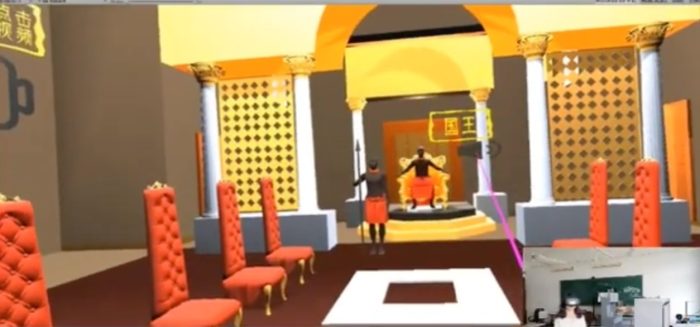
As a digital artist, and drawing from the creative potentials I see in Zainab’s works I strongly advocate for the early inclusion of digital media in the pedagogy of art learning among young people to foster deeper understanding and practical engagement with the possibilities of Extended Reality. I also believe that integrating virtual reality experiences into history curricula will significantly enhance students’ comprehension of, and engagement with, art, culture, and history.
Trevor Morgan teaches visual communication design and computer graphics at the Department of Fine and Applied Arts, University of Nigeria, Nsukka from where he graduated with first class Honours before proceeding to Oxford Brookes University for a master’s degree in digital media production and Ph.D. in Visual Art from University of KwaZulu-Natal. A multivalent artist and scholar, his research and practice interests have dwelt on cultural communication, visual cultures, transmediatory art, eco-aesthetics mediated through the digital and bordered by the visual.
Contact: Department of Fine and Applied Arts, University of Nigeria, Nsukka, Enugu State, Nigeria.
E-mail: [email protected]