 Follow Us on Google News


 Follow Us on Google Discover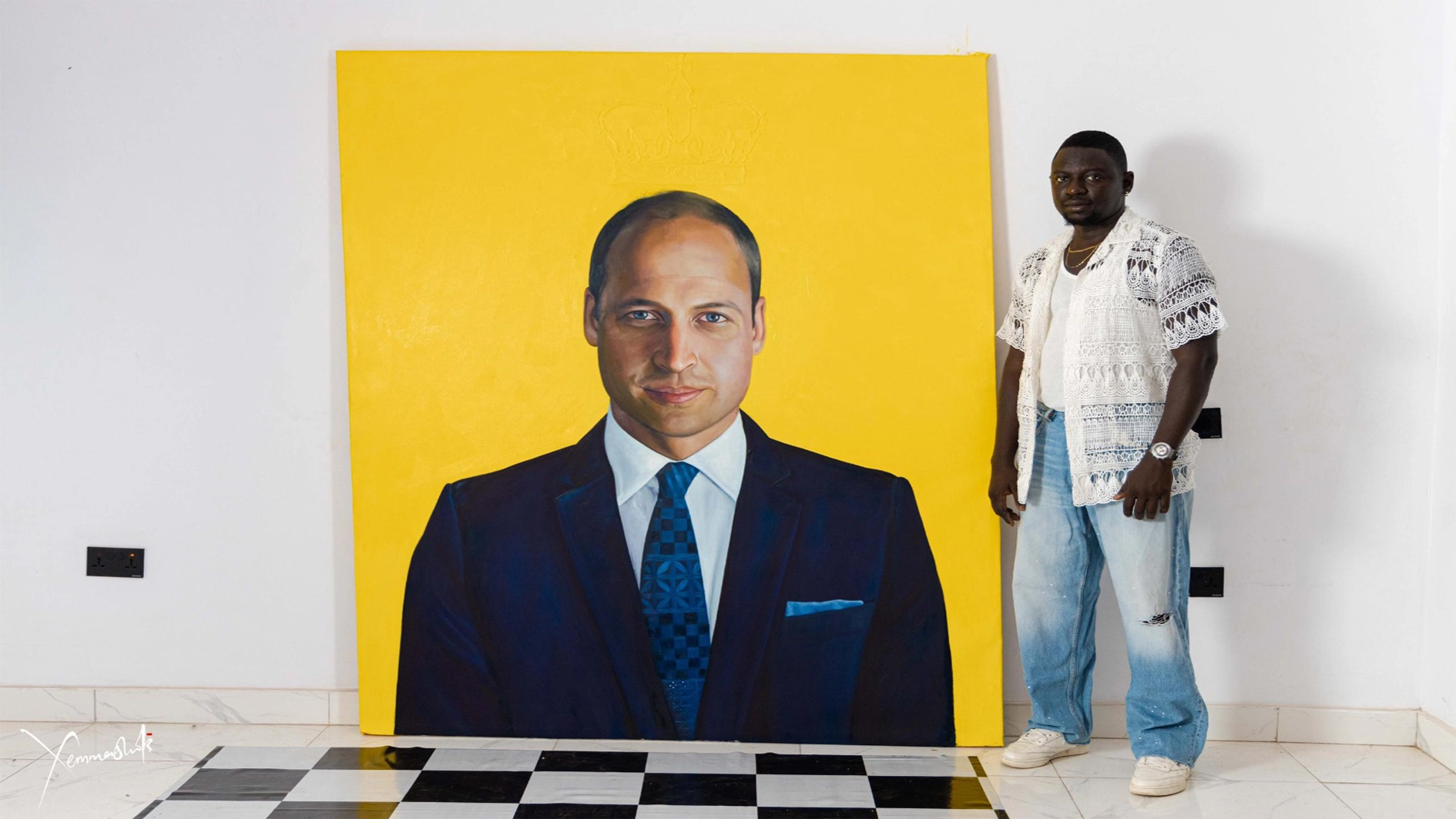
A Nigerian artist, Oluwole Omofemi, recently did a portrait of Prince William. And it’s generating a lot of attention. “The response so far has been very strong and encouraging. What interests me most is that different people have brought different interpretations to the work. That is always rewarding because it means the painting is alive beyond my own intentions,”Omofemi says.
This portrait of Prince William continues a conversation he started with his painting of Queen Elizabeth II. While her portrait was rooted in a sense of permanence and long history, this one feels more like a moment in transition—someone who carries that history, but is also stepping into what comes next.
“This work grew out of my continuing interest in portraiture as a way of exploring identity, memory, and presence. I was interested in creating an image that goes beyond likeness and tries to communicate character and emotional weight. The timing felt right because we are in a moment where public figures are constantly seen, but not always deeply observed. I wanted to make a portrait that invites people to look again,” Omofemi confesses.
With a confident gusto, he adds, “I am interested in figures whose presence carries cultural, historical, or symbolic significance. But for me, it is never just about visibility — there has to be something deeper that can be explored through paint.”
When he was approached by Tatler to do the portrait of Prince William for the cover, he searched all over the internet for inspirational images. He came up with a few that inspired him, from how they brought out the Prince’s essence and gave a sense of what kind of a prince he is and what kind of King he could become. “I printed all of them and studied them. There was one image in particular that I found on google that made him look very grand and I used that as my base inspiration. The way I work is I start doing some blockings on the canvas based on how I interpret the image and then I pick the colours and designs I may want to add. In this case, I went with the yellow to mirror the Queen’s portrait done a few years ago, to symbolise the past and future. I also added a crown on top of his head as a symbol of the future king. In addition I included certain elements of my own heritage such as the designs on the tie, which mean a lot to me and where I grew up,” he notes.
“When I worked on this piece, I wasn’t trying to make something overly grand. I wanted it to feel present, calm, and relatable. There’s a quiet energy in the portrait—not loud or dramatic, but thoughtful. It’s about showing responsibility in a way that still feels human, something people can connect with without needing too much explanation, “he says.

In the end, these portraits are less about two individuals and more about a shared story: Queen Elizabeth and her grandson. Both portraits speaking to legacy, continuity, and change. “This work, in particular, sits in that in-between space—where the past is still present, and the future is slowly taking shape,”Omofemi quips.
“I worked with oil on canvas. Oil gives me the depth, richness, and flexibility I need in portraiture. It allows me to build the painting gradually through layers, creating subtle transitions in tone, texture, and atmosphere. For me, oil helps carry both the emotional weight and physical presence I want the work to have,” he reels.
he yellow tone, which also appears in the Queen’s portrait, became a natural link between the two. In both works, it speaks to royalty and continuity, but in Prince William’s it feels softer, more open—like something that is still evolving. It connects the two portraits as part of the same story, while still allowing each one to stand on its own.
“There’s also a faint image of St Edward’s Crown within the piece. I didn’t treat it as something fully present or possessed, but more as something approaching. Its faded quality reflects that sense of inheritance—something not yet fully claimed, but already felt. It carries a certain weight, more expectation than authority. In that way, it ties closely to the title Heir, placing the portrait in that space between becoming and being,” he says.
He also included subtle references to African textile traditions. They’re not meant to stand out immediately. “I wanted them to sit quietly within the work, adding depth without taking over. As an African artist, it’s important for me to bring my perspective into what I do—but in a way natural and honest,” Omofemi shares.
The portrait of Queen Elizabeth II engaged more directly with history, continuity, and legacy. This work is more immediate and contemporary. It is less about institution and more about the tension between public image and inner humanity. So, while both are portraits of major figures, they speak in very different emotional languages.
“My expectation is simply that the work creates conversation. Beyond recognising the subject, I want people to engage with the painting emotionally and think about what portraiture can still communicate today,” he gladly says.
“After this I want to keep pushing my work further — developing new ideas, new bodies of work, and continuing to grow as an artist both in Nigeria and internationally.”

