 Follow Us on Google News


 Follow Us on Google Discover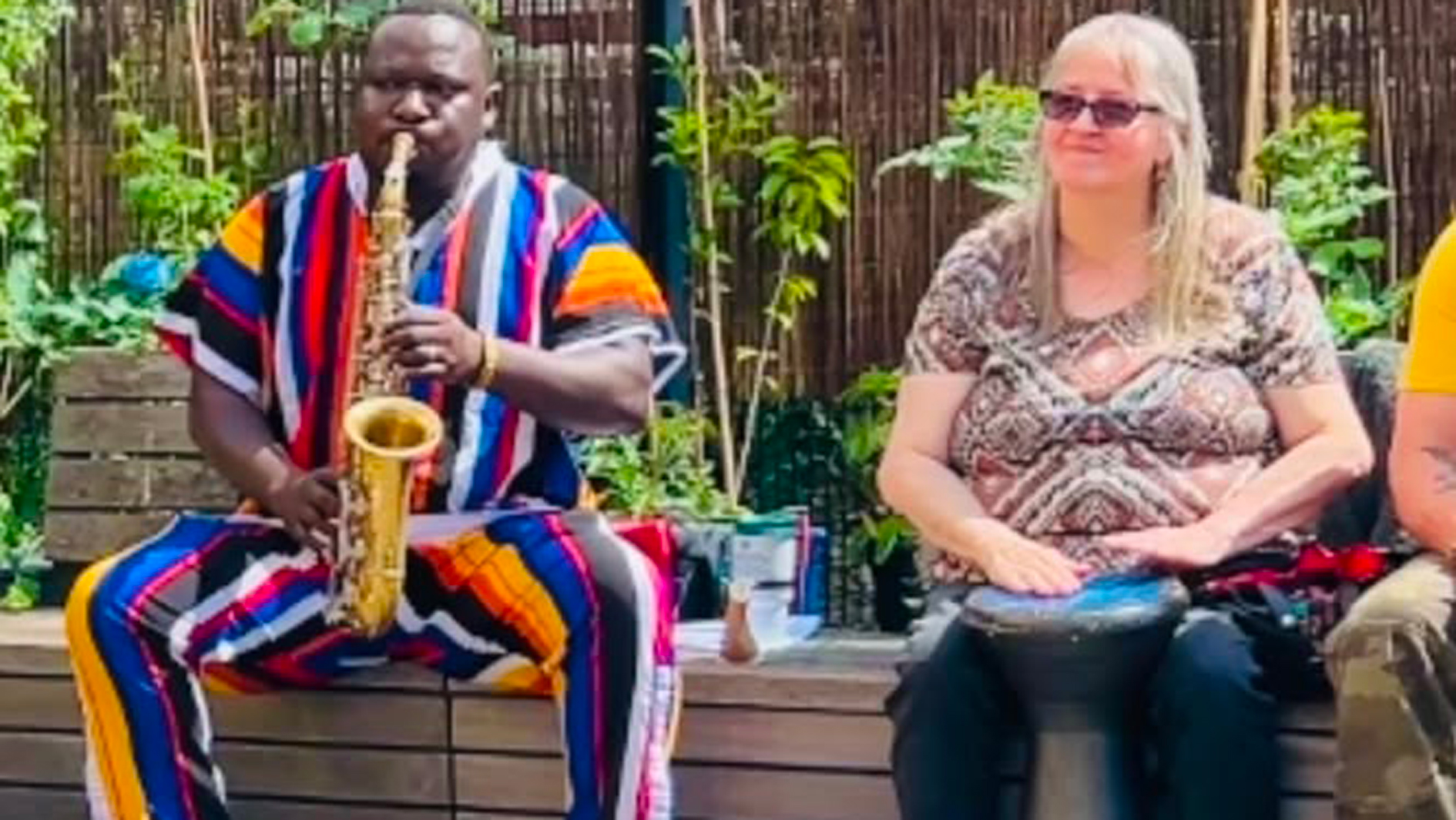
Nigerian saxist and participatory artist Olamide Phillips Olaniyan, professionally known as Olamide Sax, ran a unique workshop performance as part of activities for the community festival titled Collective Routes & Beyond, which was held at the Danum Gallery, Library and Museum in Doncaster, England. The cherry on the cake for Olamide Sax’s showcase was the symbiosis between the audience and the performer.
The performance saw Olamide Sax bring together a variety of cultures to form a universal beat that anyone could join. He brought the saxophone out of the musical universe and up into a place of crossing over between people and fostering community. It enabled people to participate and be part of it, creating a unique sound that was produced through the group’s collaboration.
One of the wonderful things about participatory art is that you can turn the passive viewer into the active participant. During this session, when people were initially just watching, they began to perform themselves, and developed confidence as they repeated their actions and collaborated with each other. The atmosphere of Olamide’s workshop was very casual and warm. It was a very good method of making it accessible and fun. As people began to feel more comfortable, they began talking and contributing much more. This was a good session to show how participatory arts can bring people together and make them feel confident and creative.
Also, Olawale’s performance swelled with expertise and dexterity. He was especially gifted with the saxophone. He did not try to set the music, but rather shaped the music that was being created by the participants, and responded to the music and its rhythms and harmonies, while reinforcing the idea that the music was theirs, not his. This aligned with the overall direction of the conference, which was to be interested in the subjects of cultural exchange, community healing and common history.
Olamide also illustrated how his work continues to link traditional African sounds to community art by using rhythm, call and response and by involving all the people in their community.
Flipside, at times the workshop was organised more as an act of feeling and spontaneity than planning. That led to some pretty interesting and real moments, but also meant that some of the workshop participants got lost in the workshop field. There were a few times where the change between the rhythm exercises and the sax improvisations were abrupt, and a more well-defined plan could have kept the participants more engaged.

Also, Olamide’s musical talent at times overshadowed the rest and people didn’t pay attention to the band. He started to play around on the saxophone, and no one else was paying attention to the band anymore. If he pushed a bit harder in a few areas it would have been a workshop that was more of a team effort.
These restrictions can be interpreted as the “natural” limitations of an artist involved in both performance and facilitation. What was central to the collective ownership was the challenge of participative practice, and here Olamide‘s session was to speak to the possibilities and tensions that arise in the balancing act.
Altogether, it was an experience that brought people together through music, and not just a workshop on teaching music. Community is a word that gets used a lot, but it is not used in many ways to bring people together, so Olamide’s workshop was a reminder to me that music, specifically rhythm, can provide a common base with which people of different backgrounds can meet and connect if they did not meet elsewhere. The workshop did accomplish much more significance although it did not have everything right and all because of sound, for a fleeting moment, it brought people together.

