 Follow Us on Google News


 Follow Us on Google Discover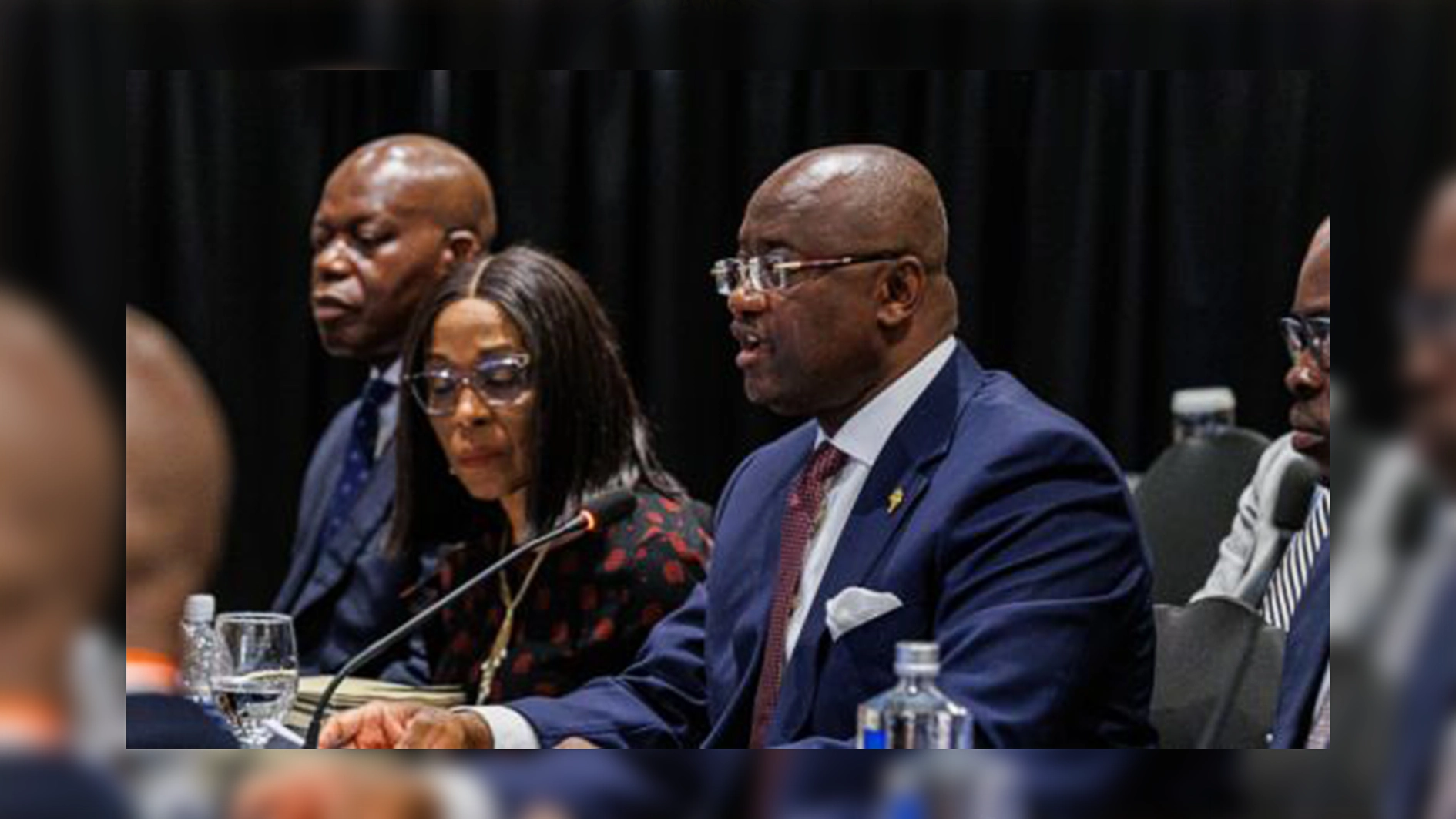
African Export-Import Bank (Afreximbank), has announced a major expansion of its engagement with the Caribbean Community (CARICOM), increasing its regional financing limit from $3 billion to $5 billion over the next four years. The enhanced commitment builds on more than $750 million already disbursed across the region and a robust pipeline of over $2 billion in transactions currently under execution, signaling a decisive scale-up of support to governments and the private sector.
Addressing the 50th Regular Meeting of the Conference of Heads of Government of the CARICOM in Basseterre, St. Kitts and Nevis, President and Chairman of the board of Afreximbank, Dr George Elombi said that the bank’s aim in the years ahead was to significantly expand that support.
“We will, therefore, increase the global limit to this region from the current $3 billion to $5 billion, with the hope of achieving full utilisation over the next three to four years.”
Elombi announced that the bank’s vision for the next decade was to change the structure of these economies so that it would invest in value addition or processing of agricultural outputs and natural resources.
According to him, this would help to retain significant value from these resources , generate wealth for the people, create jobs, and improve their livelihoods, with spillover impacts on government revenues and investments.
The president said that specific interventions by the bank would include developing healthcare facilities in Barbados, Guyana, and Grenada; supporting tourism projects in Barbados, Grenada, Bahamas, and Antigua and Barbuda; financing agro-processing projects and logistics facilities in Barbados, Guyana, Antigua and Barbuda, and St. Kitts and Nevis; and supporting infrastructure development, including power generation and distribution and road projects, conferencing facilities and trade centres, in Grenada, Jamaica, the Bahamas, and Suriname.

Others were providing financing support for banks in Suriname, St Lucia, Grenada, and Dominica, including an SME-focused on-lending facility to development banks in the region; supporting local content promotion in natural resource rich countries to retain maximum value in the region by empowering local entrepreneurs to participate actively in the sectors; working on a framework for the implementation of sea and air interconnectivity within the Caribbean to boosting movement of people, goods and investments; and promoting the cultural and creative industries through expansion of the Creative Africa Nexus Programme to support financing, capacity building and trade of creative goods and services between Africa and the Caribbean.
Elombi also stated that, following a meeting with the leadership of the Eastern Caribbean Central Bank, Afreximbank had agreed to support the implementation of the regional development strategy aimed at doubling the size of the region’s economy within a decade.
That support would include investments in infrastructure development, power generation and distribution, agricultural production, and production processing.
He said that the Bank was are already working with African entities, such as Access Bank, Oando and Arise Integrated Industrial Platforms (Arise IIP), to enable them establish their presence in the region and that Arise IIP was already exploring the establishment of special economic zones in a number of countries.
Elombi reaffirmed Afreximbank’s commitment to the development of the Afreximbank African Trade Centre in Bridgetown, Barbados, in order to consolidate its presence in the region. He added that the bank would continue the process towards the establishment of the Caribbean
Eximbank as an institution that could make the difficult investments “necessary to change the structure of our economies”.
He welcomed the decision of the Committee of CARICOM Central Bank Governors to proceed with the CARICOM Payment and Settlement System, modelled on PAPSS, which Afreximbank pioneered in 2022, describing it as a real opportunity to deepen regional trade and integration as it would be a low cost, real time cross border payment system in local currencies.

