 Follow Us on Google News
 Follow Us on Google Discover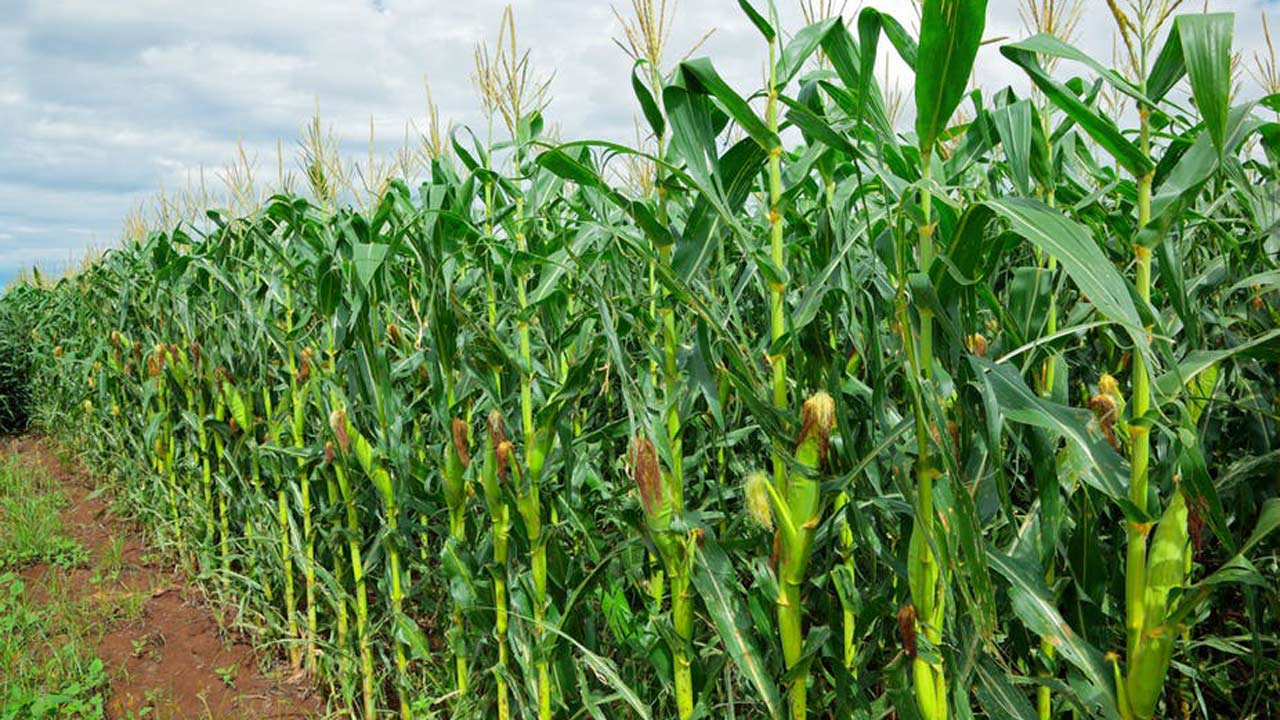

The Director, Institute of Agricultural Research (IAR), Zaria, Kaduna State, Prof Mohammad Ishiyaku, has revealed that the adoption of almost all the modern agricultural technologies, especially in the North and other parts of Nigeria, was spearheaded by the Research Institute.
[ad]
While stressing that Tela Maize is being adopted and translated into economic development of Nigeria by farmers, he commended them for adopting the technology, assuring that it will potentially increase their economic status, and invariably, translate into economic development of the country.
Speaking at the Tela Maize Programme in Giwa Council of Kaduna State, where thousands of farmers gathered to assess the efficacy of the hybrid maize seed, he said, “seeing is believing of farmers field at Kakangi, Giwa Council, and it is heartwarming to see technologies, such as the Tela Maize, being adopted and translated into economic development of the country by farmers.
“I will like to, therefore, call on the local councils, the state governments and the Federal Government to make agricultural production cheaper so that the margin that is going to accrue from agricultural activities will be much more profitable, and by so doing agriculture will continue to serve as employer of labour for up to 66 per cent of our population, which is translated roughly to around 160 million Nigerians.”
The Institute, in its 101 years of existence, he said, has been instrumental in development of the popular groundnut pyramids, the cotton industry and the numerous varieties of rice, maize, millet and so on.
“We shall continue to endeavour, to improve the lots of agriculture in this country and we would like to solicit the cooperation of our farmers as primary stakeholders in our research and development endeavours,” he said.
The Principal Investigator of Tela Maize Programme, Prof Rabiu Adamu, said Nigerian farmers were being challenged by poor yields of maize, with less than two tonnes per hectare.
“With the improved maize variety, you could get up to four tonnes per hectare. These varieties, some of them have pulled up to seven tonnes per hectare under ideal management. Under good management, you could get up to 70 bags per hectare. So, this trial is conducted as On Farm, that is, farmer-managed. We brought four maize hybrids for him to test and evaluate, and report, which he prefers to grow based on his own reasons.
“So, today we gathered here in Kakangi to conduct ‘Seeing is Believing’. We’ve been doing that in our own stations, farmers didn’t know what we are doing but research cannot be done in isolation in your room, you have to bring it to the end users, the farmers and us. You are the ones to help us and guide us.
One of the farmers, Dan Masani, said they got the seeds on July 19 and planted them on July 21 for a period 53 days.
He expressed happiness with the pattern of growth, saying the hybrid is of good quality, promising that the farmers will plant it next season.
[ad]

