 Follow Us on Google News


 Follow Us on Google Discover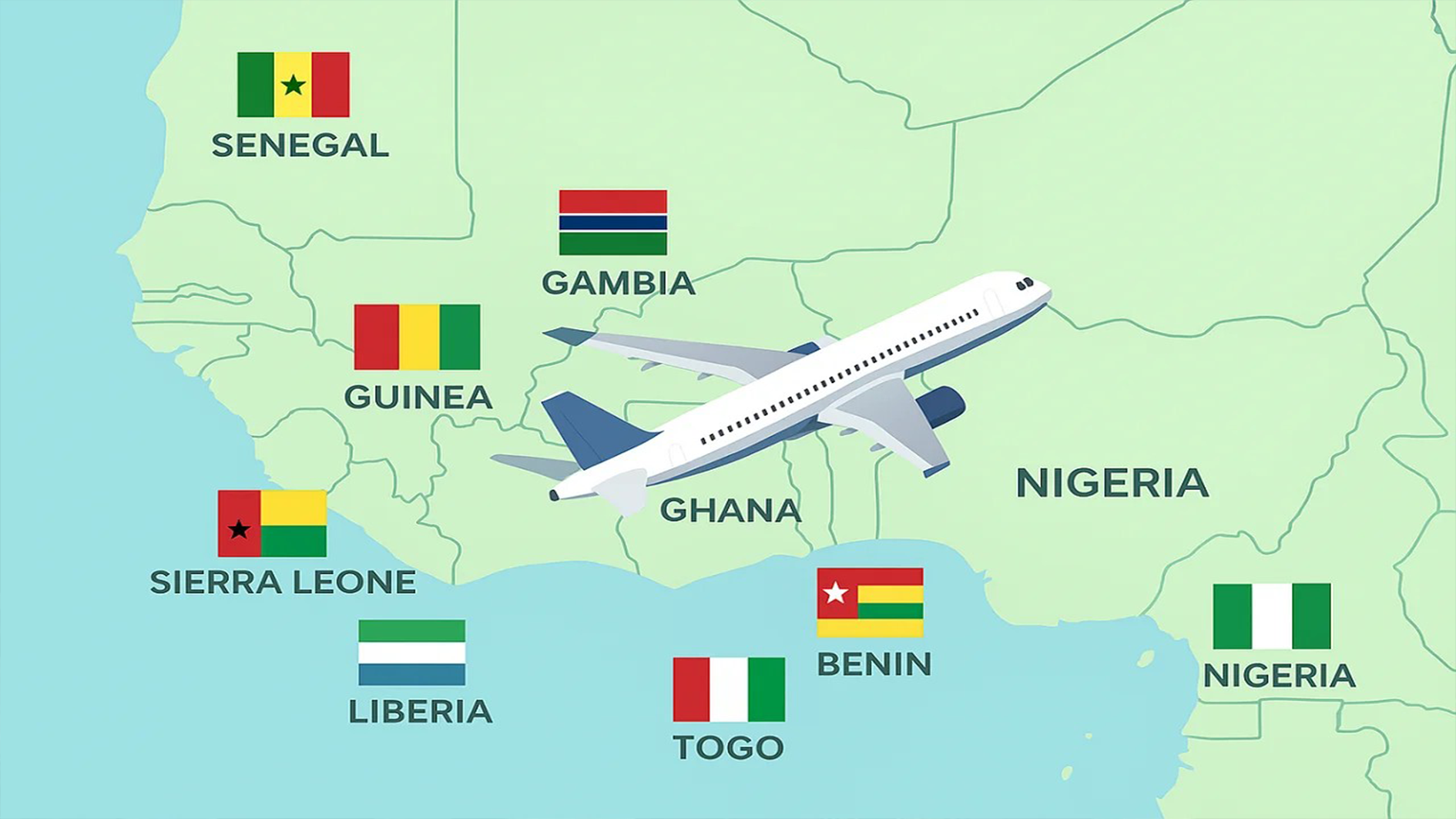
Apparently to make air travel affordable to all, West African heads of government in 2024 agreed to a 25 per cent reduction in charges, with an implementation date set for January 2026. But three months after the scheduled take-off date, there is no sign of motion or commitment to cheaper flights, OLUSEGUN KOIKI reports.
When leaders of the Economic Community of West African States (ECOWAS) gathered in Abuja in December 2024, the mood was one of cautious optimism.
For decades, West Africa had struggled under the weight of some of the highest aviation charges in the world, an anomaly in a region where economic integration and ease of movement are central to its founding.
At the 66th Ordinary Session of the Authority of Heads of State and Government, chaired by Nigeria’s President, Bola Tinubu, a momentous decision was reached – member states would reduce key air transport charges by 25 per cent and eliminate a range of taxes that had long inflated ticket prices across the sub-region.
A document obtained by The Guardian, showed that the resolutions were reached by the Presidents of the Republic of Benin, Burkina Faso, Cabo Verde, Cote d’Ivoire, The Gambia, Ghana, Guinea, Guinea-Bissau, Liberia, Mali, Niger, Nigeria, Senegal, Sierra Leone and Togo.
The document was, however, signed by six of the Presidents: Adama Barrow, The Gambia; Nana Akufo-Addo, Ghana; Joseph Boakai, Liberia; Bola Tinubu, Nigeria; Julius Bio, Sierra Leone and Bassirou Faye of Senegal.

The policy sought not only to make air travel more affordable, but also to unlock broader economic gains by stimulating tourism, enhancing trade and strengthening regional integration.
Governments projected that fares could drop by as much as 40 per cent, with tourism potentially rising between 20 and 30 per cent with the implementation of the policy.
However, more than three months after the January 1, 2026, implementation deadline, the policy has yet to practically take off.
Across the 15 ECOWAS member states, there has been little to no compliance with the directive. Instead, the region continues to grapple with high taxes, rising airfares and a widening gap between policy declarations and practical realities.
Air travel within West Africa has long been absurd – geographically short routes often cost more than intercontinental journeys. A 45-minute flight from Lagos to Accra or Dakar, for instance, can cost as much as, or even exceed, the cost of flying to Europe or the Middle East.
At the heart of this imbalance are numerous taxes, levies, and charges imposed by governments and aviation authorities.
According to ECOWAS policy documents, passengers in the region pay some of the highest charges globally, often at both ends of their journey.
These include Passenger Service Charges (PSC), Ticket Sales Charge (TSC), security fees, ticket sales taxes, tourism levies, solidarity taxes and foreign travel taxes.
In Sierra Leone, for instance, total taxes and charges per passenger can reach $294. Nigeria follows with around $180, while Guinea-Bissau records about $137.
Other countries, including Ghana, Senegal and Liberia, also impose significant levies that raise ticket costs for passengers flying to their countries.
On average, passengers in West Africa pay over $120 in taxes per ticket, which is one of the highest rates in the world.
For many travellers, this has made air transport a luxury rather than a necessity.
As a result, road travel, despite its risks and inefficiencies, remains the preferred option for a large segment of the population. Cross-border buses and informal transport networks continue to thrive, even as governments speak of integration through aviation.
For airlines, the consequences of high taxes and delayed reforms are profound on their operations.
Operating in West Africa is already challenging for the carriers due to factors such as high fuel costs, currency volatility and infrastructure limitations, which further erode profitability.
The Abuja resolution
The ECOWAS resolution of December 2024 was designed to address the significant challenges posed by charges, levies, and taxes across the sub-region.
Contained in a 13-page document, titled: ‘Supplementary Act A/SA.2/12/24 Relating to the Common Policy on Aviation Charges, Taxes and Fees,’ the agreement outlined a comprehensive reform package.
Four major taxes were marked for elimination: ticket sales tax, tourism tax, solidarity tax, and foreign travel tax. In addition, the sub-region governments agreed to reduce the PSC and security fees by 25 per cent.
The policy also aligned with international standards, particularly Article 15 of the Chicago Convention, which mandates that airport charges be fair, transparent and non-discriminatory.
Besides, the resolution recognised that high taxes were not just a burden on passengers, but a structural barrier to growth.
By lowering costs, ECOWAS hoped to stimulate demand, improve airline profitability and position West Africa as a competitive aviation market.
But the gap between intention and implementation has proven difficult to close.
Why implementations are almost impossible
One of the main challenges lies in ECOWAS’s structure. While the bloc has repeatedly adopted regional policies, implementation unfortunately and ultimately depends on individual member states.
Each country must domesticate resolutions into national laws, regulations and administrative frameworks. This process is often slow, complex and politically sensitive, and most of the time unaccomplished, industry experts said.
Aviation taxes are a significant source of government revenue in many West African countries. For cash-strapped economies, the prospect of reducing or eliminating these charges raises concerns about fiscal sustainability.
Aviation analyst, Samuel Caulcrick, in an interview with The Guardian, said that taxes and charges could account for between 64 and 70 per cent of ticket prices in the region.
Caulcrick attributed the delay in implementing many aviation-related policies to the slow pace of domestic policy reforms required for those policies to take effect.
Caulcrick explained that while the ECOWAS commission, comprising Heads of State and government, may have approved the measure at the regional level, implementation rests solely with individual member countries.
According to him, each state must amend its national laws, regulatory frameworks, and administrative guidelines to reflect these resolutions, stressing that, until such amendments are enacted, national aviation authorities lack the legal backing to suspend or reduce the affected charges.
He said: “The reduction is expected to come from government-imposed taxes such as ticket sales charges and airport fees, not from airline operational budgets.”
Caulcrick noted that the delay underscored the broader challenge of harmonising aviation policies across sovereign states, particularly where aviation-sector revenues are a significant source of government income.
He declared that unless member states demonstrated stronger political will and expedited the required legislative adjustments, the anticipated relief for passengers and airlines may remain elusive, thereby slowing regional integration and air traffic growth within the sub-region.
Also commenting on the issue, the Managing Director of Aero Contractors, Ado Sanusi, a pilot, said that the implementation of aviation-related resolutions adopted by ECOWAS had continued to face major setbacks due to weak political will and poor institutional enforcement among member states.
Sanusi observed that while ECOWAS routinely reaches consensus on regional aviation policies, actual execution remained largely dependent on the willingness of individual governments to align national regulations with regional commitments.
He maintained that many West African states are reluctant to adjust local policies, taxes, charges and regulatory frameworks because of revenue considerations and the desire to protect domestic interests, thereby frustrating the implementation of agreed resolutions, including the current one.
Sanusi stated that regional integration within ECOWAS had historically progressed at a slow pace, particularly in critical sectors such as aviation, which require harmonisation of policies, regulatory alignment, and, in some cases, economic sacrifices by member states.
He cited the Yamoussoukro Decision (YD) on air transport liberalisation as an example of the region’s implementation deficit, noting that more than two decades after its adoption, compliance was uneven and incomplete across ECOWAS and Africa.
Sanusi said: “The difficulty lies primarily in the lack of political will and weak institutional enforcement across ECOWAS member states.
“While the resolution was agreed to at a regional level, implementation depends on individual governments adjusting national policies, taxes, charges and regulatory frameworks, something many are reluctant to do due to revenue considerations and protection of domestic interests.
“In addition, ECOWAS integration has historically been slow, particularly in sectors such as aviation that require harmonisation of policies, economic sacrifices, and regulatory alignment.
This slow pace of integration inevitably translates into delayed or selective implementation of regional decisions.”
Sanusi further advised ECOWAS leadership to move beyond policy declarations and adopt enforceable mechanisms that compel member states to comply.
He recommended introducing clear implementation timelines, monitoring benchmarks, and sanctions for non-compliant countries, alongside stronger empowerment of ECOWAS institutions.
The Managing Director of Flight & Logistics Solutions Ltd, Amos Akpan, in his comment, said the continued failure of West African governments to implement the resolution was worsening the competitiveness crisis facing airlines in the subregion.
According to him, the failure to implement the agreed reduction in charges was imposing heavy operational burdens on indigenous carriers, limiting their growth and allowing airlines from other African regions to continue to dominate passenger and cargo traffic originating in the region.
Like others, he mentioned the absence of political will among member states as the primary barrier to enforcing the resolution, which he said was aimed at easing the cost of air travel and improving regional integration.
Akpan emphasised that the lack of sanctions for defaulters of resolutions was further fueling non-compliance.
“They (West African governments) need to understand how critical ease of movement is for businesses, tourism, and economic growth.
“Therefore, they need to prioritise practical steps that encourage ease of movement at affordable prices to citizens of ECOWAS,” he added.
Akpan warned that the financial strain from high taxes, air navigation fees, and airport charges continued to raise the cost of operations for West African airlines, ultimately making tickets more expensive for passengers and weakening regional carriers.
He pointed out that airlines in other regions of Africa, including Ethiopia, Morocco, Rwanda and South Africa, were expanding aggressively and capturing traffic that should naturally belong to West Africa.
He expressed that the continued failure to implement tax and levy reductions would stifle investment, discourage route expansion, and delay the development of strong regional hubs capable of efficiently linking West Africa to global markets.
“We need to move from intentions to action. If these resolutions remain on paper, West Africa will continue to lose traffic, investment and opportunities to other regions,” he added.
In spite of the relevance of the ECOWAS air tax reduction and elimination policy, its implementation remains elusive. Despite the resolutions, some of the countries within the region have introduced new charges and fares even in 2026.
The policy, if implemented, would lead to a more integrated, competitive and accessible air transport system in West Africa, while more people would fly by air.

