 Follow Us on Google News


 Follow Us on Google Discover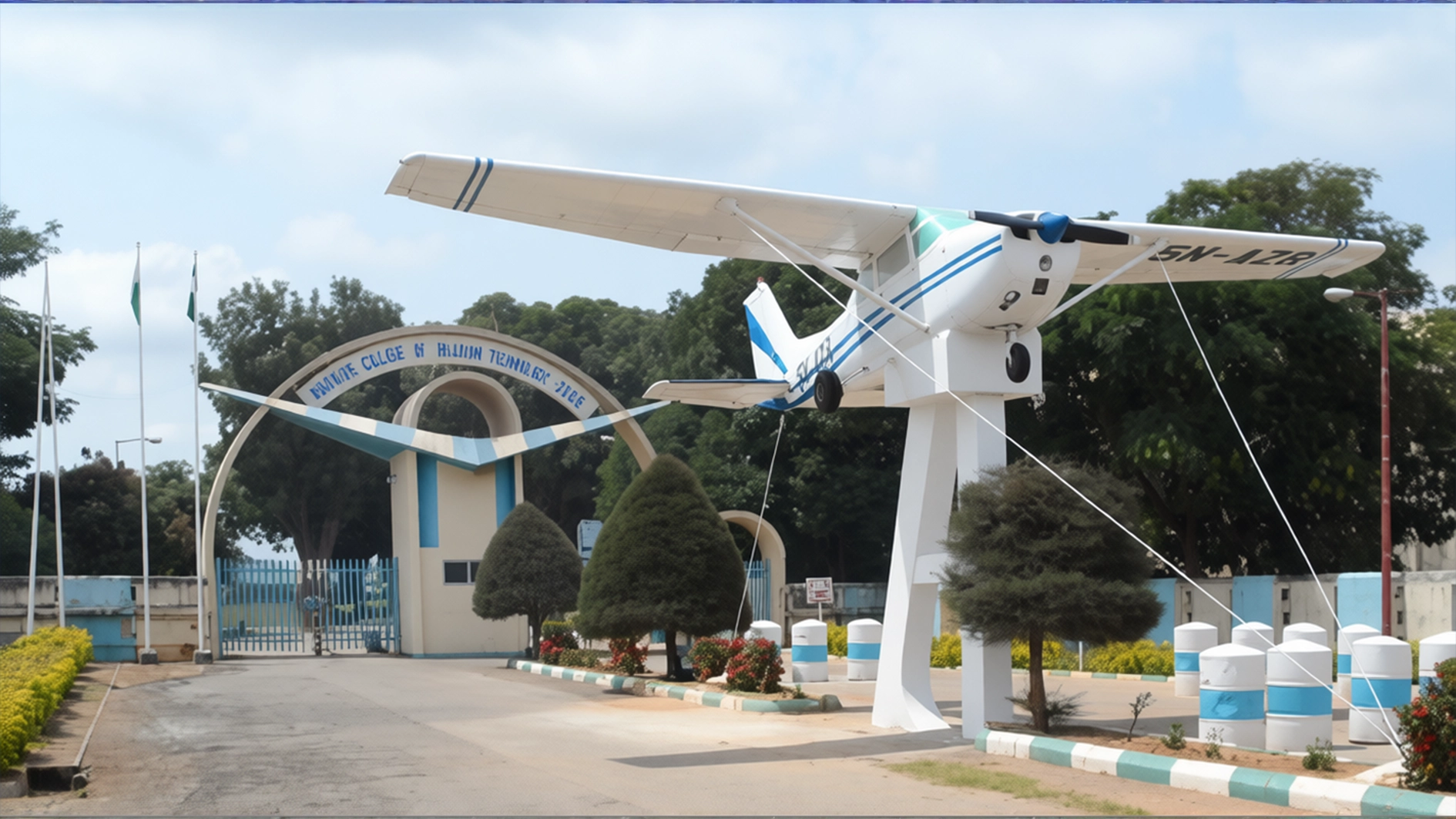
Officials of the Nigeria College of Aviation Technology (NCAT), Zaria have appealed to the Federal Government to rescue the institution from the present situation of decay facilities and poor expansion drive, which has limited the admission of students pilots to twenty five per session.
The Rector of NCAT, Dr. Danjuma Adamu Ismaila said while addressing a press conference in his office, that with the support of the Federal Government, TETFund and Public Private Participation (PPP) in the drive to enhance the facilities of the College, it will go a long way to address the pitiable condition of the institution.
According to him, “lack of modern aircrafts for training and other infrastructural facilities as factors limiting expansion, and pilot students enrolment in the college”, while adding, “actually the challenge is funding”.
He said, “thank God, we have many source of funds now. We have the Federal Government, we have our Internally Generated Revenue (IGR), we have our TETFund now, it’s coming, and then there is also support from the Ministry”.
“So, these are some of our sources of funding, but some of them are not performing. So, if all of them were performing, then fine and good, but we are managing with the situation. Actually, we wish some of our critical infrastructures; one of our aircraft—TBM series, it’s now grounded because lack of funds to reactivate it. And we also need additional aircraft.”
Besides , Ismaila pointed out another challenge facing the College, stressing that “we are facing is excessive demand for pilot training all over the country.”

According to Dr. Ismaila, “we have limited capacity to admit. We can only admit maximum of 25 in a class, then after six month, you can admit another 25. But, this is the overall general demand for the country of about 200 million”.
” So what we do is that after giving admission, the first 25 that paid, they’re guaranteed for the classrooms. And that’s why we call it, first come first serve basis, but despite that, there are many people waiting to be admitted, and to be listed in our classrooms. So this is the situation we are having and one of the challenge that we are facing. But, if can have more additional aircrafts for training, okay, definitely we are going to have more intake”, he added.
Ismaila also lamented over the rate of staff leaving the college for other greener pastures, as ” most of our staff are running to the industry now.”
” Because the salary we are paying them is not commensurate with what is being paid in the industry. They are running to other organizations in the industry because there is higher pay there”, he stressed.
Meanwhile , despite the shortcomings, NCAT boss explained that the management of the college has continued to maintained the available facilities in the College to meet the demands of the institution and standards.
He said that because of the reputation of NCAT in the Aviation industry and quality of trained pilots produced by the College, it has attracted continued to attract admissions from overseas student pilots.
“So we have started reaching out to our neighboring West African countries and other East African countries. So far, it has started yielding results. As at last year, I think we have almost about 100 number of participants from West Africa and South Africa”, he said.
“Some of them, from Niger, Gambia, Sierra Leone; In fact, in two weeks time, I think there are some coming from is it Gambia or Sierra Leone? About 18 of them are coming. So we have all what it takes to generate participations from African countries, and that will give us revenue in hard currency”, Ismaila noted.
He added, “so, if we can invest more in the facilities, I’m telling you, Nigeria has a lot we can benefit from the college and we can generate a lot of hard currency. And also we can reduce what we call capital flight. People don’t need to go outside to do some training. They can stay here and do it. Other West African countries can come here and do it, and they pay in dollars. And that is an income to Nigerian Government”.

