 Follow Us on Google News


 Follow Us on Google Discover
Africa’s rapid demographic expansion is reshaping the continent’s development trajectory, exposing critical infrastructure gaps while accelerating the demand for modern mobility.
In this evolving landscape, the United Arab Emirates has emerged as a prominent investor in transport, logistics and renewable energy, positioning itself as a key partner for Africa’s next phase of integration and growth. Africa’s population is projected to reach 2.5 billion by 2050, with 1.4 billion people added to today’s demographic base, equivalent to sixty per cent growth.
This unprecedented demographic shift creates significant commercial opportunities but also heightens pressure on mobility systems that remain structurally insufficient. Across ports, rail corridors and energy infrastructure, the capacity required to support this transition is far from adequate.
Against this backdrop, the UAE has deepened its commercial footprint on the continent. Emirati entities such as AD Ports, DP World, Etihad Rail and Masdar have become central actors in major African infrastructure corridors. Their projects illustrate a broader ambition that links enhanced connectivity with regional trade, economic diversification and long-term development strategies.
Port infrastructure has been the most visible and transformative dimension of Emirati engagement in Africa. In Senegal, the $840 million Ndayane Port project, led by DP World, is set to become the country’s largest port and a future regional logistics hub. In Somaliland, the $442 million expansion of Berbera Port in 2021 created alternative sea access for Ethiopia, Africa’s largest landlocked country and its second-biggest market, while strengthening one of the world’s most strategic maritime corridors in the Horn of Africa.
AD Ports has followed a parallel trajectory. In 2023, the company secured a long-term concession to manage the Port of Pointe Noire in the Republic of Congo as part of a joint-venture with CMA CGM, backed by a $500 million investment aimed at transforming it into the largest port in Central Africa.

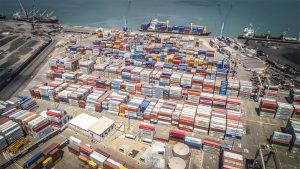
In Tanzania, AD Ports acquired a ninety-five percent stake in the Tanzania International Container Terminal Services in 2024 to operate the second terminal in Dar es Salaam, a national strategic asset that manages eighty-three percent of domestic traffic and serves Burundi, the DRC and Zambia. In Angola, the company confirmed a $250 million allocation for the modernisation of Luanda Port.
Railways and new continental corridors
More recently, the UAE has taken on a growing role in railway development. In January 2025, it confirmed plans to finance a $3 billion 250 kilometre railway linking Tog Wajale on the Ethiopian border to Berbera in Somaliland. The project is expected to reduce Ethiopia’s dependence on Djibouti, which currently handles ninety percent of its traded goods.
Kenya has also emerged as a beneficiary of this new interest. A memorandum of understanding signed between Etihad Rail and Kenya Railways foresees feasibility studies for a new national rail network and a potential involvement in the Standard Gauge Railway. Nairobi has requested Emirati support for the second phase of the line between Naivasha, Kisumu and Malaba. China financed the first phase but has expressed reluctance to provide additional loans for the extension. In Uganda, agreements signed in the presence of UAE Foreign Minister Sheikh Abdullah bin Zayed Al Nahyan aim to modernise the national railway.
In Chad, which has become a centrepiece of the UAE’s investment strategy in Central Africa, Etihad Rail signed a memorandum of understanding with the National Railway Office to update feasibility studies for the 800 kilometre N’Djamena to Ngaoundéré line. If completed, this corridor would provide Chad, the largest country by size in the CEMAC region, with direct access to Douala Port in Cameroon.
Energy investments and the foundations of a future electric mobility
Beyond conventional transport, the UAE’s push into renewable energy could contribute to shaping the future of electric mobility across Africa. The continent holds nearly 39% of the world’s renewable energy potential, a factor that contributed to Emirati entities investing $72 billion in the sector between 2019 and 2023. This expansion has been driven by Masdar, AMEA Power and the Phanes Group, whose projects have strengthened electricity generation capacity in numerous African countries.
This renewable backbone could underpin the long-term diffusion of electric vehicles, especially as governments pursue the Africa Continental Free Trade Agreement and the African Union’s Agenda 2063, both of which prioritise infrastructure integration and sustainable development.
At the same time, the rise of African electric-mobility champions such as Spiro illustrates the growing demand for reliable clean-energy supply and dependable financing mechanisms, both of which are essential to scale these models across the continent.
Taken together, these transformations suggest the emergence of new economic corridors shaped by Emirati capital and African demand. Their long-term impact will depend on the continent’s ability to align investment flows with coherent regional strategies, opening the way for new forms of mobility and deeper commercial integration.

