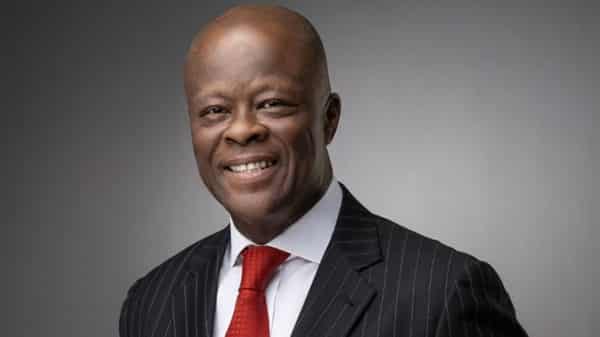

Minister of Finance and Coordinating Minister of the Economy, Wale Edun, said ongoing reforms by President Bola Tinubu-led administration are critical to stabilising the economy and attracting foreign direct investments (FDIs).
Edun said this yesterday at the opening of the 2023 yearly directors’ conference of the Chartered Institute of Directors Nigeria (CIoD) in Abuja.
He said the administration’s agenda is to provide a stable economy, achieve faster growth, low inflation and stable foreign exchange to enable attract investments into productive sectors.
Urging Nigerians to be patient while looking forward to the task at hand, he said: “The big price is to create a functional economy; our institutions should put a corporate governance place so that those interested in investing can trust their investments. It promotes risk management, increases productivity, grows the economy, creates jobs and reduces poverty, which is the overall goal of the President.
“The economy needs to be diversified… There are not enough foreign exchange savings to give us a positive balance of trade. We need export earnings to be greater than import expenditure to stabilise the currency.”
Edun said the CIoD has a major role to play in championing a country with a clean-led corporate governance sector that would lead to economic growth.
In his keynote address, former Minister of Trade and Industry, Olusegun Aganga, who spoke on ‘Driving Nigeria’s Economic Transformation and Diversification – the Role of Corporate Governance’, lamented that Nigeria, with good economic plans and policies, has not been able to transform its economy and diversify its sources of revenue due to the lack of continuity and extremely-poor policy implementation.
Citing instances, he said Nigeria commenced the implementation of its industrial plan in 2011 and officially launched it in 2014 to diversify the economy but that the agenda has been put in the ‘cooler’ for eight years.
Aganga said Nigeria’s economy is relatively small, not growing fast enough and exclusive.
According to him, it has all the features of a weak, import-dependent economy as well as an unstable macroeconomic environment.
The economy, he said, exports primary products without value addition while suffering from high and unsustainable debt servicing costs.
“As a result, the growth of manufacturing’s contribution to GDP, which was in double digits throughout 2011 to 2014 peaking at 24.59 per cent in 2013 crashed by 1.46 per cent in 2015 and 4.32 per cent in 2016 but only grew marginally by 2.45 per cent in 2022. This is what lack of continuity does to an economy.
“If it had been implemented rigorously, Nigeria would have become a top competitive global exporter of at least three or four of the 13 products identified for export by now. It is all about continuity and discipline. We are long on plans and policies but short on implementation. And why is that so? It is because our institutions, particularly the economic institutions, are weak or do not exist,” he said.