 Follow Us on Google News
 Follow Us on Google Discover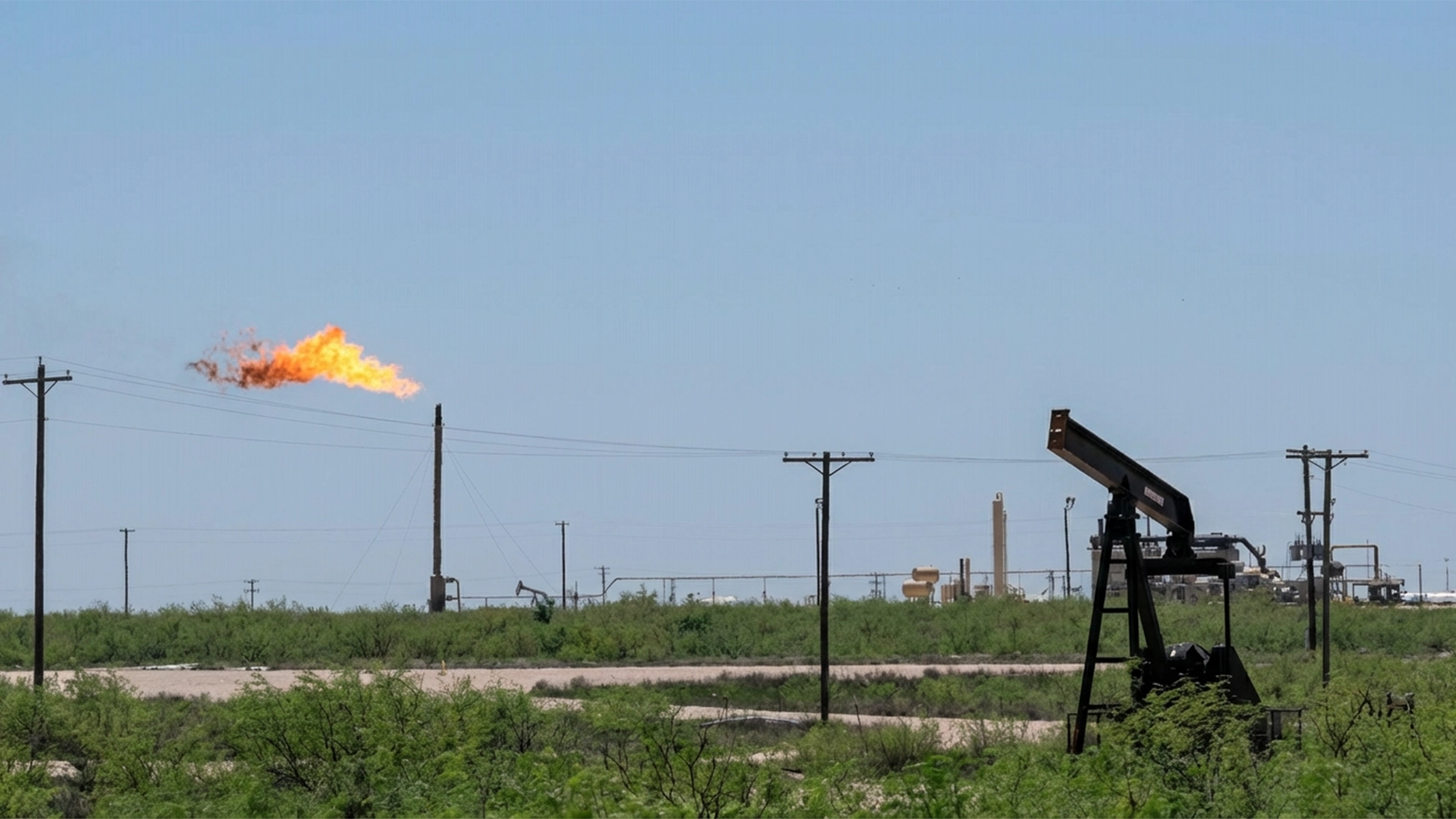
Global gas flaring has climbed for the third consecutive year in 2025, reaching its highest level since 2019, with Nigeria among major oil-producing countries recording an increase in gas burned despite higher crude oil production.
This is according to the latest Global Gas Flaring Tracker released by the World Bank.
The report showed that 167 billion cubic metres (bcm) of natural gas were flared globally in 2025, representing an enormous loss of energy resources valued at an estimated $54 billion.
According to the report, the volume of gas wasted exceeds the amount of liquefied natural gas (LNG) that transited the Persian Gulf during the year and is equivalent to Africa’s entire yearly gas consumption, highlighting what the World Bank described as a significant missed opportunity to improve energy security and economic development.
Published yearly by the World Bank’s Global Flaring and Methane Reduction (GFMR) Partnership in collaboration with the Payne Institute at the Colorado School of Mines, the report provides an independent assessment of global gas flaring volumes, intensity and trends across oil-producing nations.
For Nigeria, the findings underscored the country’s continuing struggle to commercialise associated gas despite decades of policies aimed at ending routine flaring.
According to the report, Nigeria recorded an eight per cent increase in gas flaring volumes in 2025, while oil production also rose by eight per cent. The World Bank attributed the increase largely to insufficient infrastructure required to bring associated gas to domestic and export markets, alongside ageing gas processing facilities suffering frequent operational downtime.

The report noted that these infrastructure bottlenecks continue to constrain Nigeria’s ability to monetise associated gas, even as the country seeks to position natural gas as a transition fuel for industrialisation, power generation and export growth.
Globally, gas flaring reached 167 bcm in 2025, the third consecutive annual increase and the highest level recorded since 2019. The wasted gas, the report stated, could have powered homes and industries, expanded access to electricity and clean cooking fuels, created jobs and reduced energy import bills in countries grappling with energy shortages.
The World Bank estimated that eliminating routine flaring worldwide would require between $70 billion and $100 billion in upfront investment, roughly twice the yearly value of the gas currently wasted. However, it stressed that the technologies required to capture, process and utilise associated gas are already commercially available, suggesting that the main obstacles are weak regulation, inadequate infrastructure, limited access to capital and underdeveloped gas markets.
The report further observed that oil producers continue to burn a resource capable of generating government revenues, supporting industrial development and lowering greenhouse gas emissions at a time when many developing economies continue to battle severe energy deficits.
For Africa, where electricity access remains one of the continent’s biggest development challenges, the findings present an even sharper contradiction. The World Bank noted that the volume of gas flared globally in 2025 was equivalent to the continent’s yearly gas consumption.
It also pointed to evidence showing that persistent power outages across Sub-Saharan Africa have been associated with a 14 per cent reduction in employment, underscoring the wider economic cost of inadequate energy supply.
According to the report, if the gas currently being flared were captured and utilised for electricity generation, it could produce approximately four billion kilowatt-hours of electricity, significantly improving energy access for underserved communities.
The report identified Russia, Iran, Iraq, Venezuela, Libya, Algeria and Nigeria among countries where flaring volumes increased during the year. Russia remained the world’s largest gas-flaring nation, accounting for 18 per cent of global flare volumes after recording a nine per cent increase in 2025 despite relatively flat oil production.
Mexico posted one of the steepest increases, with flaring volumes rising 28 per cent and flaring intensity increasing 36 per cent, largely due to declining oil production. Iran’s flaring volumes rose by five per cent, while Libya recorded a 15 per cent increase.
In contrast, several major producers demonstrated that sustained investments and policy reforms can significantly reduce routine flaring.
The United States achieved the largest absolute reduction globally, cutting flaring by 0.4 bcm, or seven per cent, following the commissioning of the Matterhorn Express Pipeline in the Permian Basin, which expanded gas evacuation capacity and reduced the need to burn associated gas.
Manager of the World Bank‘s Global Flaring and Methane Reduction Partnership, Zubin Bamji, said the technologies, regulations and financing mechanisms required to eliminate routine flaring already exist.
According to him, the missing elements are stronger leadership, political commitment and governance capable of creating the markets and infrastructure necessary to commercialise associated gas.
“The technologies, policies, regulations, and financing mechanisms needed to capture and utilise associated gas are available. What is missing, in too many places, is the leadership, prioritisation, and governance needed to put these solutions into practice, creating access to markets and infrastructure. The cost of inaction will be measured in wasted billions in revenue and energy insecurity for millions of people,” Bamji said.

