 Follow Us on Google News


 Follow Us on Google Discover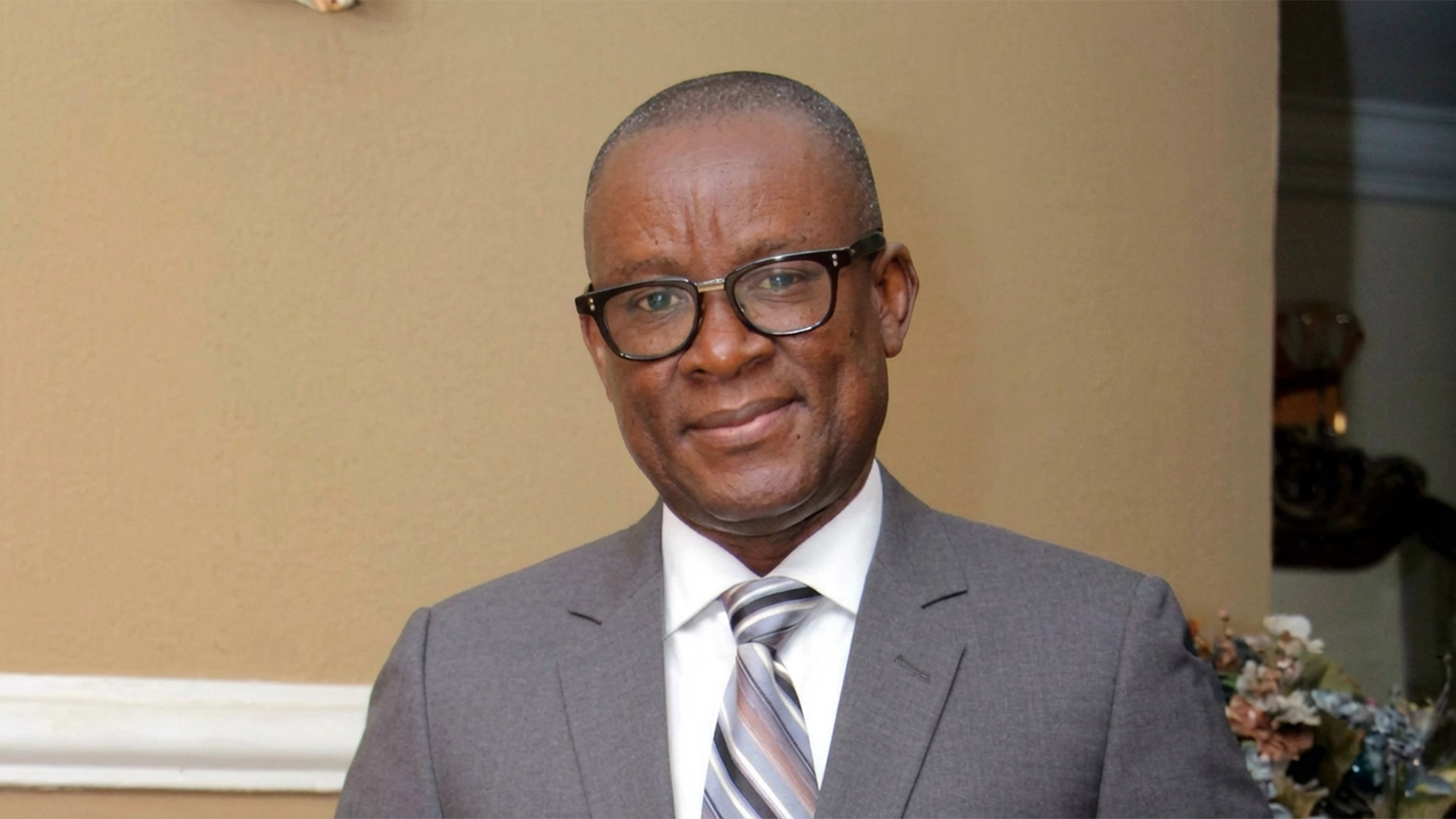
Minister of State for Industry, John Owan Enoh, said Nigeria’s financing architecture is poorly matched with the long-term nature of manufacturing, arguing that the country cannot achieve industrial growth without restructuring how capital gets into factories.
To address the mismatch, the minister held a crucial meeting with some bank chiefs, manufacturer associations and other key stakeholders in Lagos on Friday for “frank talk” on how to address the challenges.
The meeting was part of Ministerial Roundtable 2 of the Industrial Revolution Work Group (IRWG), an event organised by the Federal Ministry of Industry, Trade and Investment (FMITI).
Also present at the meeting were a representative of the Minister of Finance and Coordinating Minister of the Economy, Taiwo Oyedele; the Managing Director of the Bank of Industry, Dr Olasupo Olusi; and the President and Director General of the Manufacturers Association of Nigeria (MAN), Francis Meshioye, along with Segun Ajayi-Kadir. A few bank chiefs also joined the closed-door meeting.
Briefing journalists during a break, Enoh said the challenge facing manufacturers was not simply the availability of money. Still, the cost, tenor and structure of financing, noting that industrial investments often require years to mature and therefore cannot be sustained with short-term funds.
He said the industrial ambition of Nigeria is being threatened by the price and tenor of capital – twin crises the country must surmount to build a competitive economy.

According to him, the right financing must be long enough to support investments in machinery and production capacity, while being affordable enough for manufacturers to price their products competitively.
“Our manufacturers do not lack ambition; they don’t lack orders; they don’t lack markets. What they continuously lack is money, the right kind of money,” he said.
Enoh explained that the long gestation period of industrial investments made the current structure of financing unsuitable for manufacturing.
“The issue is not that there is no money. It is the price of the money, the term of the money and the capital architecture into the factories,” he said.
The minister said a business investing in a long venture that could take 10 to 15 years to mature could not reasonably be expected to repay financing within three or six months.
He said the mismatch in financing was contributing to a situation where businesses could find trading more attractive than investing in production, particularly when the cost and structure of capital made manufacturing less viable.
Enoh said the finance sector needed to help move Nigerians from trading to production, stressing that the objective of the ongoing discussions was to find ways of directing capital towards productive investments.
He added that Nigeria’s manufacturing sector, which contributed more than 20 per cent to gross domestic product in the early 1990s, had struggled to move beyond the eight to nine per cent range for more than a decade, despite the resilience of manufacturers.
The minister said the country’s industrial policy had set an ambition of raising manufacturing’s contribution to about 20 per cent by 2030 or 2031, but achieving the target would require financing arrangements capable of supporting long-term industrial investment.
Also speaking, Minister of Finance and Coordinating Minister of the Economy, Taiwo Oyedele, who was represented by his Special Adviser on Finance and Investment, Marie Ukpere, said commercial banks’ credit to the manufacturing sector contracted by about N1.9 trillion in 2025, representing a decline of more than 22 per cent from N8.5 trillion to N6.61 trillion.
Oyedele said manufacturers were borrowing at prime rates averaging about 27 per cent, with maximum rates reaching the mid-30 per cent range, describing the environment as unsuitable for investments requiring seven, 10 or 15 years to deliver returns.
He said the financing gap required government, regulators, development finance institutions and commercial capital providers to understand the constraints from one another’s perspective and develop a more coordinated financing framework.
He said the focus should extend beyond commercial bank lending to the deliberate use of public balance sheets, blended finance, institutional capital, pension funds, insurance assets and the capital market to support productive investment.
He added that fiscal, monetary and industrial policies were interconnected, warning that an incentive, guarantee scheme or development fund that manufacturers could not access effectively produced the same outcome as having no policy at all.
He said the proposed National Industrial Finance Compact should ultimately be judged by whether manufacturers could access financing and use it to expand installed capacity, create jobs and increase export earnings.
In his welcome address, the Permanent Secretary of FMITI, Dr Chris Isokpunwu, said affordable and patient capital remained a major constraint to investment in machinery, technology, export production and industrial competitiveness.
Represented by the Director of the Industrial Development Department, Mohammed Bala, he said financing must be affordable, accessible and appropriately structured, while incentives should be designed to stimulate productive investment, domestic manufacturing, local value addition, job creation and exports.
Isokpunwu said the success of the financing framework should not be measured by the number of policies introduced, but by the investment mobilised, factories established or expanded, jobs created, technology deployed and the ability of Nigerian products to compete in domestic, regional and global markets.

