 Follow Us on Google News


 Follow Us on Google Discover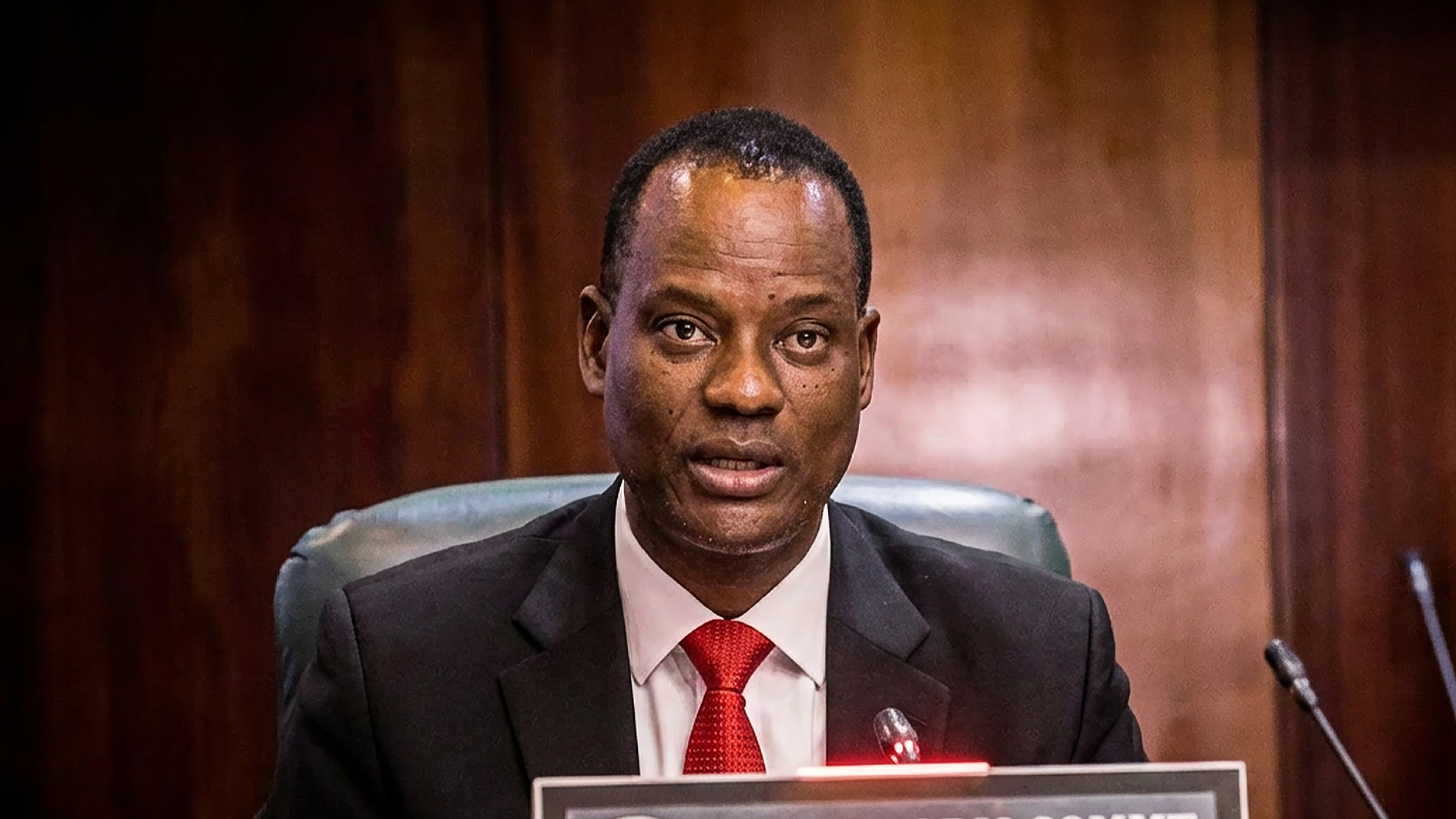
The Federal Government has dismissed as false and misleading claims that about two per cent of gross domestic product (GDP), amounting to over N8 trillion, was spent outside the approved national budget in 2025, insisting that no such “shadow budget” exists in the country’s public finance framework.
In a statement issued yesterday, the Federal Ministry of Finance said recent public commentary referencing the International Monetary Fund’s (IMF) 2026 Article IV Consultation Report and remarks by the Fund’s Resident Representative in Nigeria, Christian Ebeke, distorted the true meaning of the IMF’s observations and wrongly cast a statistical and reporting matter as evidence of unlawful expenditure.
The clarification followed a fresh wave of criticism from opposition politicians, including the Nigeria Democratic Congress presidential candidate, Peter Obi, and the African Democratic Congress (ADC) presidential candidate, Atiku Abubakar.
The duo separately cited the IMF’s figures to allege that trillions of naira hadbeen spent in 2025 without legislative appropriation. Obi described the development as “grand corruption” and renewed his call on President Bola Tinubu to resign.
Atiku, on its part, demanded that the National Assembly convene emergency hearings and called for a comprehensive audit by the Auditor-General of the Federation.
But a statement issued by the Minister of Finance and Coordinating Minister of the Economy, Taiwo Oyedele, said the Federal Government does not operate any expenditure mechanism outside the constitutional and statutory framework governing Nigeria’s public finance.

Citing Sections 80 to 83 and 162 of the 1999 Constitution (as amended), Oyedele explained that public funds could only be withdrawn and spent pursuant to duly enacted appropriation acts, supplementary appropriation acts and other statutory authorities passed by the National Assembly.
He added that multi-year capital projects, which by nature span across budget cycles, are implemented under existing laws governing capital rollovers and should not be mistaken for expenditure incurred outside legislative approval.
He argued that allegations of spending “trillions of naira” outside appropriation were unsubstantiated, noting that such claims ought to identify the specific projects allegedly executed without legal authority and present verifiable evidence rather than conjecture.
He sought to distinguish between appropriation, expenditure authorisation, financing and fiscal reporting, listing several statutory transfers and intervention mechanisms recognised under Nigerian law.
These, according to the minister, include statutory allocations to development commissions, cost of collection retained by revenue agencies, separately approved capital budgets for some agencies and the Federal Capital Territory, special interventions for security and infrastructure and debt service obligations authorised by extant legislation.
He maintained that the expenditures are lawful, disclosed in fiscal reports, and subject to oversight and audit, even though their treatment under international statistical standards may differ from their presentation in the annual appropriation acts. Such classification differences, it said, should not be misrepresented as unlawful spending.
On the question of whether the reported figure signals a wider fiscal deficit, Oyedele said a deficit is determined strictly by the gap between total government revenue and total expenditure, regardless of the financing channel through which a capital project is funded.
The IMF’s observation relates chiefly to the comprehensiveness, timing and presentation of Nigeria’s fiscal reporting rather than to the legality of any expenditure, the minister said.
He noted that President Tinubu had, while presenting the 2026 Appropriation Bill to a joint session of the National Assembly, asked lawmakers to end the practice of running multiple, overlapping budgets in favour of a single, harmonised framework — evidence of the administration’s commitment to tighter fiscal reporting.
”
Public debate is both welcome and essential in a democratic society,” the minister said, but added that such debate should be grounded on facts and an accurate understanding of the country’s constitutional and fiscal framework.
The controversy stems from remarks Ebeke made to business executives in Lagos last week during which he said Nigeria had failed to record public spending equivalent to about two per cent of GDP in recent official budgets, a gap he said understated the country’s true borrowing needs and complicated coordination between fiscal and monetary authorities.
He said the shortfall was linked largely to capital spending on major government projects executed outside the formal budget process and noted that the Federal Government had begun revising recent budget laws to capture the previously unrecorded expenditure, though updated implementation reports were still awaited.
The disclosure came even as the IMF, in the same Article IV consultation, commended Nigeria’s reforms for strengthening macroeconomic stability and investor confidence, while cautioning that the gains had yet to reach millions of ordinary citizens.
The exchange plays out against the backdrop of an already contentious 2026 budget cycle. Tinubu had presented a N58.18 trillion spending plan in December, projecting a deficit of N23.85 trillion, about 4.28 per cent of GDP, before the National Assembly expanded the expenditure to N68.32 trillion with a fresh N29.2 trillion borrowing plan.
The Senate has also approved an additional $6 billion in external loans, comprising $5 billion from Abu Dhabi’s First Abu Dhabi Bank for budget support and debt servicing and $1 billion from Citi Bank and UK Export Finance for the rehabilitation of Lagos ports.

