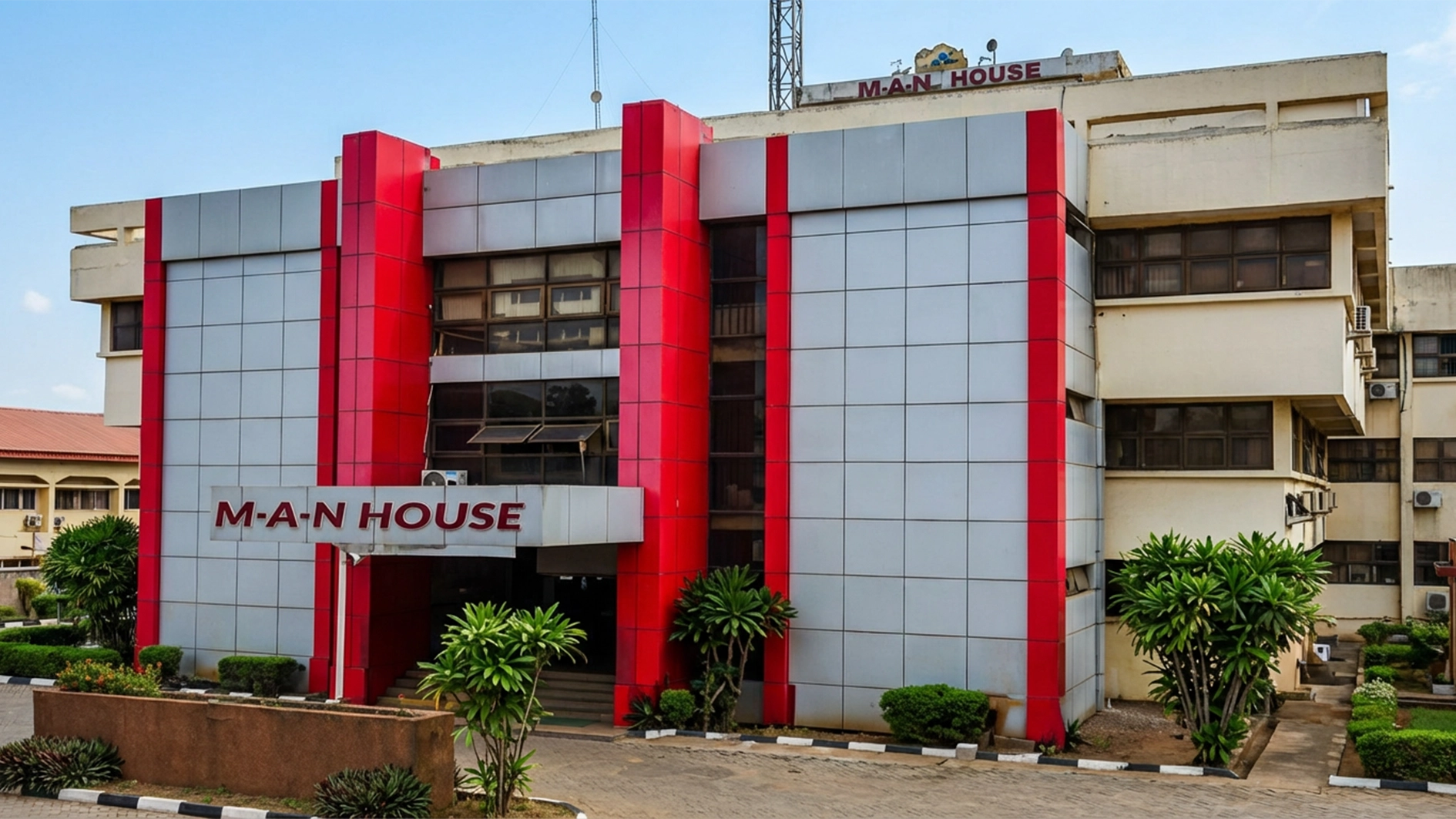
As business activities kick off fully for the year, manufacturers have asked the government to pay special attention to the real sector and improve the operating environment to save industries from going under, TOBI AWODIPE reports.
Over the years, global manufacturing has undergone a rapid transformation driven by technological innovation, supply chain reconfiguration, and shifting trade dynamics.
However, the Nigerian manufacturing sector continues to lag behind, grappling with overwhelming challenges and far-reaching ills that have hobbled the country’s economic growth, employment, industrial development and shared prosperity.
Data sourced from the Manufacturing Association of Nigeria (MAN) shows that the sector’s contribution to the economy has declined rapidly from 29.9 per cent in 1981 to 8.2 per cent in 2024, while its real growth has witnessed a staggering decline from 14.7 per cent in 2014 to a paltry 1.2 per cent in 2024.
With 767 manufacturing companies shutting down in 2023 and over 18,000 jobs lost in 2024, the declining state of the sector is attributed to the hostile macroeconomic environment, extremely high-cost operating environment, rising cost of raw materials, high energy prices, unaffordable cost of borrowing, multiple taxation, dilapidated infrastructure and high level of insecurity, among other factors.
MAN’s Manufacturing State of Affairs 2025 affirmed that while Nigeria’s trade balance improved to N7.46 trillion, high interest rates continued to strangle lending, with credit to the private sector falling to N74.63 trillion in November 2025 from N76.13 trillion in June 2025. Foreign direct investment (FDI) inflows also remained weak while public debt rose significantly, straining fiscal space. Declining oil production and prices in late Q3 threatened to undermine growth momentum, raising concerns about the sustainability of what appeared to be a moderate recovery.
It also revealed that Nigeria’s manufacturing sector continued to struggle under severe structural and macroeconomic constraints. By 2024, manufacturing value added had fallen to $25.36 billion from $55.9 billion in 2023, as competitiveness weakened due to soaring exchange rates, interest rates, and inflation. Though lower, the alternative energy cost of N676.6 billion and raw material import of N1.72 trillion in H1 2025 remained a heavy-weight burden on operational efficiency and employment, with 18,935 job losses recorded in the same period.
Also, high average lending rates of 36.6 per cent, reduction in credit access and rising inventories of N1.04 trillion, continued to limit performance. Overall, it noted that the sector’s fragile recovery requires urgent policy actions to cut energy costs, strengthen FX liquidity and expand affordable credit access.
For Q3 of 2025, the aggregate Manufacturer’s CEO’s Confidence Index (MCCI) recorded a tepid increase of 0.4 points from 50.3 points in Q2 to 50.7 points in Q3 of 2024. Decline in the current production condition was primarily attributed to the industrial disputes in the oil and gas sector, which disrupted gas supply, elevated energy costs and constrained manufacturing output.
In 2025, six sub-sectors showed some signs of improvement, including domestic/industrial plastic and rubber, electrical and electronics, food/beverages/tobacco chemical and pharmaceuticals, textile/apparel/footwear and basic metal, iron and steel sectors. The report attributed the improved confidence indices to steady local polypropylene supply in the plastic and rubber group, which eased FX pressure and supported stable production.
“For the chemical and pharmaceuticals group, the temporary export ban on raw shea nuts is expected to ensure stable input supply for cosmetic producers this year and further stimulate growth in non-toxic skincare lines. For the textile, apparel and footwear group, the new leather processing hub in Lagos is expected to provide shared equipment for small and medium-sized industries (SMIs) to meet bulk orders efficiently.
Complementary actions to formalise leather exports and improve access to local polypropylene are expected to enhance the sector’s export readiness and cost competitiveness. FX stability has slightly eased steel rod prices, spurring gradual demand recovery and strengthening confidence in the basic metal, iron and steel group,” the report said.
Four groups however declined last year – wood and wood products, motor vehicle and miscellaneous assembly, pulp/paper/printing/publishing/packaging and non-metallic products – due to prevailing high energy cost, disruption in gas supply, illegal logging, limited government patronage, influx of imported furniture, higher import duties on spare parts and machinery, escalating piracy, global shortage of paper, FG ban on outsourcing printing jobs to private companies as well as seasonal slowdown in construction activities.
Nine industrial zones recorded improved confidence scores due to easing inflation, steadier Naira and moderate improvement in FX access, while five zones recorded diminished confidence due to logistics and port frictions, as well as electricity transmission and distribution interruptions, which raised operating costs and delayed production.
Six zones recorded indices below the 50-point threshold due to localised power outages, supply-chain bottlenecks, insecurity, flooding and lingering cost pressures.
On the macroeconomic environment, research revealed that less than 51 per cent of FX demand was accessed at the official window, just as the average lending rate of 36.6 per cent in leading commercial banks remained prohibitively high.
Delays in amending the 2007 Procurement Act and the repeated extensions of capital budget implementation also limited the effect of government capital expenditure on manufacturing productivity. Also, the manufacturers said the ‘Nigeria First’ policy lacks a clear implementation framework and has had zero effect on the sector.
Touching on the operating environment, they noted that exorbitant fines, the threat of factory closures, overlapping oversight activities of NASS, and the reintroduction and eventual suspension of the four per cent FOB levy exemplify overregulation and policy inconsistency.
Other problems listed include port congestion due to limited parking facilities and technical glitches of the B-Odogwu platform, pending presidential assent and implementation of 30 per cent value addition threshold on raw material exports, delay in implementation of the tax incentives for local sourcing of raw materials, extremely high insecurity in key agricultural zones which posed significant threat to local raw material sourcing and government’s refusal to patronise local manufacturers for the Lagos Airport perimeter fencing project.
Other challenges include poor power supply; high exchange rate/FX scarcity, low patronage by government agencies, high electricity tariff and cost of alternative energy as well as high cost and shortage of raw materials, high interest rate and low access to credit, poor road infrastructure and high logistics costs, multiple taxation, government over regulation, policy inconsistency and finally and extremely expensive import duty.
On the outlook, the report projected the naira to appreciate to N1,300–N1,400/$, headline Inflation to decelerate to 14 per cent and the apex bank to implement further cuts in the benchmark interest rate to about 23 per cent, in line with the disinflationary trend and to stimulate credit expansion and output growth.
“Further reduction in lending rates and completion of the bank recapitalisation exercise will enhance credit availability to manufacturers, strengthen investment and capacity utilisation. Real growth is projected to reach 3.1 per cent, while the contribution to real GDP is expected to rise to 10.2 per cent.
“These gains, however, hinge on the effective execution of incentives under the new tax laws, operationalisation of the National Single Window Project and the purposeful implementation of the Nigeria Industrial Policy in close alignment with the Nigeria First Policy framework. Overall GDP growth is expected to reach four per cent,” the report said.
To make this a reality, they urged a further reduction of the benchmark interest rate by at least 200–300 basis points over the next two quarters to make credit affordable for manufacturers; a Manufacturing Refinancing and Rediscounting Facility (MRRF) that allows banks refinance approved manufacturing loans at single-digit rates for up to seven years and a publicly accessible dashboard to track lending flows, interest rate spreads, loan approvals and sectoral disbursement patterns in real time.
It also called for a dedicated manufacturing FX window to ensure access to FX for raw materials and machinery; the release of the existing backlog of Export Expansion Grants and reduction in bureaucratic procedures for issuing Export Credit Certificate (ECC), as well as import duty exemptions for non-locally available raw materials, spare parts and machinery needed for manufacturing.
“Finally, expand embedded generation and industrial cluster power projects using gas and renewable mini-grids, ensuring manufacturers get reliable, affordable off-grid electricity; approve the N1 trillion stabilisation fund for manufacturers and direct the apex bank to increase the capital base of the Bank of Industry (BoI) to meet the credit demand of industries.”
888888888