 Follow Us on Google News


 Follow Us on Google Discover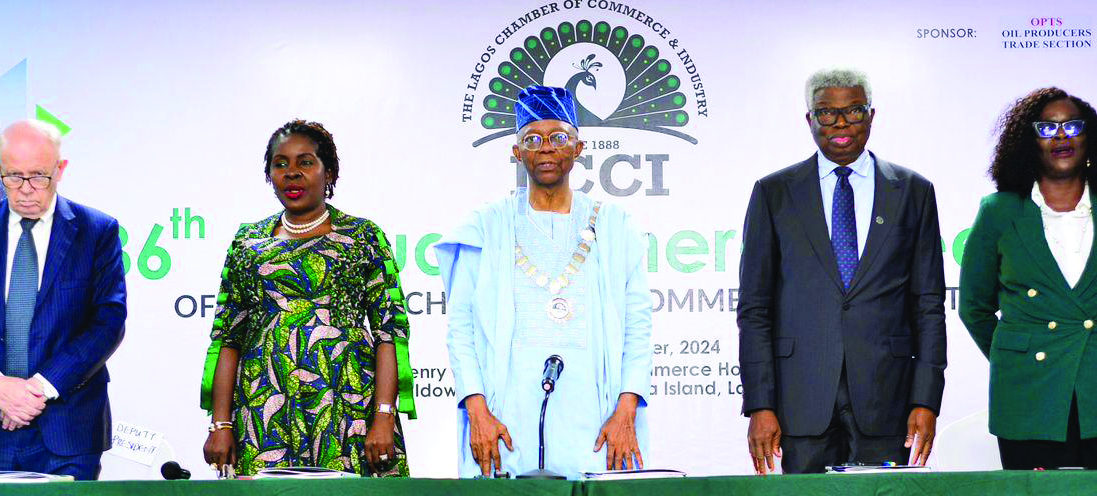

The President of the Lagos Chamber of Commerce and Industry (LCCI), Gabriel Idahosa, has advocated effective fiscal and monetary policies to aid the recovery of the Nigerian economy.He argued that steps must be taken to promote policies that encourage private capital inflow into the economy to save local businesses from collapsing.
[ad]
According to him, both the fiscal and monetary authorities must develop a medium-term growth plan anchored on boosting local production, supporting ease of doing business, and attracting private investment.
Speaking at the chamber’s yearly general meeting, which was held in Lagos, Idahosa said the proposed plan should also focus on developing infrastructure, business-friendly regulatory policies, economic diversification, and employment generation.
“Businesses and the economy are currently dealing with a myriad of challenges, including sustained double-digit inflation, a steadily rising debt profile, and revenue mobilisation challenges, among others. During the year, we have advocated for a well-coordinated synergy between the fiscal and monetary authorities in engaging with the private sector to navigate the uncertain economic terrain. We would continue to engage with the government in creating an enabling business environment where the private sector is empowered to grow, create jobs, and generate revenue for the government,” he said.
Addressing economic indices that have been thrown up within the polity, he said the private sector is plagued with increased borrowing costs and a pressured foreign exchange market, adding that the recent hikes in the monetary policy rate (MPR) have directly translated to higher interest rates, making it more expensive for businesses to access credit for working capital, expansion, and sustainability. He said that rate hikes alone would not curb inflation without resolving the challenges of the real sector.
Idahosa further added that the country needs to diversify its exports by boosting local crude refining capacity, production of petrochemical products, and accelerating reforms in the oil and gas sector.
On the projected N47.9 trillion 2025 budget estimates, Idahosa said the key parameters and assumptions on which the budget was proposed are too optimistic in the face of numerous economic and social indicators.
He said beyond assumptions and projections, the right policies, an enabling environment, and clarity of policy direction in the economy are critical to achieving the projected 2025 gross domestic product growth rate.
[ad]
On her part, the chamber’s Director-General, Dr Chinyere Almona, said galloping interest rates, high and unstable exchange rates, and sky-high inflation have all led businesses to struggle for survival, with a number of them closing shop this year. She said productivity will improve if the government creates an enabling environment for businesses to thrive.
Reacting to the poor macroeconomic indicators from the Q3 report, Almona said the reforms carried out by the government have made it difficult for businesses to absorb the impacts.
“The last year has been very difficult for Nigerians, and we are using this time to help member companies improve efficiency, help them attract finance, and boost productivity. We hope the next fiscal year is better as we look forward to ways to increase capacity to be more productive,” she said.
Urging the government to focus more on non-oil exports, she said if Nigeria ramps up its export numbers, more FX would come into the economy and improve the Naira.She said the organised private sector needs to be assisted to be more productive and export more finished goods, rather than raw materials.
“We are working with our export groups to see how we can improve their capacity and productivity to export more and attract FX. We are doing a lot of advocacy with the government on the need to remove bottlenecks to encourage exports. Our goods are sometimes rejected for different reasons, and we are working with our members on how to stem this.”
She added that the chamber is creating a database of necessary information that would guide the export of goods and services as part of its efforts to reduce the rejection of made-in-Nigeria products.
[ad]

