Minister of Environment, Alhaji Balarabe Abbas Lawal, has warned that Nigeria industrial future is unfolding at a period marked by unprecedented environmental and developmental pressures, stressing that the country must accelerate efforts toward cleaner, more efficient production systems.
Industry representatives also emphasized their readiness to adopt cleaner production methods but noted that manufacturers require stronger incentives, affordable green financing options, and clearer regulatory guidance.
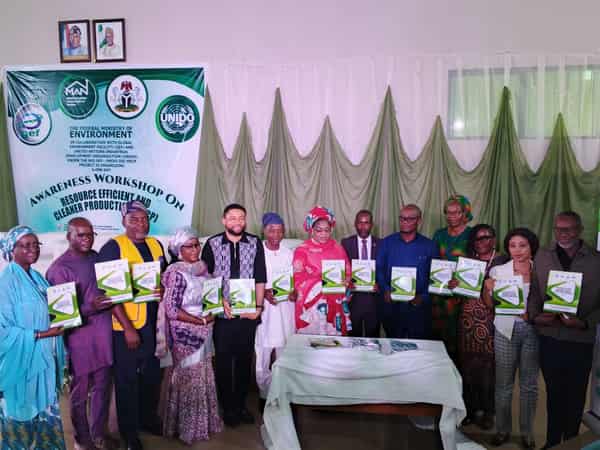
Lawal disclosed this in Abuja, at the awareness workshop on Resource Efficiency and Cleaner Production (RECP), themed I GO GREENER,where government officials, global development partners, and industry leaders convened to push for innovation in clean technology.
The workshop was convened under the Global Environment Facility (GEF) project titled Improving Nigeria’s Industrial Energy Performance &Resource Efficient Cleaner Production through Programmatic Approaches and the Promotion of Innovation in Clean Technology Solutions.
Represented by the Director in the Ministry, Dr Engr Bahijjahtu Abubakar, the Minister warned that climate change, pollution, unsustainable consumption patterns, and outdated industrial systems are steadily undermining national productivity and public well-being.
Lawal said: Our nation stands at a crossroads, faced with economic, environmental, and social challenges that directly impact growth and sustainability. Yet within these challenges lie opportunities to strengthen institutions, correct longstanding inefficiencies, and place our industries on a more resilient path.
The Minister highlighted that the GEF-supported initiative aims to close these gaps by introducing scalable clean technology models, strengthening energy-efficient production systems, and providing best-practice frameworks for enterprises nationwide.
In his remarks, the UNIDO Regional Director Ambassador Philbert Johnson, Field Coordinator Charles Uzoma said the project is a strategic intervention aligned with Nigeria’s climate and circular economy commitments.
He underscored both the urgent need for reform and the persistent structural barriers slowing progress.
He stressed that the country must urgently address systemic constraints limiting innovation in clean technology.
He said: Cleaner technologies and resource efficiency are essential for competitiveness, but adoption remains slow. The regulatory tools unveiled today are significant steps toward coherence, institutional learning, and strengthened compliance.
He reaffirmed UNIDOs commitment to providing technical expertise, global best practices, and capacity-building support until Nigeria industrial sector becomes fully aligned with modern, low-carbon production systems.
He emphasized that manufacturers are willing to adopt cleaner production methods but need better incentives, easier access to green financing, and clearer regulatory frameworks.
Speaking on behalf of private-sector operators, the Health, Safety and Environment Manager, Ike Charles Chukwuemeka, said industries want to comply and innovate but need a more supportive ecosystem.
He said: We remain committed to cleaner production, minimizing waste, and improving energy efficiency. But strong partnerships with regulators and development partners are essential for a safer, cleaner, and more resource-efficient future.
He praised the organizers and stakeholders for championing sustainable industrial practices and reaffirmed his company’s commitment to aligning its operations with both national and global environmental standards.
He added, We look forward to continued collaboration with regulatory bodies, industry players, and development partners as we work toward a cleaner and more resource-efficient future.