 Follow Us on Google News
 Follow Us on Google Discover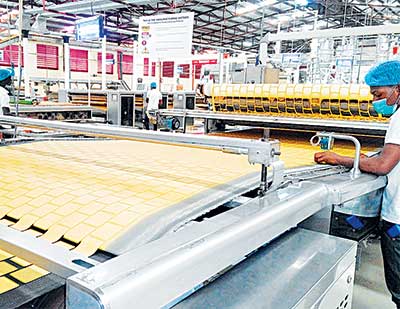

While many African governments might have displaced manufacturing to a distant position, various analyses and projections from development institutions have shown that Africa may be the next production hub if it moves from net exporter of raw commodities to exporter of finished goods. Despite the opportunities, success in manufacturing in Africa, especially Nigeria is dicey, considering the monolithic structure of the economy, the huge appetite for foreign goods, as well as other lingering challenges that are slowly being addressed. New opportunities for diversification arise from the rebalancing of Africa’s economic relations with emerging partners. FEMI ADEKOYA writes.
The Economist, in its February edition of 2014 noted that if Africa’s economies are to take off, Africans will have to start making a lot more things. Fortunately, the present realities are pushing many African economies, especially those dependent on oil to embrace not just diversification, but manufacturing.
In Nigeria, presently, the share of value-addition is fairly low as export of raw produce remains dominant, meaning the manufacturing sector has a lot of opportunities for growth and limited period to become competitive to be relevant in the global value chain.
For instance, while manufacturing continues to provide a pathway from subsistence agriculture to rising incomes and living standards in developing countries, it remains a vital source of innovation and competitiveness, making outsized contributions to research and development, exports, and productivity growth in developed countries.
China, often described as the manufacturing hub of the world, produced less than three per cent of global manufacturing output by value in 1990. Its share now is nearly a quarter. China produces about 80 per cent of the world’s air-conditioners, 70 per cent of its mobile phones and 60 per cent of its shoes. Indeed, the white heat of China’s ascent has forged supply chains that reach deep into South-East Asia.
While the stakes are rising on manufacturing output of Nigeria and other African countries, a lingering question is on how stable the continent is, to attract investments? Issues of policy, taxation, infrastructure, regional integration and the cost of energy also come into play. There is also need for consumer awareness to promote consumption of locally produced goods. The everyday consumer might not always understand the link between buying local and creating jobs.
There is also a perception that foreign products are of better quality – yet local companies are manufacturing to international standards and are in fact selling their products to international markets.
Describing some of the challenges to industrial growth in Nigeria and other countries, Rick Rowden of Foreign Policy said: “In Africa and Latin America, industrial policies often failed because they were focused inward on small domestic markets. Companies were often given support based on corruption or nepotism, rather than their efficiency. On the other hand, the successful East Asian countries focused on international markets, and they instilled discipline in companies by cutting off support to those which failed to improve. But this says more about how to do industrial policy — not whether it should be done.
In fact, Africa has had difficulty industrializing because its leaders drank the Kool-Aid of free markets and free trade proffered by the World Bank, the IMF, and the best university economics departments over the last 30 years. Of particular harm has been the insistence that African countries forswear the use of industrial policies such as temporary trade protection, subsidized credit, preferential taxes, and publically supported R&D. As a result, African countries have abandoned these key tools, which they could have used to build up their domestic manufacturing sectors.
World Bank economist, Wolfgang Fengler, says, “Africa is now in a good position to industrialise with the right mix of ingredients.” This includes favourable demography, urbanisation, an emerging middle class and strong services. “For this to happen,” he adds, “the continent will need to scale up its infrastructure investments and improve the business climate, and many [African] countries have started to tackle these challenges in recent years.”
On his part, MAN President, Dr. Frank Jacobs, noted that the current low capacity utilisation in the manufacturing sector can be addressed with good infrastructure, as well as policies that would aid production of quality products in the country.
With the right mix of fiscal and monetary policies to stimulate the economy and attract domestic and foreign investments in 2016, Nigeria’s Gross Domestic Product (GDP) may rebound to about 3.5, despite a potential high inflation of about 11 per cent driven by exchange rate volatility, the Lagos Chamber of Commerce and Industry (LCCI) stated.
LCCI added that the targeted N300 billion by Nigerian banks to boost lending to Small and Medium Scale Enterprises (SMEs) and the agriculture sector in 2016 will boost small businesses’ development and employment generation as well as increase non-oil export.
Similarly, the Managing Director, Bank of Industry (BoI), Rasheed Olaoluwa during a facility tour of some factories in Ogun state, advocated the adoption of smart technology and renewable energy as part of measures to improve efficiency, protect environment and compete globally.
He explained that deploying smart technology in the production of goods would further aid the competitiveness of many manufacturing firms in terms of cost saving measures and product quality guarantee.
While Nigeria and other African countries may have chosen to follow the industrialisation and diversification agenda, Rowden raised concerns about free trade agreements and bilateral investment treaties.
Rowden said: “So, even as we are seeing a renewed appreciation of industrial policy, trade negotiators from the rich countries are twisting arms, cajoling developing countries into signing new treaties and agreements that will restrict their use of industrial policies. Many developing country leaders either buckle under such pressure or willingly sign on in the hope that they can export more of their primary commodities into rich country markets in the short-term, even if this means foregoing long-term industrialization.
Given this situation, the logical conclusion is still seldom spoken in polite company: African leaders who are serious about pursuing industrialization will have to back-track, renegotiate, and re-design their previous international trade commitments, and refuse to sign new ones that put them at a disadvantage. Offending more powerful trading partners and big foreign investors would likely invite serious short-term consequences, including lawsuits, threats to cut off foreign aid and trade preferences, and possibly lower foreign investment. But the longer-term consequences of not doing so may be far worse”.
According to African Economic Outlook, African governments must strategically engage zone developers by inviting local investors into the zones, building links to research and development institutes, planning the long-term transfer of shareholder relations, as China did with the special zones it created, sometimes with Singapore partners.

