 Follow Us on Google News


 Follow Us on Google Discover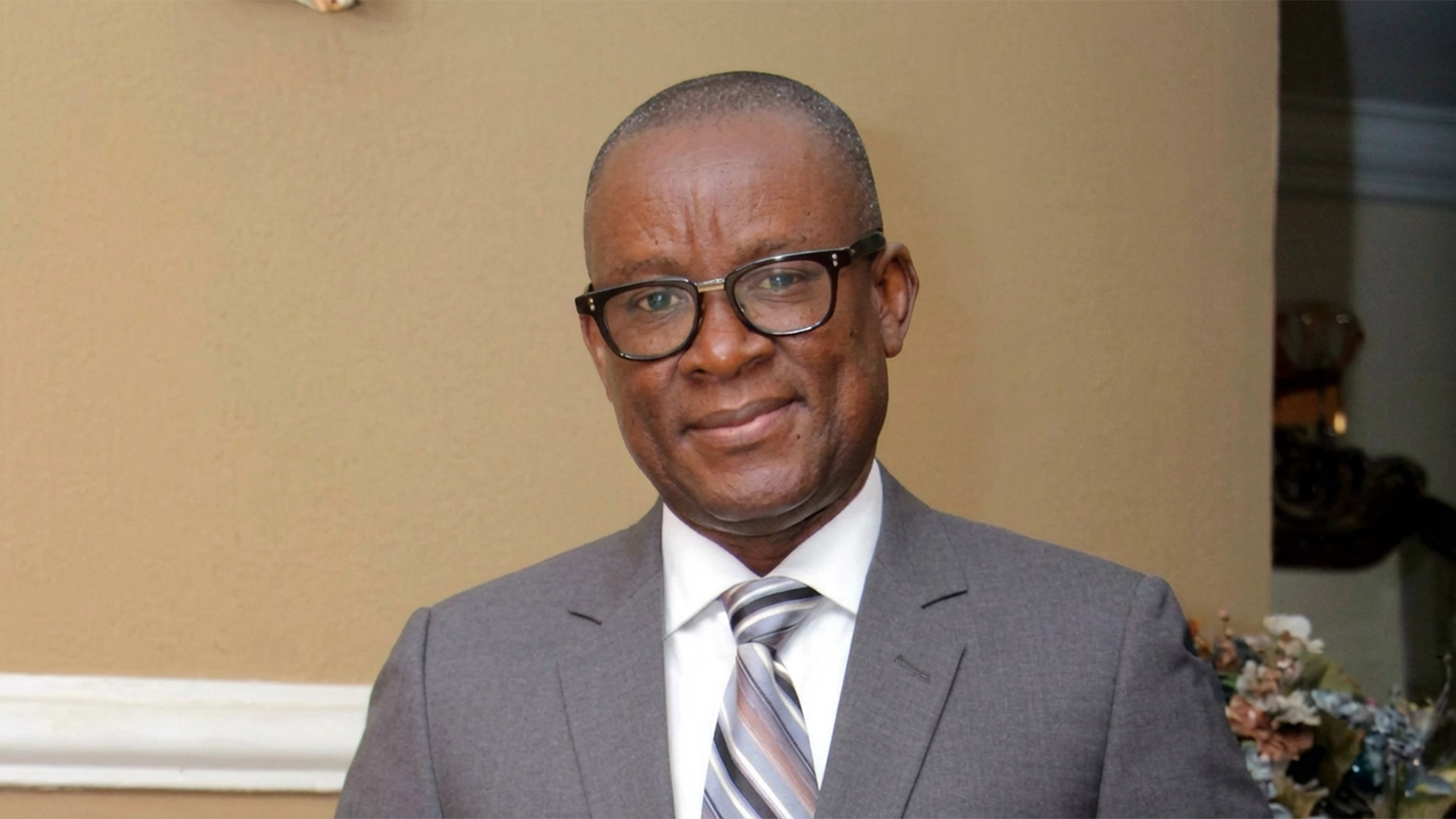
•30% lending rates threatening industrialisation push, says Enoh
Minister of State for Industry, John Owan Enoh, has warned that Nigeria cannot industrialise when manufacturers borrow at interest rates above 30 per cent, while competing businesses in countries such as Benin Republic and Cameroon reportedly access credit at about eight per cent.
This is as the Industrial Revolution Work Group (IRWG) of the Federal Ministry of Industry, Trade and Investment (FMITI) has agreed on a consolidated 30- to 90-day implementation framework to move the industrialisation agenda from policy commitments to measurable results.
The framework will focus on energy and infrastructure, finance and incentives, Made-in-Nigeria and market integrity, regulatory reform, as well as skills and innovation.
Enoh, who is the Chairman of IRWG, said the high cost of credit had become one of the major constraints to industrial expansion, urging the government to move beyond policy pronouncements and deploy financing instruments capable of providing affordable, long-term capital to manufacturers.
Speaking yesterday at the second technical session of the IRWG in Lagos, he said the recent rebasing of the Nigerian economy had made the economy statistically larger but had not fundamentally altered its industrial structure.

According to him, manufacturing still accounts for less than 10 per cent of total economic output, despite the increased size of the rebased economy.
He said the rebasing showed that Nigeria’s economy was now valued at N372.8 trillion, with services accounting for more than half of output and real estate overtaking oil.
However, he said manufacturing, which had been central to the development of virtually every advanced economy, remained a single-digit contributor to Nigeria’s output.
Enoh said: “So I will say plainly what the rebasing conversation has danced around for a year: the rebasing made Nigeria statistically larger. It did not make Nigeria more industrial.
“We got a bigger mirror; we did not yet get a stronger body. The mirror is not the achievement. And the body is built in factories.”
He said the next decade should therefore be judged by the volume and diversity of goods produced in Nigeria rather than how well the country measured its economy.
“The execution decade begins in this room,” he declared.
The minister identified energy, infrastructure, regulation, local production, skills and innovation as other major constraints that must be addressed if Nigeria is to achieve broad-based industrialisation.
Enoh said the country could not industrialise on generators, urging stakeholders to replicate the Idu pilot model of supplying gas to industrial clusters and providing electricity to manufacturers at predictable and affordable prices.
On regulation, Enoh called for the merger of overlapping licences and the elimination of unnecessary levies.
“Where two agencies perform one function, recommend which one stands down. Name the licences to be merged, the levies to be abolished, and the dates,” he said.
He also called for stronger enforcement of product standards, punishment of counterfeiters and effective measurement of federal procurement under the Nigeria First policy.
The Director-General of the Manufacturers Association of Nigeria (MAN), Dr Segun Ajayi-Kadir, supported the call for urgent action, warning that although manufacturing had remained resilient, it lacked the depth required to drive inclusive economic growth.
Presenting MAN’s State of Industry Report, titled The Real Numbers of the Real Sector: Nigerian Manufacturing and the Rebased Economy, Ajayi-Kadir said manufacturing’s share of GDP had declined despite growth in output.
He said the sector expanded in the second quarter of 2026 but remained below overall GDP growth of 4.43 per cent, with capital-intensive activities such as oil refining and cement accounting for a significant proportion of industrial expansion.
According to him, oil refining grew by 43 per cent and cement by 12.75 per cent, while the food, beverage and tobacco segment grew by only about three per cent.
“The economy is real, but unable and concentrated,” he said, stressing that Nigeria needed broader manufacturing growth to generate jobs, increase tax revenues and promote inclusive economic expansion.
Ajayi-Kadir also highlighted exchange-rate pressures and rising diesel costs as major challenges confronting manufacturers.
He noted that the official exchange rate had moved from about N400 to the dollar in June 2023 to approximately N1,450, while diesel costs had increased six- to seven-fold.
He said manufacturers were also contending with expensive credit and high logistics costs, which continued to undermine competitiveness and capacity utilisation.
The MAN chief called for broad-based acceleration of manufacturing rather than a selective recovery, with emphasis on cheaper credit, improved energy supply and stronger demand for employment-intensive products.
“Resilience should not be a permanent state. And so, when you are resilient, it doesn’t mean that you are growing,” he said.
He argued that the decisive test of Nigeria’s industrial policy would be whether manufacturing could sustain growth above the wider economy, saying only such expansion could spread economic gains into employment-intensive activities.
Also speaking, Managing Director of the Bank of Industry (BOI), Dr Olasupo Olusi, said no single institution could close Nigeria’s estimated industrial financing gap of more than $35 billion.
He stressed the need to mobilise more capital locally and internationally while expanding partnerships across the financial ecosystem.
Olusi said BOI was focused on deploying capital into productive activities, including factories, expanded production capacity, stronger local value chains and more competitive Nigerian enterprises.
He disclosed that BOI deployed more than N645 billion in 2025, the largest amount ever disbursed by the bank to the industrial sector, reaching more than 12,000 businesses across the 36 states and the Federal Capital Territory.
According to him, more than N300 billion went into agro-allied and core manufacturing activities, while at least N100 billion was deployed to critical infrastructure supporting industrial production.
According to a Communique issued at the end of the workshop, IRWG said the immediate priority was to convert existing commitments into actual results, including capital disbursed to businesses, infrastructure delivered, firms financed, production increased, workers placed and local contracts awarded.
It also called for a quarterly industrial scorecard to distinguish between commitments made by institutions and results delivered.
According to them, the five priority areas must be implemented as a single execution framework because energy, finance, regulation, market access, skills, technology and institutional coordination are interconnected. The framework is expected to identify what must be delivered, by whom, when it should be delivered and what actions depend on others.

