 Follow Us on Google News


 Follow Us on Google Discover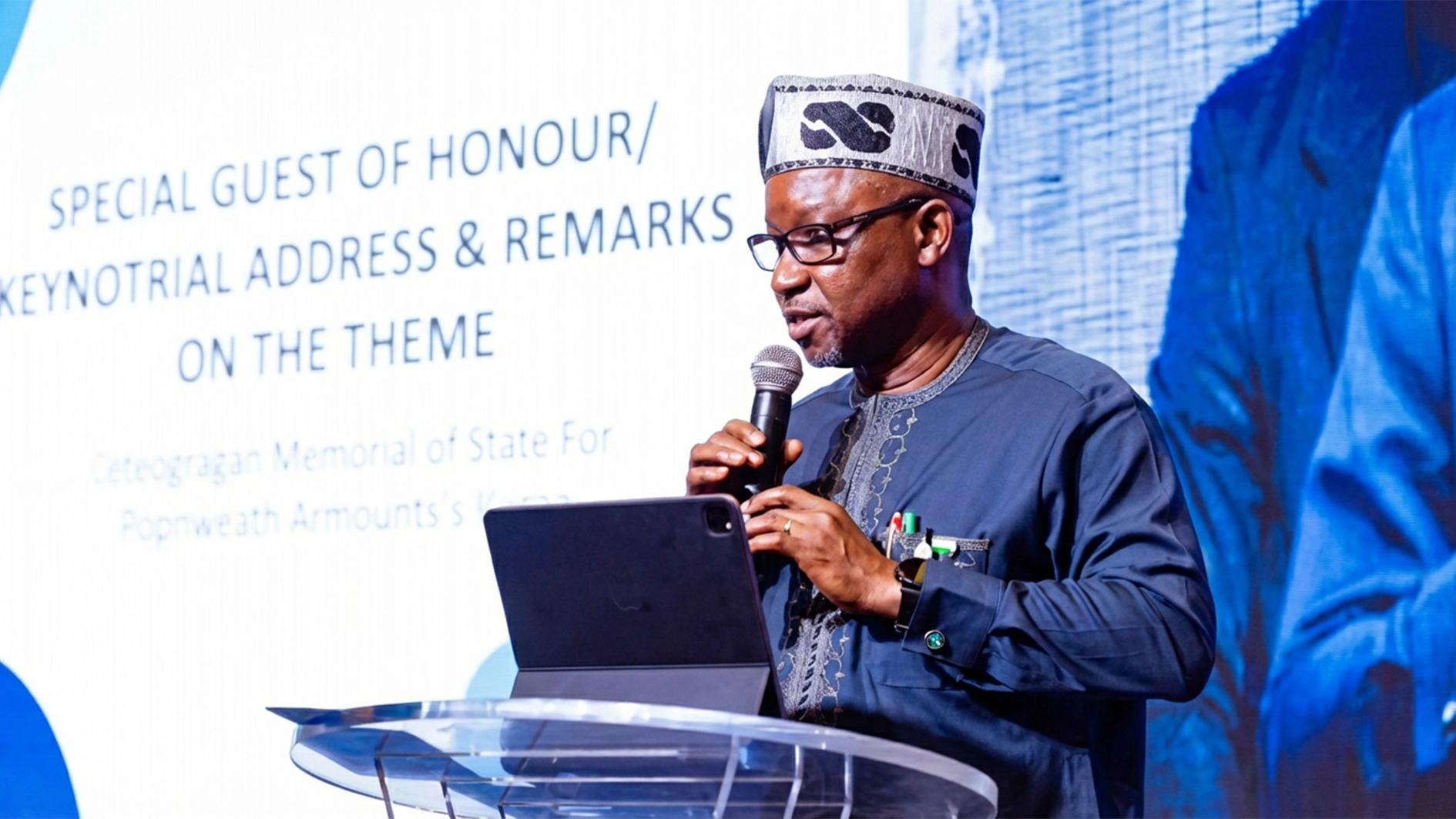
Oilserv Group said the anticipated changes to Nigeria’s domestic gas pricing framework will be decisive in unlocking fresh investment across the gas value chain.
Following the Federal Government’s decision last week, which signalled a shift towards cost-reflective tariffs in the coming days, Managing Director of Frazimex Engineering Limited, a subsidiary of Oilserv Group, Chuka Eze, said there was a need to urgently deepen gas utilisation to drive industrialisation.
The Minister of State for Petroleum Resources (Gas), Ekperikpe Ekpo, said the Federal Government was considering a transition to cost-reflective pricing within the domestic gas sector. The move, according to him, aimed at attracting private capital, addressing persistent debts in the gas-to-power value chain and stabilising energy supply.
Ekpo, at the Nigerian International Energy Summit in Abuja, noted that reform aligns with the government’s ambition of shifting Nigeria from “exporting molecules to exporting value”, positioning gas as a catalyst for industrial growth.
Against this backdrop, Oilserv argued that pricing remains a fundamental factor influencing investor confidence.
“Gas pricing is a determining factor because every investor would like to know their return on investment. If investors are to commit capital to develop infrastructure or explore and produce gas, they need clarity that the commercial terms will enable them to recover costs and make reasonable returns,” Eze said.

Nigeria holds over 210 trillion cubic feet of proven gas reserves, according to data from the Nigerian Midstream and Downstream Petroleum Regulatory Authority and the Nigerian Upstream Petroleum Regulatory Commission.
However, despite the abundance, supply constraints have continued to hamper power generation and industrial use.
Eze maintained that the challenge is not resource availability but infrastructure and financing.
“The gas that will drive economic impact is not the gas under the ground, but the gas that has been extracted, processed and transported to where it is needed,” he said.
He pointed to the Federal Government’s “Decade of Gas” initiative as providing policy direction, but stressed that implementation and funding decisions must follow swiftly to translate policy into tangible outcomes.
Oilserv, through its subsidiaries, has been involved in several major gas infrastructure projects, including the Obiafu-Obrikom-Oben (OB3) pipeline and the Ajaokuta–Kaduna–Kano (AKK) pipeline.
Eze said welding on the main AKK pipeline was completed in December last year, with remaining works focused on backend installations.
The 40-inch, 304-kilometre pipeline segment includes multiple block valve stations and terminal facilities designed to transport up to 700 million standard cubic feet of gas per day.
He said the OB3 pipeline, which connects key gas supply nodes, is already flowing about 300 million standard cubic feet of gas per day, with infrastructure designed to handle significantly higher volumes once upstream constraints are resolved.
Eze also stressed the organisation’s involvement in the Assa North-Ohaji South (ANOH) project and other domestic gas developments, arguing that local engineering and construction capacity has improved significantly in recent years.
He noted that detailed engineering for critical segments of the AKK project was executed by Nigerian engineers, describing it as evidence of growing in-country expertise.
“We have the talent and capability to deliver complex gas infrastructure in Nigeria. What is required is sustained opportunity and project flow,” he said.
On community engagement, he said Oilserv has adopted a model that integrates host communities into project execution, including training programmes in specialised skills such as automated welding.

