 Follow Us on Google News


 Follow Us on Google Discover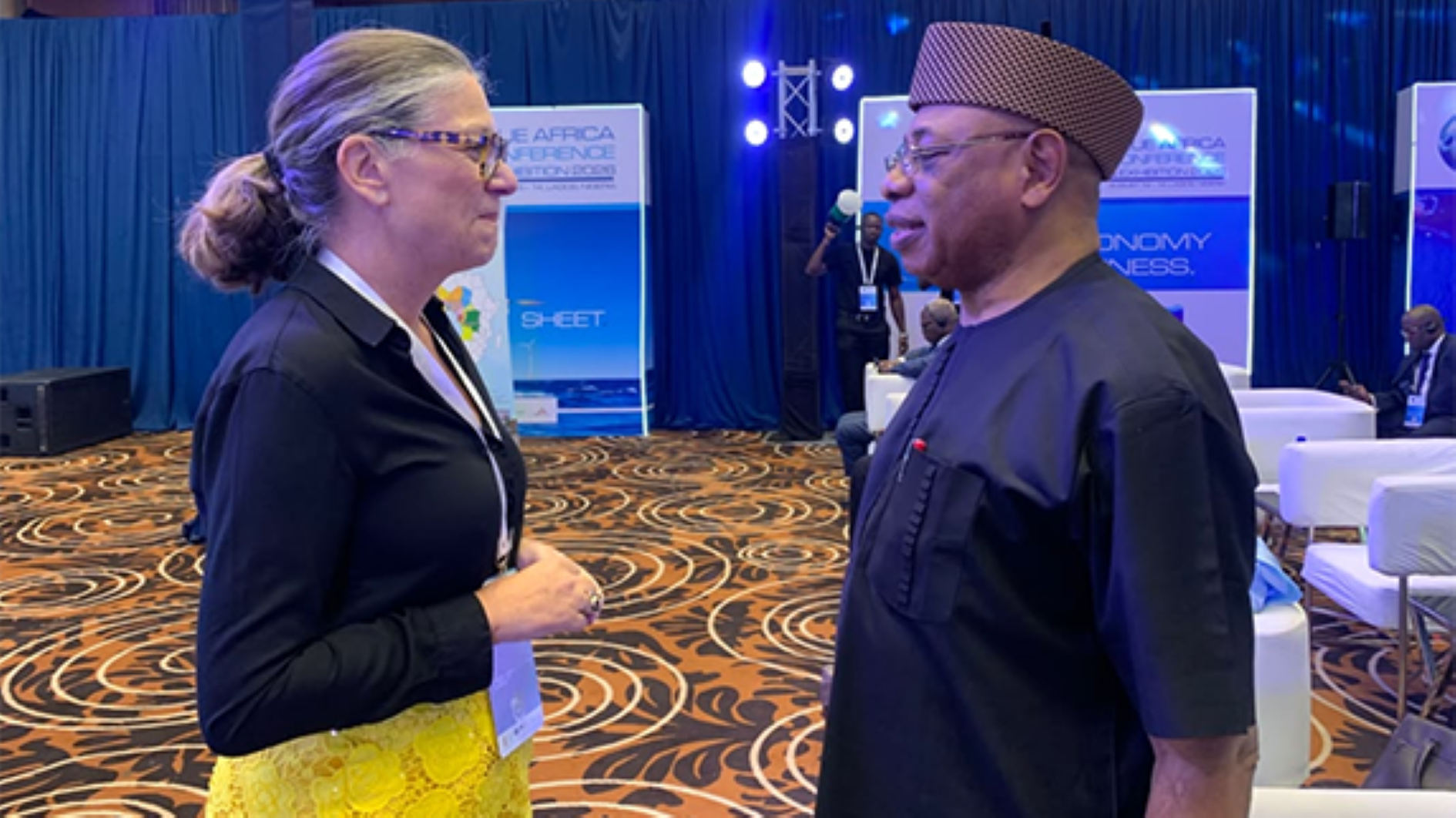
Fragmented markets, inadequate connectivity, limited value creation, weak governance and inconsistent policies have continued to prevent Africa from fully harnessing its vast marine and blue economy resources, which are estimated to reach $405 billion by 2030.
This was stated at the maiden edition of the Blue Africa Conference and Exhibition held in Lagos.
The African Union (AU) estimated that the continent’s blue economy could reach $405 billion by 2030 and up to $576 billion by 2063, while supporting about 49 to 50 million jobs.
Sierra Leone’s Minister of Transport and Aviation, Fande Turay, stressed that Africa’s maritime transformation requires more than infrastructure, noting that the continent’s oceans, coastlines, rivers and lakes are major economic assets that support trade, food security, livelihoods, biodiversity, energy and access to global markets.
Turay said African ports must become interconnected centres of trade, production and logistics rather than operate as isolated gateways and fail to realise their full potential.
He identified the African Continental Free Trade Area (AfCFTA) as an opportunity to strengthen maritime connectivity and integrate African markets, noting that efficient ports, harmonised policies, modern terminal operations and reliable maritime corridors would support increased intra-African trade.

The minister urged African governments to develop policies that promote value addition, strengthen local maritime industries, and create an enabling environment for investment in port development, logistics, fisheries, environmental protection, digital systems, and other ocean-based industries.
He also urged governments to work with development finance institutions, investors and the private sector to develop credible, bankable projects and attract investment into sustainable ocean industries.
Secretary General of the Maritime Organisation of West and Central Africa (MOWCA), Dr Paul Adalikwu, called on African countries to move beyond generating maritime wealth for export and take greater ownership of, investment in and control over their ocean resources, stressing that the continent must reverse the imbalance that allows it to create maritime value without retaining a fair share of the benefits.
The MOWCA scribe painted a stark picture of the continent’s maritime paradox, with over 30,000 kilometres of coastline, strategic trade routes, vast fisheries and offshore energy resources, yet foreign ownership of ships, external financing, imported technology and offshore insurance continue to drain value from the continent.
Adalikwu outlined a five-year imperative for measurable progress in maritime integration, stating that governments must place maritime development at the heart of economic strategy.
Speaking on maritime financing, Adalikwu pushed for a Maritime Bank of Africa, stating that MOWCA is advancing to mobilise patient capital, blended finance, guarantees and long-term equity and debt to fund ports, African shipping fleets, shipyards, fisheries, offshore renewables, maritime technology, security infrastructure, and skills development.
The Secretary-General said Africa cannot build competitive ports, fleets, shipyards and blue industries on external capital alone.
He insisted the blue economy must move beyond slogans to genuine ownership across the value chain, including vessels, ports and logistics, technology, fisheries processing, marine data, ship repair, maritime finance, and intellectual property.
Linking the maritime agenda to the AfCFTA, he stressed that ports are only as strong as their hinterland connections, adding that ocean-to-hinterland corridors, efficient logistics, rail, road and customs systems are essential if maritime infrastructure is to drive industrial transformation.
The Secretary General said people remain the real infrastructure, highlighting the need to invest in the training of African youths as seafarers, naval architects, engineers, port managers, logistics specialists, fisheries experts, maritime lawyers, data specialists, cybersecurity experts and entrepreneurs.
Consul General of the Royal Danish Embassy in Nigeria and Head of Economic Diplomacy, Jette Bjerrum, said the emergence of new digital companies and the transition from manual to digital processes would help improve efficiency and drive innovation across the maritime value chain.
She stressed the need for a full value chain approach to maritime development, calling for stronger collaboration among government agencies, the private sector and other stakeholders to unlock the potential of the blue economy.
The envoy reaffirmed the Danish government’s commitment to supporting the development of Nigeria’s maritime sector, which she emphasised was not only important to the country but also to the wider West African region.

