 Follow Us on Google News


 Follow Us on Google Discover
ADAKU ONYENUCHEYA writes that Nigeria continues to lose an estimated $500 million yearly as the Federal Government delays the implementation of the International Cargo Tracking Note (ICTN), a tool for combating smuggling, under-declaration of cargo and illicit trade.
The Federal Government’s failure to implement the International Cargo Tracking Note (ICTN) has continued to cost the country about $500 million yearly revenue loss from smuggling, under-declaration and procedural delays.
The Executive Secretary, Nigerian Shippers’ Council (NSC), Dr Pius Akutah, had, during a plenary session at the National Assembly, early last year, stated that the country loses about $500 million yearly to the non-implementation of the ICTN
Although the ICTN Bill has been passed by both chambers of the National Assembly – the House of Representatives and the Senate – it is still awaiting presidential assent.
The absence of a fully operational technology to monitor and track cargo movements and combat illicit trade has exposed Nigeria to significant economic and security risks, with exacerbated smuggling and trafficking of dangerous goods.
Cartels and non-compliant importers thrive in these gaps, engaging in illegal trade activities that cost the economy billions while tarnishing Nigeria’s global reputation.

Smuggling and underreporting of cargo have created loopholes in duty and tax collections, leading to billions in uncollected revenue, just as the lack of transparency in cargo handling has hurt Nigeria’s standing as a reliable trade partner. Moreover, the frequent entry of contraband, arms, hard drugs and other illicit goods compromises national security.
The Comptroller-General of the Nigeria Customs Service (NCS), Dr Bashir Adeniyi, had attested to this when he revealed that between 2018 and 2023, the country recorded the highest rate of ammunition smuggling.
The Service also intercepted 20 major shipments containing 10,498 arms and 114,929 rounds of ammunition, with a Duty Paid Value (DPV) of N9.58 billion.
Also, between June 2023 and May 2024, seizures of arms, ammunition, narcotics, pharmaceutical products and other illicit goods at ports and borders were valued at over N6 billion.
Animal and wildlife products worth N566 million were also confiscated during the same period.
Also, INTERPOL reports confirmed Nigeria’s significant role in the global stolen vehicle trade – a situation compounded by data from the National Bureau of Statistics (NBS), which reveals that only 54 per cent of stolen vehicles were recovered between 2013 and 2015.
The National Drug Law Enforcement Agency (NDLEA) also reported a seizure of over 2.55 million kilogrammes of illicit drugs, including cocaine, methamphetamine, cannabis, tramadol, and codeine at the seaports between 2021 and 2025, with an estimated street value exceeding N3 trillion.
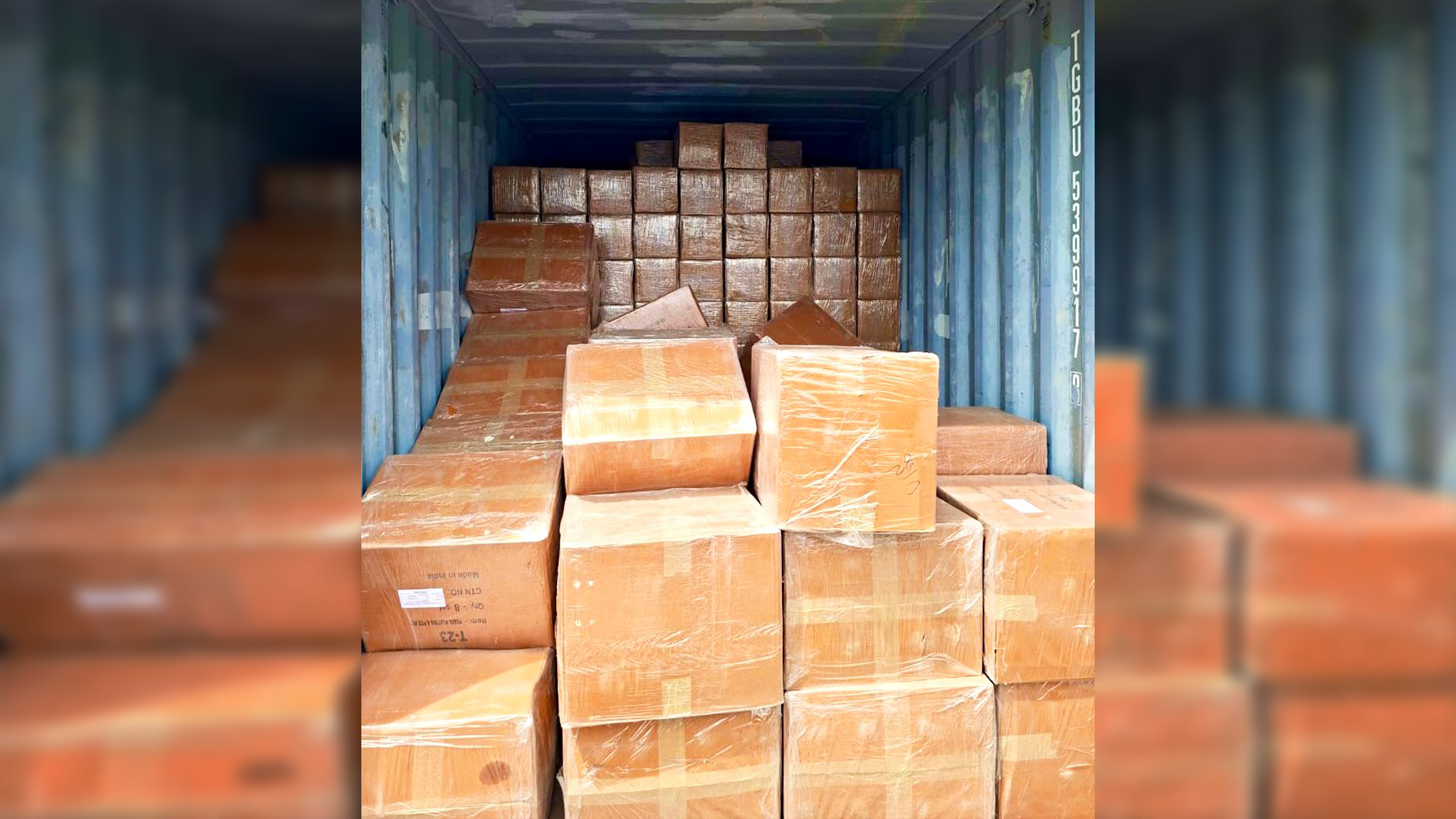
The NCS has also made several seizures of illicit drugs at Lagos ports, with the recent being 13 containers laden with expired pharmaceuticals, controlled drugs, security equipment and other prohibited goods worth N6.38 billion at the Apapa Port.
Five days after the seizure, the NCS, in collaboration with the NDLEA, intercepted and seized another two containers with 3,398 cartons of Codeine Syrup worth N3.39b billion concealed in household utensils at the Apapa Port.
This is due to the false declaration of goods by importers and their agents. Also, they often under-declare the value or quantity of the goods to pay lower duties and taxes.
These illicit trades persist, with some intercepted at entry points, while a larger volume evades security detection, making its way into the local markets.
However, the implementation of the ICTN, according to experts, will address these challenges.
Benefits of ICTN
The ICTN is an electronic system that provides real-time tracking, enabling stakeholders -including port authorities, customs, freight forwarders, terminal operators, and shipping companies – to monitor cargo from the moment it is loaded at the port of origin until it arrives at its final port of destination.
The ICTN is also designed to ensure the traceability of goods across international borders by assigning a unique identification number to each shipment.
This mechanism enhances visibility and accountability in the shipping process, reducing opportunities for fraud, smuggling and theft, particularly in monitoring daily crude oil exports and eliminating oil theft.
Additionally, it facilitates customs clearance by providing real-time updates that alert authorities to any discrepancies in cargo movement.
The concept of ICTN emerged from the need for greater efficiency and transparency in the global supply chain, particularly as trade and commerce expanded, increasing the complexity of cargo management.
The system bridges gaps in existing tracking mechanisms, especially for shipments transiting multiple countries and ports.
With a unique digital identification number, ICTN provides real-time updates on cargo location, status, and condition, eliminating uncertainties and mitigating transit risks.
Globally, countries with advanced maritime and logistical infrastructures have adopted ICTN to combat corruption, reduce delays and improve operations.
Several countries that have successfully implemented cargo tracking systems, reaping the substantial benefits, include South Africa, Singapore, United Arab Emirates (UAE), among others.
Director of International Trade at the Maritime Researchers and Authors Association of Nigeria (MARASSON), Sunday Ademuyiwa, said the ICTN aligns Nigeria’s cargo tracking system with international best practices, enhancing the country’s reputation as a reliable trading partner.
Ademuyiwa said the system will ensure improved efficiency as it automates cargo tracking, reducing paperwork and administrative burdens on shippers and customs officials.
He noted that the ICTN is expected to increase government revenue through improved tracking and monitoring of cargo, reducing losses from smuggling and tax evasion.
He also stated increased transparency, adding that the system provides accurate and timely information on cargo movements, enabling better planning and decision-making.
“ICTN allows for real-time tracking of cargo, improving security and reducing the risk of cargo theft or tampering,” he said.
Obstacles to implementation
Despite the success and its substantial benefits, ICTN’s implementation in Nigeria has been marred by external threats and internal challenges, including backroom negotiations, financial mismanagement, personal interests, bureaucratic bottlenecks and unhealthy rivalries among government ministries and agencies.
Critics also argue that the multimillion-naira ICTN, which was first introduced in Nigeria in 2010 during the Yar’Adua/Jonathan administration to combat illicit imports and boost government revenue, will, however, add to the already high cost of shipments and container clearance.
Meanwhile, setbacks, including corruption, stakeholder disagreements, and fraud allegations, led to its suspension in 2011 by then Finance Minister, Dr Ngozi Okonjo-Iweala.
The contract was signed between the Nigerian Ports Authority (NPA) and a Belgian firm, TPMS-Antaser-Afrique and operated for one year before Okonjo-Iweala suspended it because the scheme was hurting businesses.
The Economic and Financial Crimes Commission (EFCC) later investigated over €40 million accrued before the scheme’s termination, which was unaccounted for.
In 2019, the Nigerian Shippers’ Council (NSC) reintroduced the ICTN, citing a surge in illicit trade importation and the need to align with global standards.
The administration of former President Muhammadu Buhari engaged five companies for the contract, and approval was granted, although the process that led to the contract’s approval was flawed.
The Council signed an agreement with Antaser Limited and four other companies on a “no cure, no pay” basis, with a revenue-sharing ratio of 60:40 between the Federal Government and the consortium, respectively.
A consortium led by Antaser Nigeria Limited was engaged in 2023 to implement the system for all imports and exports, including crude oil exports.
However, in 2024, the Federal Government awarded the contract to P-Lyne Energy Limited, with the expectation that the company would provide technological solutions for the oil and gas sector.
However, challenges persist, including insufficient digital infrastructure, stakeholder resistance, regulatory hurdles, lack of self-awareness to fully integrate ICTN into stakeholders’ operations, creating friction and delays in its implementation.
Controversy continues
Stakeholders have continued to kick against the ICTN, citing additional costs.
Ademuyiwa said while the ICTN had its benefits, some disadvantages should not be ignored.
He said implementing ICTN may impose additional costs on shippers, which could be passed on to consumers, adding that there would be resistance by some stakeholders, such as freight forwarders, due to concern about added costs and bureaucracy.
He also highlighted data security concerns, stressing that the system required the collection and storage of sensitive data, which raises concerns about data security and confidentiality.
“The system requires significant investment in infrastructure and technology, which may be a challenge for some stakeholders,” he said.
Managing Director of Worldscope International Logistics Limited, Dr Segun Musa, said Nigerian supply chain management is rapidly becoming too fragile to accommodate additional costs or unnecessary bureaucratic processes, such as ICTN, which can nosedive and frustrate the economic system of the country.
“I sincerely hope that concerned stakeholders would critically look into this trade obstacle (ICTN), whose primary intent is to maximise the agency revenue by increasing the cost of doing business in Nigeria,” he said.
He described the ICTN as the Federal Government’s migration of the country back to the pre-shipment regime or destination, cautioning the NSC to stop creating unnecessary systems for generating revenue.
Musa said over a decade ago, the Nigerian government migrated from the Pre-Shipment Inspection regime to the Destination Inspection regime to demonstrate its confidence in the Nigeria Customs Service’s capability to effectively manage cargo inspection, maximise government revenue more efficiently than during the pre-shipment era, and promote trade facilitation.
“The efforts of the shipper’s council to stylishly push us back to a pre-shipment or partial pre-shipment regime are absolutely in conflict with the federal government’s genuine intention to drive our economy to prosperity.
“The Nigerian supply chain management is rapidly becoming too fragile to accommodate additional costs or unnecessary bureaucratic processes such as ICTN, which is capable of nosediving and frustrating the economic system of the country,” he said.
Meanwhile, the NSC boss expressed optimism that the ICTN bill will get the president’s assent.
Akutah explained that ICTN helps minimise the risk of smuggling, illegal activities, and the entry of counterfeit or prohibited goods.
He said the system also provides visibility into the movement of goods, reducing corruption and ensuring that importers and exporters can track their shipments at all stages.
“By improving the efficiency of cargo clearance and reducing delays, ICTN ultimately lowers costs for businesses and consumers alike,” he stated.
Meanwhile, the implementation of ICTN is expected to have far-reaching impacts on Nigeria’s economy and port security.
By reducing smuggling, underreporting of cargo, and other fraudulent activities, the system can significantly increase government revenue through accurate and timely duties and taxes.
Additionally, ICTN will enhance the efficiency of Nigerian ports by reducing waiting times and shipping costs, making the country a more attractive destination for international trade and investment.
The system ensures all cargo entering and leaving the ports is fully tracked, making it easier to identify suspicious shipments and prevent illegal activities, such as contraband trafficking.

