 Follow Us on Google News
 Follow Us on Google Discover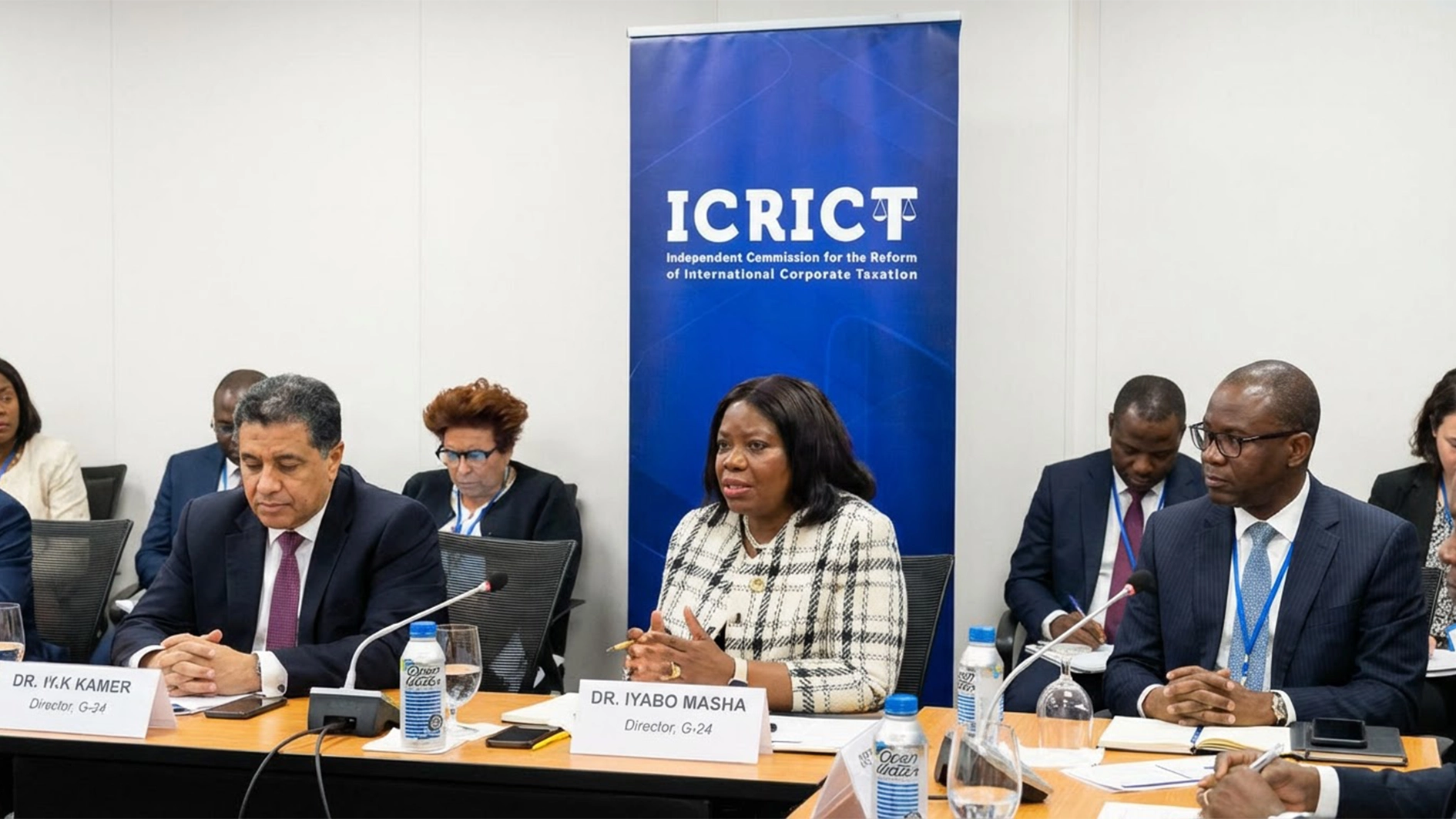
Nigeria is set to host the 2026 Technical Group Meeting of the Intergovernmental Group of 24 on International Monetary Affairs and Development (G-24) amid mounting global economic strain marked by volatile exchange rates, rising debt burdens, trade tensions and tightening development finance.
Speaking ahead of the event, Director of the G-24, Dr Iyabo Masha, said Nigeria is expected to take centre stage in the campaign for a fairer global financial architecture.
Masha stated that the global financial pressure disproportionately affects developing countries.
Founded in 1971 amid upheavals in the Bretton Woods monetary system, the G-24 was established to offer a coordinated voice of developing economies in negotiations with developed countries and multilateral institutions such as the International Monetary Fund and the World Bank.
“The whole idea was to form a representative organisation of the largest economies in the Global South and have them negotiate collectively on exchange rate policies, development financing and international tax cooperation,” she explained.
Masha noted that the global system remains heavily dollarised, as the US dollar accounts for roughly 58 per cent of international transactions, which leaves developing economies vulnerable to exchange rate shocks and monetary tightening in more advanced economies.
She added that many developing countries rely heavily on external financing due to the low capacity of domestic capital markets, thereby exposing them to shifts in global interest rates and capital flows.
She explained: “One of our most crucial mandates is continuous engagement within the international financial architecture to ensure developing countries have better outcomes — whether in the interest rates they pay or the type of financing they receive.”
Masha hinted that the meeting with ‘Mobilising Finance to Promote Sustainable, Inclusive and Job-Creating Growth’, as the theme will feature five major panels addressing reform of the Bretton Woods institutions, digital taxation, climate transition financing, financial inclusion and regional trade integration.
According to her, the key focus will be on the taxation of multinational digital corporations such as Google and Facebook, which generate substantial revenues in developing markets without establishing physical presence.
She disclosed that countries that have implemented digital tax reforms have recorded revenue gains of between 10 and 12 per cent, citing Kenya and Sri Lanka as examples.
Masha acknowledged the dilemma confronting oil-producing countries that have to balance decarbonisation commitments with the reality that hydrocarbons remain major sources of revenue and employment, saying the transition must be managed carefully so that it does not destabilise fiscal systems.
Speaking specifically on the global debt dilemma, especially on developing economies, Masha stressed that the meeting will deliberate on rising sovereign debt pressures.
Masha identified the G20 Common Framework for Debt Treatments as a mechanism that allows countries facing unsustainable debt to renegotiate repayment terms and free up fiscal space.
Also speaking on Nigeria’s tax reforms, Masha admitted that domestic resource mobilisation remains the most sustainable path to development financing, adding that some developing countries collect as little as seven per cent of GDP in taxes compared to 20–30 per cent in advanced economies.
Noting that countries with tax-to-GDP ratios in the mid-20s can fund infrastructure, education, healthcare and security without destabilising borrowing because of domestic funds majorly from taxes.
Though she acknowledged past weaknesses in Nigeria’s tax administration, which had battled with fragmentation and weak enforcement, she expressed optimism that ongoing reforms would broaden the tax net, incentivise formalisation and improve tax administration efficiency.
According to her, discussions on regional trade as a buffer against global fragmentation will be held centred around the African Continental Free Trade Area.
Masha maintained that greater intra-African trade could reduce dependence on distant markets, noting that over 40 per cent of frozen chicken consumed in West Africa is imported from outside the region despite local production capacity.
“If countries focus on competitive sectors and remove barriers, regional integration can significantly boost growth,” she said.
Indeed, Nigeria currently chairs the 29-member G-24, with previous technical meetings held in Manila and Buenos Aires.
There are about 45 delegates scheduled to attend the confab and representatives of international agencies, including the United Nations Conference on Trade and Development and the International Labour Organisation.


