 Follow Us on Google News
 Follow Us on Google Discover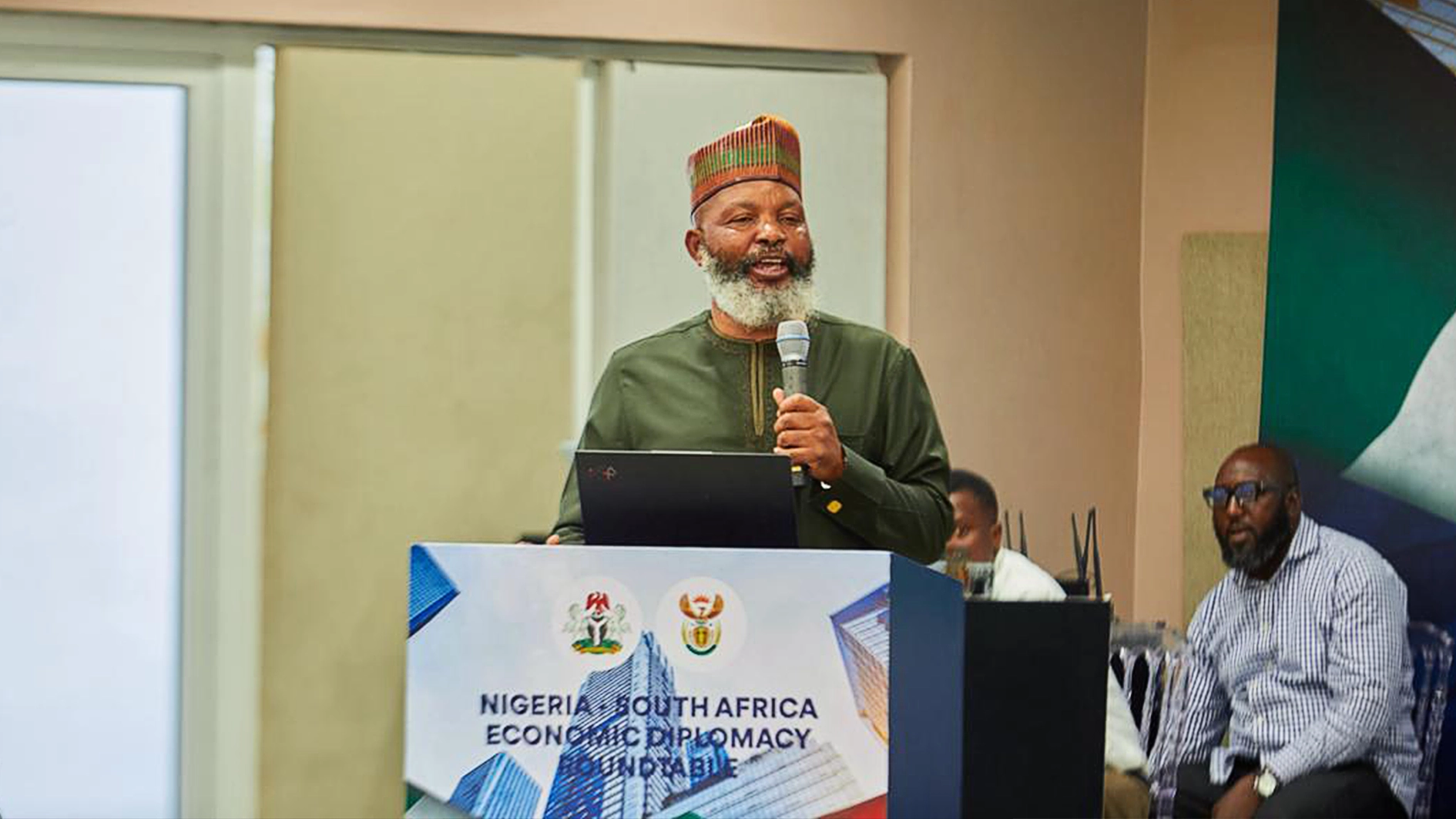
Calvin Phume is the Director for Africa Bilateral Economic Relations at South Africa’s Department of Trade, Industry and Competition (DTIC). A seasoned trade diplomat, he speaks with ISAAC CHIBUIFE on efforts to strengthen trade and investment ties between Nigeria and South Africa, the implementation of the African Continental Free Trade Area (AfCFTA), visa concerns and recurring tensions around xenophobia, on the sidelines of South Africa’s Freedom Day celebration hosted by the South African Consulate General in Lagos.
What is the significance of South Africa’s Freedom Day hosted by the Consulate General in Lagos? What has been the focus of the engagements so far?
We are marking the South African Freedom Day through a series of activities organised by the South African Consulate General Office here in Lagos, where we will be having an official ceremony to mark what South African freedom means to us as a nation. We were joined by the Deputy Minister of the Department of International Relations and Cooperation, Thandi Moraka, who led a business delegation. We held a series of meetings with the Nigerian private sector to strengthen trade and investment relations between the two countries and also to gain a clearer understanding of the challenges Nigerian businesses may be encountering in trying to enter the South African market.
Beyond the engagements, how can we deepen bilateral trade and investment between South Africa and Nigeria, given that several South African companies such as MTN, Multichoice and Standard Bank already have a presence here?
We have very good relations between the two countries and there is a genuine commitment on both sides to promote trade and investment relations. However, there are macroeconomic challenges that Nigeria faces, which go beyond the capacity of the Federal Government alone. They are, in part, global in nature.
The foreign exchange (FX) is one issue we hear about constantly; some South African companies are unable to repatriate their returns because the Central Bank of Nigeria (CBN) may not have sufficient liquidity. Equally, companies that have invested here and need to procure certain products outside Nigeria find the FX allocation process a significant obstacle. But these are challenges that both governments are actively working on together. Based on South Africa’s manufacturing capabilities, we believe we can offer real value in helping the Nigerian private sector to navigate and thrive within this environment.

Most observers argue that the implementation of the African Continental Free Trade Agreement (AfCFTA) has been sluggish. Given that both Nigeria and South Africa have ratified the agreement, what concrete steps could be taken to accelerate its full operationalisation?
Out of 54 countries — 53 if we exclude Eritrea, which has not yet fully ratified – all other African countries have ratified the agreement. The critical next step is for governments to domesticate it by gazetting it into their domestic laws.
Currently, only 23 countries have done so and we strongly encourage the others to follow suit so that we can begin trading preferentially within the framework. I am glad to say that both South Africa and Nigeria have already completed this process. South Africa gazetted the agreement on the 31st of January, 2024, while Nigeria followed on the 15th of April 2025. This means South Africa and Nigeria can, right now, begin exploring the preferential trade opportunities that the AfCFTA affords us, as we are both fully operational members of the agreement.
South Africa is said to have eased visa restrictions for Nigerians. Yet, Nigerian business travellers continue to complain about difficulties in obtaining visas. What is your response to those concerns?
There is a misconception that the South African High Commission or Consulate General refuse to issue visas to Nigerian nationals. That is simply not accurate. Some rules and regulations must be followed, and if Nigerian business travellers comply with those requirements, they will have no difficulty obtaining their visas. The issue is that many people choose to use travel agents rather than apply directly. Unfortunately, those agents sometimes submit fraudulent documentation.
For instance, I know of cases where a prominent Nigerian businessman handed over his passport to an agent without providing the required supporting documents, such as bank statements. The agent then fabricated those statements. When our consular officers carried out verification and contacted the bank, the figures did not match, and the application was declined — rightfully so. The real solution is education: every Nigerian national must understand that they are responsible for submitting their own genuine documents, not those manufactured by third parties.
Over the years, Nigeria-South Africa relations have been strained by trade disputes and recurrent reports of xenophobic attacks against Nigerians living in South Africa. How do you respond to those allegations and what is the government doing to address them?
South Africa is not a xenophobic country. What you see reported are isolated incidents that are routinely mischaracterised. When South African law enforcement agencies carry out their lawful duties, some Nigerian nationals in South Africa resort to social media to frame their actions as targeted attacks, which is not the case. If you were to consult the Nigerian High Commission in Pretoria or the Nigerian Consulate in Johannesburg, they would tell you plainly what the real issues are.
There are groups of Nigerian nationals in South Africa who have organised themselves into factions and engage in territorial disputes among themselves. These are not xenophobic attacks by South Africans against Nigerians. South Africa is very open to legal Nigerian investment and those who conduct themselves within the law experience no difficulties. What we find troubling is the coordinated media narrative — sometimes the same story, the same wording, appearing simultaneously across multiple media outlets, which appears designed to damage the strong trade and investment relationship between the two countries. At the political level, there is no animosity whatsoever. We have presidential-level engagement and a robust Joint Ministerial Advisory Council on Industry, Trade and Investment between the ministers of both countries, which reports directly to the two presidents under the South Africa-Nigeria Binational Commission.
What is the long-term vision for Nigeria-South Africa collaboration, particularly in the area of infrastructure and economic development?
Everything we are doing here will be reported to the two heads of state. This is not a one-off event — next year, we will be back, and the engagements will be even more substantive. South Africa and Nigeria are the two largest economies in Africa. If we collaborate on joint projects, identifying the complementarities between our sectors, the potential is immense. On infrastructure, South Africa has world-class development finance institutions — the Development Bank of Southern Africa, the Industrial Development Corporation, the Public Investment Corporation, and the Export Credit and Insurance Corporation — which together constitute what we call South Africa Inc., providing financing for infrastructure and a broad range of sectors including automotive, agriculture, agro-processing, manufacturing, and pharmaceuticals. Our goal is to build shared value chains across these sectors so that both Nigeria and South Africa can fully harness the opportunities the AfCFTA presents not just for our two countries, but for the entire continent.

