 Follow Us on Google News


 Follow Us on Google Discover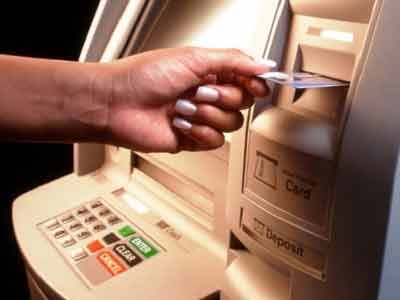
The holidays have come and gone and left a bitter taste in the mouth for most Nigerians. What with the scarcity of fuel, the high cost of patronising the black market and the rogue stations which were milking the public by selling the product at prohibitive rates.
Currently, there are no self-serve stations in the country. In a free market, consumer should be given an option. There is no value addition in the downstream sector of the petroleum industry. There is a need for the government to allow the market to grow and provide competitive services for the public.
The only form of payment for fuel at various filling stations in the country is cash. It is important for the retailers to integrate debit cards into pump dispenser, to enable customers who opt to pay with cards to do so.
Also pre-paid fuel cards can be developed to make for ease of payment for the products. Most car owners attest to the lack of trust that exists between them and their drivers when they give them cash to buy fuel. Car owners are often unsure their drivers would buy up to the amount they were given. Availability of various modes of payment will make transactions more transparent.
Establishment of self-serve stations will allow consumers the option of accessing these products 24 hours a day; they can fuel up at night if they choose, especially when attendants may have closed for the day and the filling stations shut down. In the absence of such a facility, customers are limited to only certain hours of service within the day.
It is critical to give consumers the flexibility and convenience to choose what option is suitable for them. This would provide the much needed competition even among the retailers; nudge them to improve their services, service such as clean restrooms which are hardly provided at most filling stations. Few of them provide free air pressure checks on tires, cleaning of windshield and oil level checks.

Giving the customers the options at the end of the day creates competition in the market and results in lower prices and provision of better services.
ATM machines and its downsides in Nigeria
The arrival of the ATM on Nigeria’s shores has drastically changed the banking landscape in the country. It has provided customers with easy 24 hour access to cash outside the banking halls, thereby cutting down on waiting time and paperwork, as well as access to cash after banking hours, weekends and public holidays.
Customers are also able to check their bank balances and transactions, transfer funds between different bank accounts, make payments for business transactions on the POS, payment of utility bills, withdraw cash when outside the country (until recently).
The ATM card can more or less be resorted to as a customer’s “personal teller.”
It also has its disadvantages. Any customer who has experienced inserting his ATM card into an ATM machine and as a result of forgetting his pin number has had his ATM card seized by the machine, especially if this happens after banking hours or at weekend, can attest to the miserable feeling of being shut out from accessing his cash.
It was only recently I discovered that there are ATM machines outside Nigeria where when the cards are inserted, the machines do not ingest them; the cards remain outside the machines. If the transaction is not completed the customer still has access to his ATM card. At no point in time does the card disappear into the dark recesses of the machine
It is important that the Central Bank of Nigeria (CBN), the regulator in the banking sector mandates banks to upgrade their ATM machines to these more customer friendly versions.
The express checkout lane in Shoprite, Jabi, Abuja
I had to make a quick stop at the newly opened Shoprite store in Jabi, Abuja. The store was very busy with shoppers. I needed to pick up about three items and run home to complete dinner. Unfortunately this was not to be. After picking the items, I hurried towards the express checkout lane. My intention was to be out of the store as quickly as possible. The two express checkout lanes in the store had been clogged by shoppers with large number of items in their cards.
It was frustrating as shoppers with few items like me who had hoped that our shopping trip was going to be expedited since we only had few items, were left queuing up for more than 30 minutes. I drew the attention of the cashier to it, asking why she was attending to people with huge carts at the express checkout lane; she simply threw up her hands in the air.
She was expressing her frustration with customers who insisted they must be attended to despite the large number of items in their carts. All attempts to educate them on why they should not have been on the express checkout lane fell on deaf ears.
I didn’t think that it was my responsibility to enforce the rules at the supermarket, which I believe was the reason they had floor managers. Alas, they were nowhere to be found!

