 Follow Us on Google News


 Follow Us on Google Discover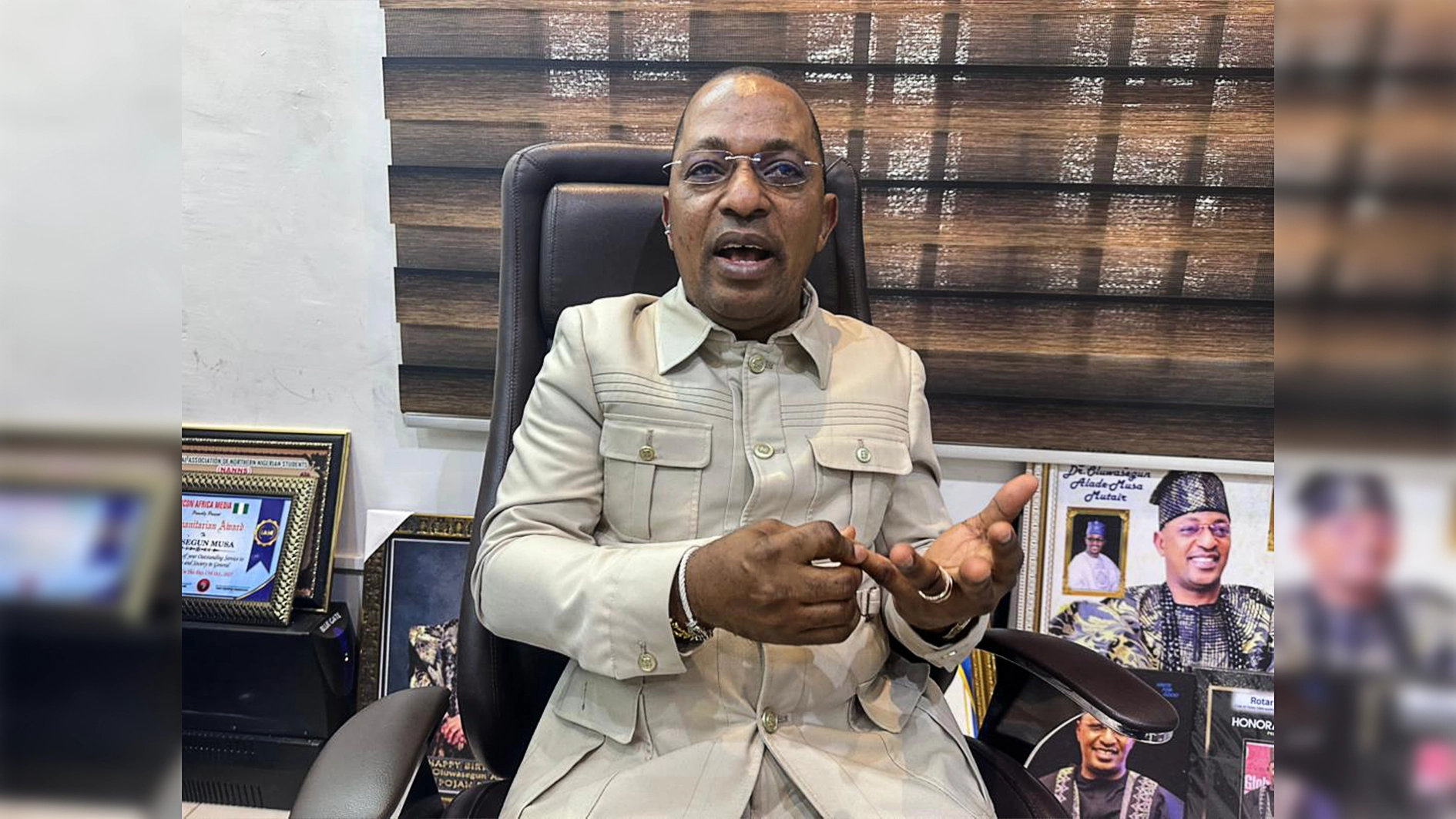
Nigeria loses an estimated $4 billion yearly to transport inefficiencies caused by traffic congestion, poor multimodal integration and fragmented logistics systems, with delays in implementing transport reforms putting additional N800 billion in avoidable logistics waste.
This was disclosed yesterday at the 2026 Global Transport Policy (GTP) Multimodal Roundtable held in Lagos with the theme: ‘Transforming Nigeria’s Transport System: Integrating Solutions for Safety, Efficiency and Sustainability’.
Chairman of the Global Transport Policy, Dr Oluwasegun Musa, who revealed this, said the country’s logistics costs account for over 42 per cent of Gross Domestic Product (GDP), far above the global best practice of less than 15 per cent, warning that the current transport system continues to drain the economy and undermine national competitiveness.
Musa said road transport currently carries over 90 per cent of Nigeria’s freight and passengers, while rail accounts for less than one per cent, describing the imbalance as unsustainable and increasing transportation costs and carbon emissions.
He noted that a container travelling from Lagos to Kano currently changes hands about five times and can take up to two weeks to reach its destination due to poor coordination among transport modes.
According to him, developing integrated transport corridors could reduce travel time by 40 per cent, cut logistics costs by 25 to 30 per cent, lower commodity prices and increase the country’s GDP by an estimated 1.5 per cent.

He warned that delays in implementing transport reforms come at a high economic cost, with every year of delay adding N800 billion in avoidable logistics waste.
Musa called for stronger collaboration between the government and the private sector to accelerate infrastructure development, stressing that public-private partnerships (PPPs), Build-Operate-Transfer (BOT) models and foreign direct investment are critical to closing Nigeria’s transport infrastructure gap.
Lagos State Governor, Babajide Sanwo-Olu, stressed that the country’s economic ambitions, from becoming a leading African Continental Free Trade Area (AfCFTA) trade hub to achieving food security, industrialisation and competitive manufacturing, will rise or fall depending on the quality of its transport infrastructure and systems.
Sanwo-Olu, represented by the Managing Director, Lagos Metropolitan Area Transport Authority (LAMATA), Abimbola Akinajo, emphasised experts’ warnings that fragmented logistics systems keep Nigeria’s distribution costs at between 20 and 30 per cent of the value of goods, compared to the global benchmark of 8 to 11 per cent.
He also highlighted the importance of deploying technologies such as Artificial Intelligence (AI), smart mobility systems, digital ticketing, real-time traffic data and connected infrastructure, stressing that Nigeria must begin adopting these solutions now while also developing them locally to address its unique transport realities.
The Governor said the countries that will lead in the next phase of global economic competition will be those that combine physical infrastructure investments with intelligent systems.
He further noted that the transport challenges before the country and the solutions that will address them cross state boundaries, span federal competencies and require coordinated national direction that only the national government can provide.
Sanwo-Olu also added that policy alignment, resource mobilisation and regulatory framework that will truly transform Nigeria’s transport ecosystem must flow from the federal government in partnership with the states and the private sector.
Chief Operating Officer of GTP, Mark Onoruoiza, emphasised the potential of integrating maritime, aviation, road, rail and pipeline transport, noting that no single mode can unlock Africa’s trade potential on its own.
He said intra-African trade currently accounts for only 15 to 22 per cent of the continent’s total trade, compared to 60 per cent in Europe and 40 per cent in Asia.
Onoruoiza also noted that logistics costs in Nigeria are estimated at 25 per cent of GDP, while freight, logistics and other inefficiencies account for as much as 45 per cent of the total trade value, compared to just five to 10 per cent in more efficient markets.
President/Chairman of Council, Chartered Institute of Logistics and Transport (CILT), Dr Boboye Oyeyemi, called on the Federal Government to urgently operationalise the National Land Transport Policy, eliminate overlapping regulatory mandates across the transport sector, and accelerate rail modernisation to reduce the country’s high logistics costs and improve trade competitiveness.
Oyeyemi said Nigeria must implement far-reaching structural reforms to unlock private sector investment, improve freight movement and position the country to benefit from the African Continental Free Trade Area (AfCFTA).
According to him, such reforms would create a predictable and transparent legal framework capable of attracting large-scale Public-Private Partnership (PPP) investments into the transport sector.

