 Follow Us on Google News
 Follow Us on Google Discover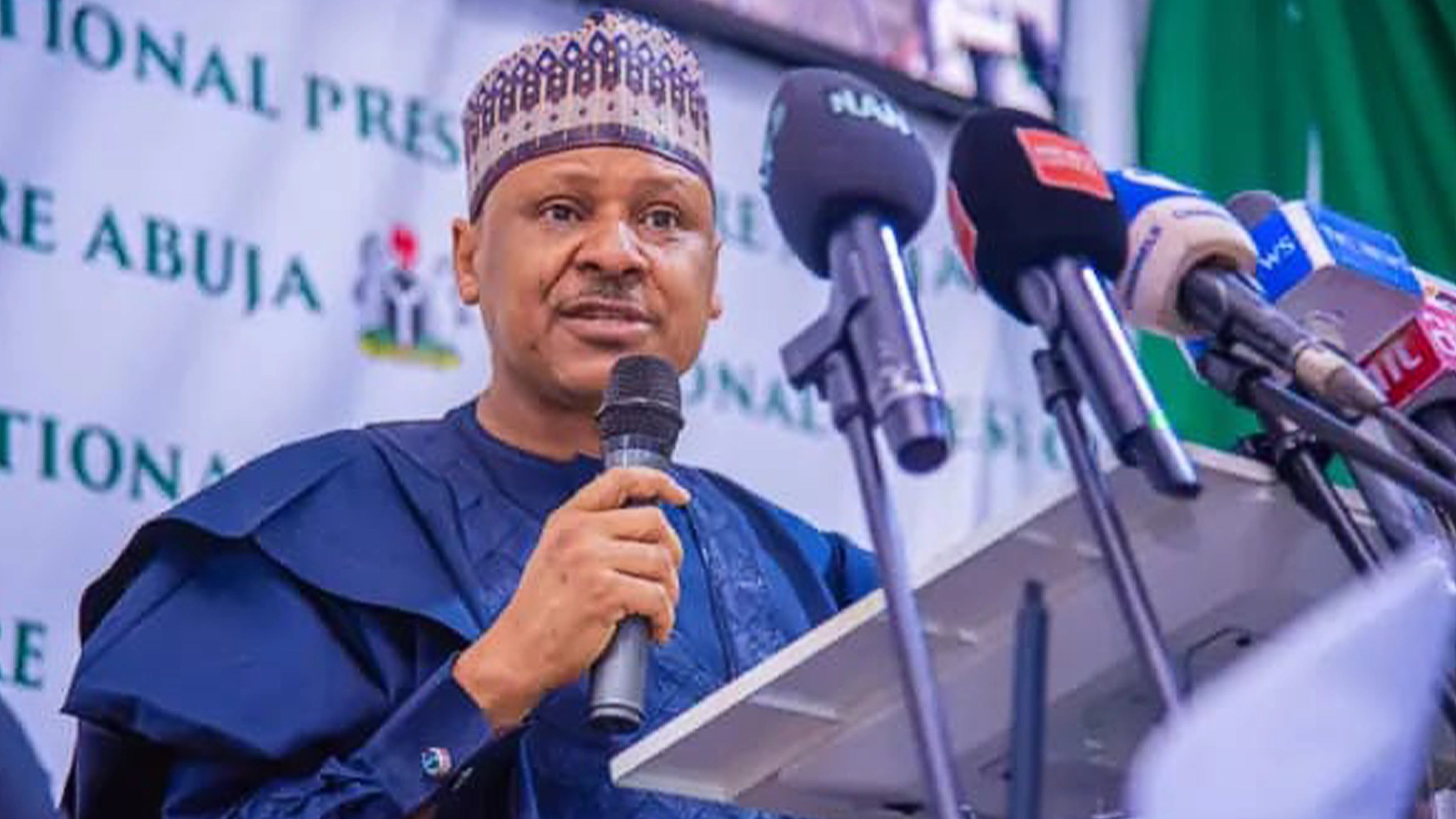
Corporate governance frameworks alone cannot eliminate misconduct in Nigeria’s public and private institutions without strict enforcement, accountability and sanctions, governance experts have said, urging the country to shift from governance rhetoric to implementation if it hopes to strengthen institutions, attract investment and accelerate economic growth.
Governance advocates spoke in Lagos at a press conference ahead of the third National Corporate Governance Summit, where they acknowledged growing public concerns over the persistence of abuse of office and ethical lapses despite years of governance reforms, regulations, advocacy and conferences.
The summit was jointly organised by the Financial Reporting Council of Nigeria (FRC), the Ministry of Finance Incorporated (MoFI), the Institute of Chartered Secretaries and Administrators of Nigeria (ICSAN), and the Institute of Directors (IoD) Centre for Corporate Governance (IoDCCG).
Addressing concerns on whether governance summits and communiqués had translated into meaningful change, Chairman of the Board of Governors, IoDCCG, Urum Eke, said governance codes and regulations “are important” but could not by themselves eliminate wrongdoing.
According to him, continuous reorientation, stronger institutional accountability and effective consequence management are necessary to reinforce governance standards across both public and private sector organisations.
“We also send signals to government institutions and private sector players that there has to be consequences. So consequence management is what we need to enforce,” he said.
He noted that while misconduct may never be completely eradicated, strong governance systems backed by sanctions can significantly reduce abuses and improve institutional performance.
“What is important is to have the framework that will sanction malpractice or bad conduct or bad behaviour,” he added.
He added that governance advocacy must work alongside the rule of law and effective enforcement institutions to achieve lasting results.
President and Chairman of Council, ICSAN, Uto Ukpanah, said Nigeria already possesses governance regulations, frameworks and codes but continues to struggle with translating them into measurable outcomes.
“For Nigeria, the challenge before us is not merely to formulate good governance principles. We already have significant governance frameworks, regulations and codes. The challenge is implementation,” she said, adding that the challenge is translating governance principles into measurable outcomes that improve investor confidence, strengthen institutions, attract capital, promote innovation, create jobs and enhance the quality of life of our citizens.
According to her, countries that achieve sustainable economic growth typically do so on the foundation of strong institutions, sound governance systems and effective collaboration between government and the private sector.
Ukpanah described good governance as a strategic economic imperative rather than merely a compliance exercise, noting that investors increasingly assess the quality of governance systems before committing capital.
Also speaking, co-chairman of the National Organising Committee and Executive Secretary/Chief Executive Officer of the FRC, Dr Rabiu Olowo, said sustainable economic development requires strong institutions, responsive leadership and governance systems capable of delivering value.
He said the success of ongoing efforts to reposition the economy would depend significantly on the quality of governance underpinning decisions in both public and private sector organisations.
According to him, the summit’s theme, ‘Implementing Good Governance for Economic Acceleration: Consolidating Public-Private Sector Partnership’, reflects the recognition that economic acceleration cannot be achieved by government alone.
The summit, scheduled for July 21 and 22 in Lagos, is expected to bring together policymakers, regulators, investors, governance professionals, development partners and business leaders to discuss governance implementation across key sectors of the economy.
Organisers said this year’s summit was deliberately designed to move beyond diagnosing governance challenges and focus on practical, implementable solutions capable of accelerating economic growth and strengthening collaboration between the public and private sectors.


