 Follow Us on Google News


 Follow Us on Google Discover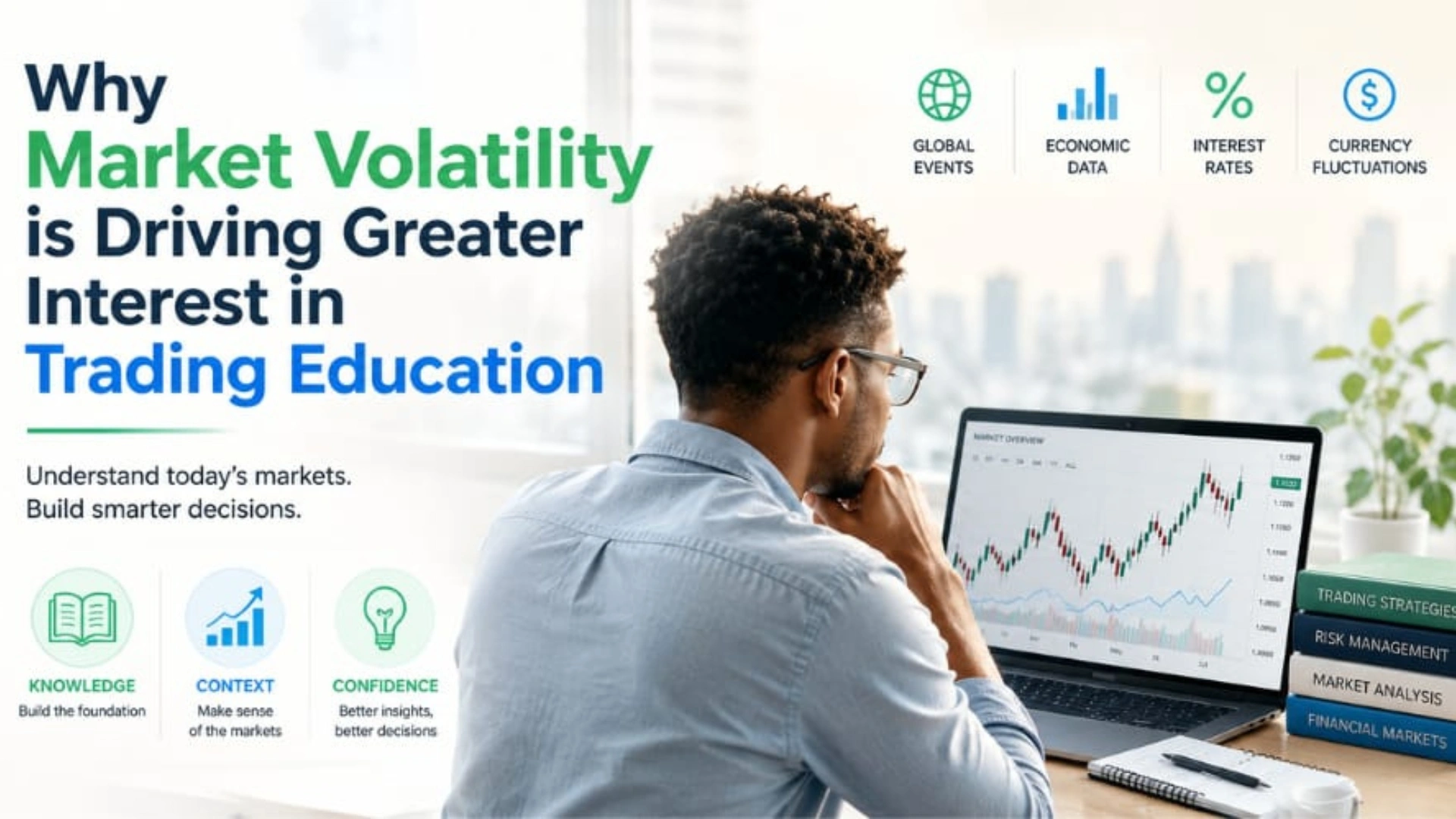
Back in the day, opening a trading account was cumbersome, and market information was harder to get; many people viewed trading as an activity reserved for professionals. That barrier has largely disappeared, but at the same time, many traders are finding that participation in the markets and understanding the markets are not the same thing.
This is clearer during periods of market volatility. Across Africa and beyond, episodes of sharp price swings are prompting a growing number of people to seek out trading education as they recognise the limits of simply having access to the tools.
Volatility as a teacher
Market volatility has a way of exposing assumptions. Mistakes often stay hidden when markets move steadily higher. A poor decision can still produce a positive outcome in this environment. Risk can appear smaller than it really is, so that confidence grows easily when conditions are favourable.
Periods of uncertainty tend to remove that comfort from trading. Currency fluctuations or geopolitical developments, and changing interest rate expectations, create an environment for less predictable outcomes. For many market participants, these moments reveal how little they understand about market behaviour.
Exchange rates and inflation can have a direct impact on daily life in African countries, where market movements are often experienced more personally than they are in some developed economies.
As a result, volatility is a practical reality that influences household budgets and investment choices, and that reality is encouraging a different kind of curiosity.

The search for context
What appears at first glance to be growing interest in trading education may be something bigger. Many traders are looking for context instead of purely education.
The modern financial environment produces an endless stream of information. Economic announcements, social media commentary, market forecasts and conflicting opinions compete for attention every day.
In response, trading education increasingly functions as a way of organising this complexity. It offers frameworks for interpreting events without just responding to them. In this sense, the appeal goes beyond trading itself.
People want to understand why currencies rise and fall or how interest rates affect markets. They want to make sense of economic headlines that increasingly influence both local and global conditions.
A more mature relationship with risk
There is also a subtle change in how risk is viewed. Public discussions around trading often focused on opportunity, and marketing materials responded by focusing on technology and the potential for returns. While these themes are still relevant, market volatility has brought risk back into the conversation.
The growing demand for education suggests that many traders are becoming less interested in shortcuts and more interested in process. They are beginning to recognise that markets are changing environments that need to be understood. Knowledge provides a more realistic framework for understanding this environment.
Beyond the trading platform
There is a greater need for real financial literacy in a rapidly changing world. As digital platforms make market access more readily available to the average retail trader, the value of education becomes more apparent. Tools can be downloaded in minutes, but understanding often takes considerably longer.
Market volatility shines a light on this gap. The increased interest in trading education shows that traders realise that market participation comes with a level of responsibility to understand the subtleties of market fluctuations and the forces that move them.
Markets will always be unstable and unpredictable, but the growing trend for real, contextual education shows how traders are choosing to engage with it. The desire to take part is most certainly there, but it is now married with the desire to understand what that participation truly requires.

