 Follow Us on Google News


 Follow Us on Google Discover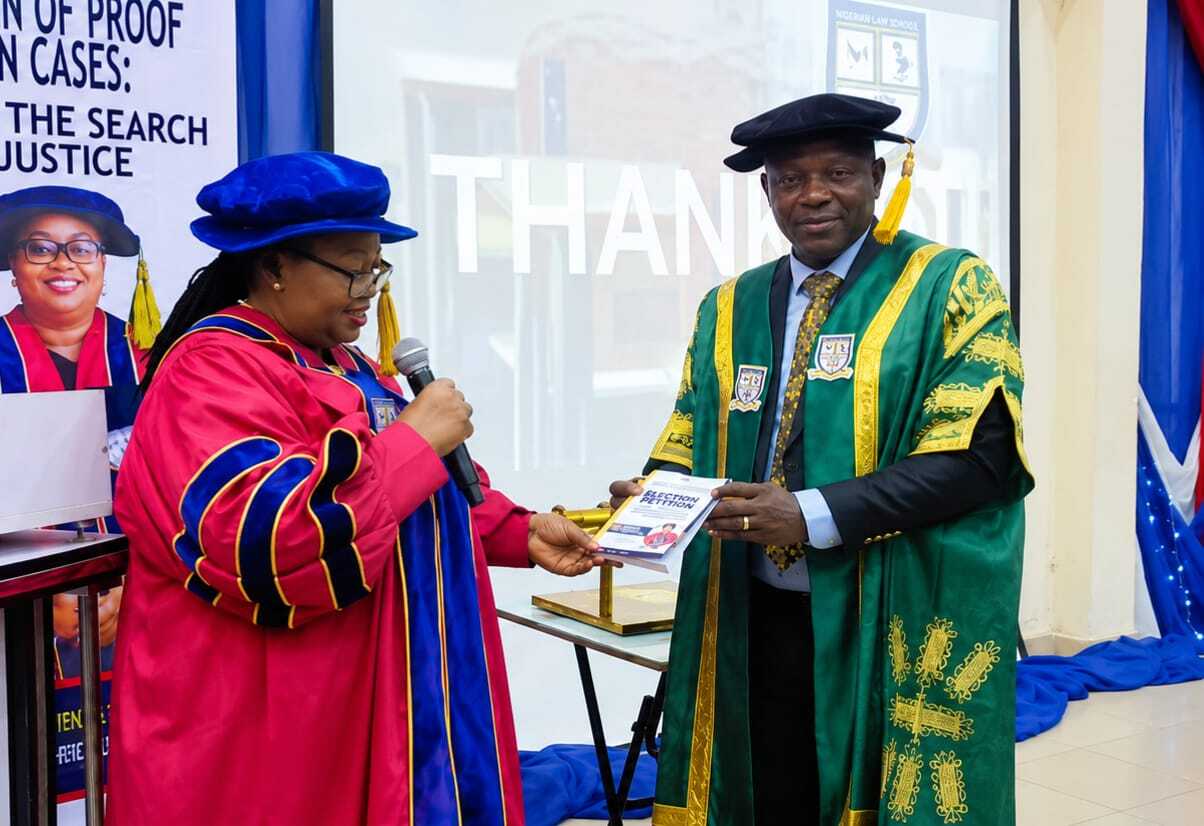
The Vice-Chancellor, Bingham University, Prof. Haruna Ayuba, has called for urgent reforms in Nigeria’s electoral dispute resolution process, warning that persistent challenges surrounding the burden of proof in election petition cases could undermine public confidence in the country’s democracy ahead of the 2027 general elections.
Speaking at the university’s 13th Inaugural Lecture on Thursday, Prof. Ayuba, said the legal hurdles associated with proving electoral malpractice often result in delays, ambiguities and, in some cases, injustice, thereby threatening the legitimacy of election outcomes.
The lecture, delivered by the Dean of the Faculty of Law, Prof. Magdalyne Dura, focused on the theme, “Unbundling the Burden of Proof of Election Petition Cases: Law, Democracy, and the Search for Electoral Justice in Nigeria.”
Ayuba described the topic as timely and significant as the nation prepares for another election cycle, noting that electoral credibility remains central to democratic stability.
“With each election cycle, the integrity and legitimacy of electoral outcomes come under increased scrutiny. The burden of proof in election petition cases often poses significant challenges that threaten the very foundation of electoral legitimacy and undermine public confidence in the electoral system,” he said.
According to him, addressing the complexities surrounding election petitions is no longer merely an academic concern but a practical necessity for safeguarding Nigeria’s democratic future.

He said the lecture would provide an opportunity to examine existing legal principles governing electoral disputes, identify areas requiring reform, and explore mechanisms for strengthening transparency, accountability and public trust in the electoral process.
Ayuba stressed that reforms aimed at easing the difficulties associated with proving electoral irregularities could facilitate quicker and more equitable resolution of election disputes.
“By unbundling and understanding the complexities of the burden of proof, we can work towards legal reforms that facilitate timely and just resolutions of electoral disputes, thereby strengthening democracy and upholding electoral justice,” he stated.
The Vice-Chancellor further noted that robust intellectual discourse on electoral justice is critical to ensuring that the voices of Nigerians are respected and reflected in future elections.
He commended Prof. Dura for bringing what he described as a “vital national issue” to the forefront of academic and public discourse, while also celebrating a milestone for the Faculty of Law.
The Guardian reports that the inaugural lecture marks the first from the Faculty of Law since the establishment of Bingham University, making Dura the faculty’s pioneer inaugural lecturer.
The academic said the development demonstrates the faculty’s commitment to fostering a vibrant intellectual environment capable of engaging pressing legal and societal challenges.
The Vice-Chancellor challenged faculties yet to present professors for inaugural lectures to embrace what he described as a cherished academic tradition that promotes scholarship, research visibility and institutional growth.
In her lecture, Professor Dura, a distinguished scholar of Constitutional Law and Jurisprudence, highlighted what she described as eight critical structural weaknesses in the 2026 Electoral Act, arguing that the identified gaps continue to undermine the effectiveness of the country’s electoral dispute resolution framework.
According to her, these shortcomings require deliberate legislative intervention to strengthen electoral justice and improve public confidence in democratic processes.
Dura listed the defects as the removal of a key qualification ground, the absence of a clearly defined electoral standard of proof, ambiguity surrounding the interpretation of Section 140 of the Electoral Act, the mandatory sanction provision contained in Section 138(3), unresolved legal and operational issues relating to the deployment of technology in elections, the reduction in advance funding for the Independent National Electoral Commission (INEC), and the application of a uniform filing timeline to electoral matters that are inherently different in nature.
She maintained that these gaps have created uncertainties in election adjudication and have, in some instances, complicated the work of election tribunals and appellate courts.
The professor stressed that electoral laws should evolve in response to emerging realities and lessons from previous elections. She noted that ambiguities in critical provisions of the law often result in conflicting judicial interpretations, thereby prolonging litigation and creating avoidable tensions within the political system. According to her, a more coherent legal framework would promote consistency in judicial decisions and enhance the credibility of electoral outcomes.
She further argued that the increasing use of technology in the conduct of elections demands a corresponding legal framework capable of addressing issues arising from electronic accreditation, digital transmission of results, and other technology-driven innovations. Without clear statutory provisions, she warned, disputes relating to technological processes would continue to generate controversy and uncertainty during election petitions.
Dura also expressed concern over funding arrangements for INEC, stating that adequate and timely financing remains essential for effective electoral planning and administration. She observed that reductions in advance funding could hamper preparations for elections and weaken the commission’s capacity to deploy resources efficiently across the country.
The inaugural lecturer urged Nigeria to align its electoral jurisprudence with evolving international best practices, particularly within the Commonwealth. She noted that countries such as United Kingdom, Ghana and Kenya have moved away from the stringent requirement of proving electoral offences and irregularities beyond reasonable doubt in election petitions. Instead, they rely on the civil standard of proof based on the preponderance of evidence or balance of probabilities.
According to her, adopting a similar approach would make electoral justice more accessible and practical, while ensuring that genuine grievances are determined on the weight of available evidence rather than on excessively burdensome evidentiary thresholds. Such reforms, she argued, would contribute significantly to strengthening democratic governance, improving accountability in elections, and deepening citizens’ trust in Nigeria’s electoral process.
In their separate goodwill messages, Dr. James Onoja, Senior Advocate of Nigeria (SAN); former Senate President, Dr. Iyorchia Ayu and former Governor of Benue State, Dr. Samuel Ortom applauded the lecturer for her scholarly contribution to the advancement of knowledge in electoral law and democratic governance.
They described the lecture as timely, insightful and relevant to Nigeria’s evolving democratic experience, particularly as the country prepares for future electoral cycles.
They further urged policymakers, the judiciary, legal practitioners and electoral stakeholders to give serious consideration to the recommendations contained in the lecture, stressing that meaningful reforms in the electoral dispute resolution process are necessary to strengthen democracy, promote accountability and ensure that the true will of the electorate is protected.

