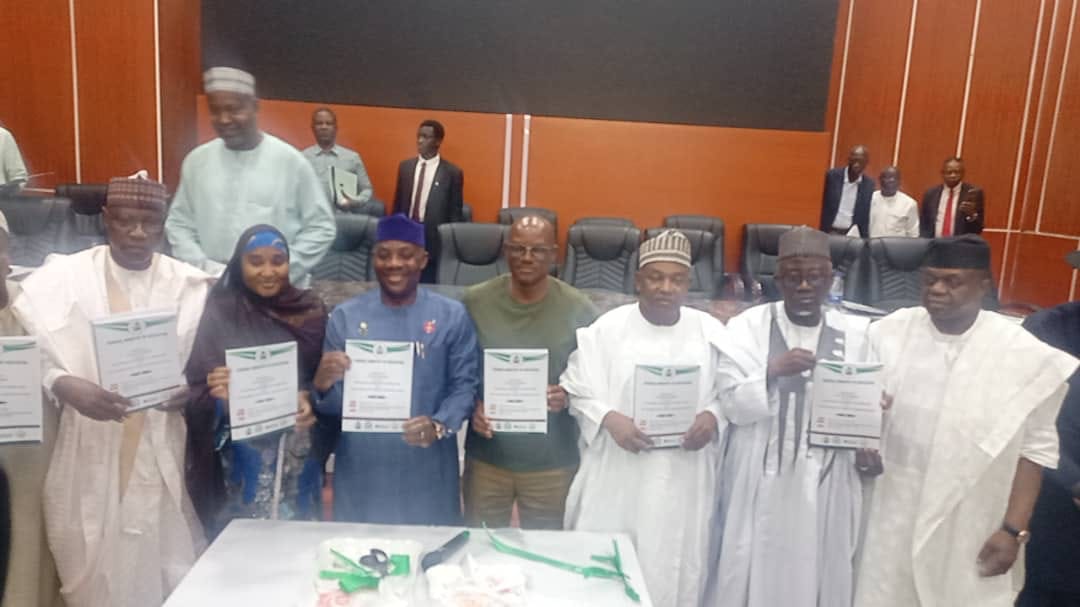
REMARKS AT PRESENTATION OF THE RENEGOTIATED AGREEMENT BETWEEN THE ACADEMIC STAFF UNION OF UNIVERSITIES AND THE FEDERAL GOVERNMENT OF NIGERIAN – DECEMBER 23RD, 2026.
The Academic Staff Union of Universities (ASUU) reached an agreement with the Federal Government of Nigeria, 16 years after the last agreement was signed. The 2009 agreement was due for renegotiation in 2012, which was after 3 years, but it dragged on for this long due to the poverty of sincerity in the government on the renegotiation. The 2025 Renegotiated Agreement is the outcome of a prolonged renegotiation process initiated in 2017 to review the 2009 FGN–ASUU Agreement, to revitalize Nigeria’s university system.
You will recall that the struggle for the renegotiation led to the formation of Wale Babalakin’s Renegotiation Committee in 2017 by the previous government. Then, the same government inaugurated Munzali Jibrin’s Renegotiation Committee in 2021. This was followed by the inauguration of another Renegotiation Committee in 2022 that was chaired by Nimi Briggs. The struggle from 2017 to 2022 could not produce a collective bargaining agreement.
This government inaugurated the Yayale Ahmed’s Renegotiation Committee in October 2024. An agreement was reached about 14 months after the inauguration and we are here to witness the agreement. The agreement focuses on conditions of service, funding, university autonomy and academic freedom, and other systemic reforms to reverse decay, curb brain drain, and reposition universities for national development.
It is important to appreciate the commitment of Alhaji Yayale Ahmed and the other members of the Renegotiation Team, the minister, and the president for their commitment to the renegotiation of the 2009 agreement. Please allow me say a few words about Mall. Yayale, this is a distinguished Nigerian, a patriot, urbane, experienced, a diplomat and intelligent human. Sir, you will go heaven! He continued to work behind the scenes as the negotiations proceeded. Mallam, did much more in the shadows, than he did in the open. Once he almost gave up, and wrote a text to me. He said “you don’t know what I have gone through to reach this point. I am a human being, a family man”. At another time, he said, “I stake my integrity on this. That is the highest possession I protect…” Mallam, thank you very much. Like I said, you will go to heaven…
Our Union also want to specially appreciate the Hon. Minister of Education, Dr Tunji Moruf Alausa, for his steadfast support and encouragement. We used harsh words sometimes to describe the journey to today. I have nothing than respect for you and your team sir. Tell the Hon Minister of state Prof Suwaiba, the permanent secretary Mr Enitan and all your staff, that we are greatful. The NUC secretary Prof Ribadu with his team for hosting us and giving us all the secretarial support we needed, thank you.
I must also commend our trustees, who despite their age, continue to allow us share in their wisdom and experiences, ASUU Principal Officers, the renegotiation team, who have given long hours calculating and re-calculating figures and making tables. We reserve the best to our entire members for their resilience during the period of the struggle for the renegotiation.
As we are here with joy for a successful collective bargaining between ASUU and the FG, we need to note that there are still pending issues, which are more of internal, that is dragging the progress and survival of the university system: government persistent encroachment into the Autonomy of the universities. University autonomy is universally recognised as a cornerstone of a functional higher education system. In Nigeria, although university autonomy is recognised in principle and partially entrenched in law, its practical implementation remains weak.
The Governing Council is legally the highest decision-making body of a Nigerian university, responsible for policy direction, financial oversight, and appointment of principal officers. In practice, however, councils are often subordinated to the whims of government authorities. A recurring problem is the arbitrary dissolution or suspension of governing councils by the Federal or State Governments and the reckless intervention in the appointment of the Vice Chancellors. Such actions send a clear message that councils exist at the pleasure of government, not as independent statutory bodies.
There have been instances where: Governing councils’ recommendations were rejected by the Visitor/Ministry. Preferred candidates were imposed despite not emerging as the best-ranked by selection panels. Appointment processes are often skewed to favour political interests. Such interventions erode meritocracy and create legitimacy crises for appointed Vice-Chancellors, often leading to prolonged internal conflicts, litigation, and staff polarisation. This does not speak well of what the university stands for. We have also observed a culture of acting vice chancellors slowly creeping into the system. Perhaps, it is time for Mallam Yayale Ahmed to turn his search light on his committee members, Pro Chancellors and members of governing councils. Sir, some of your committee members are destroying our Universities.
Research funding is not a luxury but a necessity for any university that seeks relevance, excellence, and societal impact. A university without strong research funding risks becoming a mere teaching institution, disconnected from innovation, policy influence, and national development.
Nigerian universities have faced paucity of research funding for a very long time, and I’m glad that research and development funding is a component of the 2025 ASUU-FG renegotiated agreement. It was agreed that the National Research Council (NRC) Bill shall be forwarded to the National Assembly for consideration. The proposed Bill shall provide for at least 1% equivalent of GDP as a source of funding for research, innovation, and development. It is my belief that, as stakeholders, the members of the National Assembly will expedite action in the passing of the Bill. We call on the Speaker of the House of Representatives and the President of the senate, to return to that bill and give it accelerated hearing. The entire nation, awaits your intervention, which we will consider your role towards the implementation of the Federal Government – ASUU 2025, Agreement. For countries aspiring to knowledge-driven economies, sustained investment in university research funding is non-negotiable. This calls for legislative contributions from the national assembly
At the end of every struggle, the media will always erroneously report that the Federal Government has released funds to ASUU. It is obvious that ASUU’s influence sometimes creates a paradox: It pushes for proper funding, but once funds arrive, there are limited institutional mechanisms for the union to enforce accountability beyond strikes, petitions, and public statements. This creates a situation where funding battles are won, but resource efficiency battles are lost.
Across our universities, there are repeated documented instances where vice chancellors (VCs) have been accused of mismanaging public resources, ranging from alleged corruption and contract irregularities to financial recklessness. These cases are not isolated anecdotes but mirror deeper governance weaknesses in the sector — where autonomy, accountability, and administrative culture intersect with personal conduct and institutional oversight. Our universities are now run by consultants! It has become a clean way of “cleansing” funds fought for by our Union. The federal ministry is not innocent of the “Consultancy Syndrome” in government cycles.
Unfortunately, many councils are themselves politicised and compromised, making them ineffective watchdogs. The councils need to be seen performing their responsibility as watchdogs. The management of the universities should not create a situation where the Nigerian university system does not suffer from a lack of voices demanding money but from a lack of institutions enforcing responsibility. It is important to effectively utilise university funds.
Some Federal Colleges of Education were converted to the Federal University of Education recently. You will agree with me that the structure of a college of education is quite different from that of a university. The same way as the promotion criteria, especially for the rank of professor and chief lecturer. You would have expected the new universities of education to take their time to upgrade their structure to reflect the current status. But the Vice Chancellors have started converting some of the chief lecturers to professors without due process.
These are new universities without a senate and yet to develop promotion guidelines for their current status. Even where senates were quickly “arranged”, procedures were blank and left much to be desired. Rather than focus on developing a university structure, they are converting chief lecturers to professors. Chief lecturers and professors are never equivalent.
Promotion to the rank of professor has a common standard in universities. It involved research outputs, postgraduate teaching and supervision, and external assessment, among other things. We should not allow the conversion of a college of education to a university of education to erode the standard requirement to become a professor. The Vice Chancellor of these universities should take a second look at the promotions, with a view to do the right thing.
The growth of our university system is affected by the prevailing national economic, political and social environment in which it exists. The neoliberal policies of oil subsidy removal and Naira devaluation have reduced the purchasing power of a majority of Nigerian households amidst the rising cost of university education. Most working class and middle-class parents are finding it extremely difficult to send their children to public universities despite the creation of Nelfund. University education still remains the surest path of upwards mobility from poverty in Nigeria. However, the paucity of jobs after graduation for our students is rapidly closing this path. It is important the we engage in the sustainable development of the nation and contribute to the greater Nigerian environment. We must build stronger bridges between gown and town with the 2025 agreement. Hon. Minister sir, when you go to council, tell your colleagues that the economic situation in the country is still hard. That meals are hard to come by, that transportation is still a challenge, families are struggling to keep body and soul together. Tell the security people, that we have noticed they are up and doing, we support them. Sir, through you, we are extending an open invitation to the Chairman, Presidential Fiscal Policy and Tax Reforms, Dr Taiwo Oyedele to our next National Executive Council (NEC) meeting holding here in Abuja. We believe we have a few ideas to share with him, and he could help us understand the reforms better.
Hon minister, in the Second Republic, there were arguments whether Nigerians have started picking food from the dustbin. That has turned out to be the golden era as there is no longer food in the dustbin. Today, the hungry is simply starving.
We are an import-dependent country. So, when the Minimum Wage of the N18,000 under Jonathan was the equivalent of 111 dollars, and Today’s Minimum Wage of N70,000 is the equivalent of 47 dollars, it simply means our lives has been devalued.
Two (2) years ago, the pump price of pms was N240 and now that it is over N800, it means that the right of the Nigerian to free movement is being curtailed.
Insecurity as we all know is spreading, what we need is not merely more recruitment of security personnel, but the mass involvement of the populace in their own security.
We are not just over taxed with the wrong assumption that the people can be taxed out of poverty, we do not even know which tax law is being used of the three different versions circulating.
I come from the health sector and a simple word for it is, collapse.
The country is in dire straits and propaganda is not the option. The country must be rescued and rebuilt in the interest of the people. In this, sir, we want you to tell your colleagues in government that they have an ally in ASUU. We are ready to work with you to make life better for Nigerians.
Even though plurality of Unions has been recognized as the right of workers, by the 3rd alteration of the constitution of Nigeria, and Article 87 of the ILO Convention, the employer is not empowered to have multiple negotiations with new Unions/ Associations in the case of Collective Bargaining. The Unions are required to come together to elect representatives for Collective Bargaining. The coming together to elect representatives was not intended to and should not be on the basis of each Union, but a democratic exercise that allows delegates to elect their representatives for the purpose of Collective bargaining.
Finally, we are optimistic that the agreement will be implemented in totality by the Federal Government, but there still exists that pessimistic side, looking at our history with the government and the poverty of sincerity. It is our belief that the union would not need to issue a strike threat for the full implementation of the 2025 ASUU-FGN Renegotiated agreement.
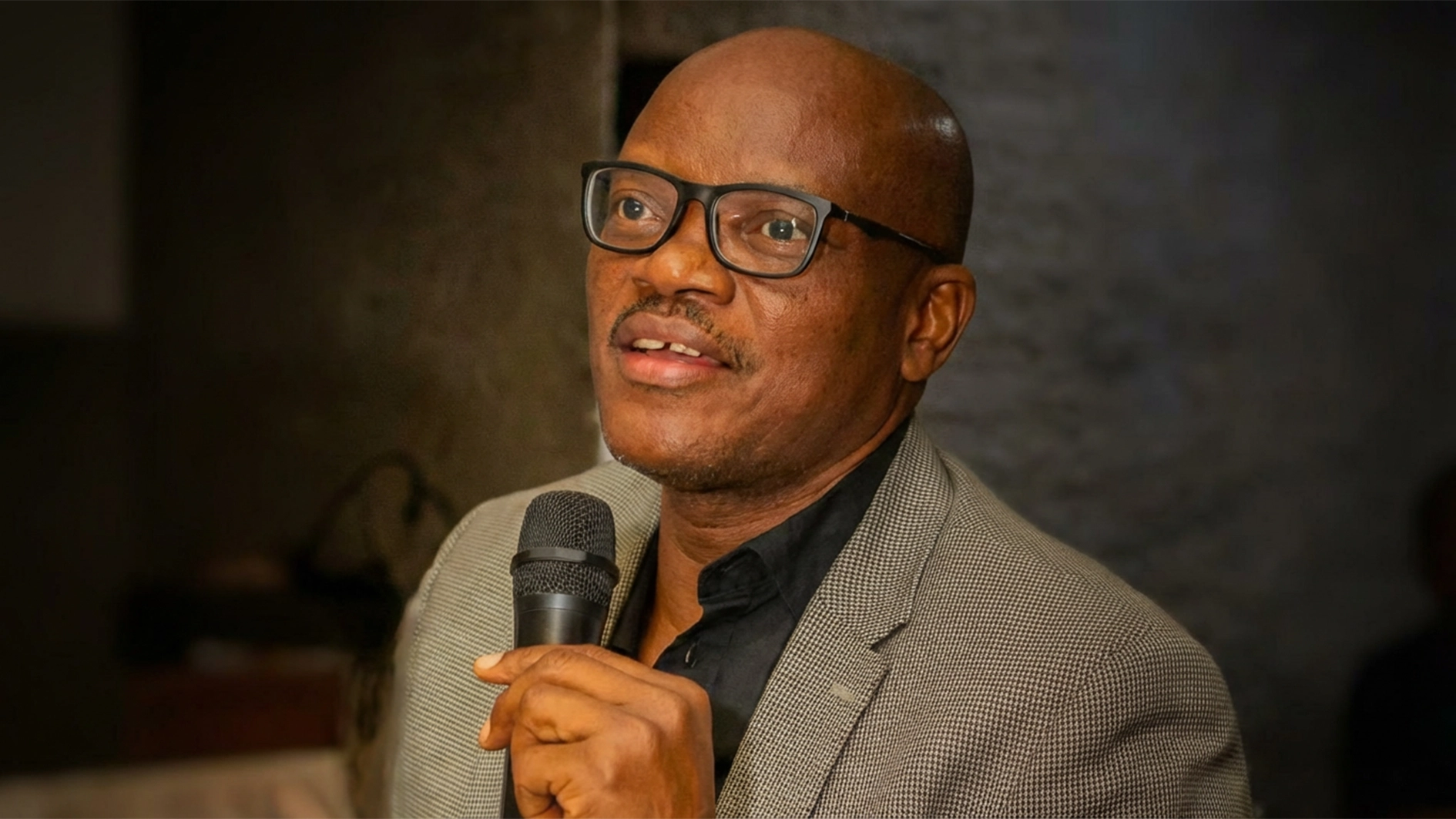
Prof. Piwuna is the President, Academic Staff Union of Universities (ASUU)