 Follow Us on Google News
 Follow Us on Google Discover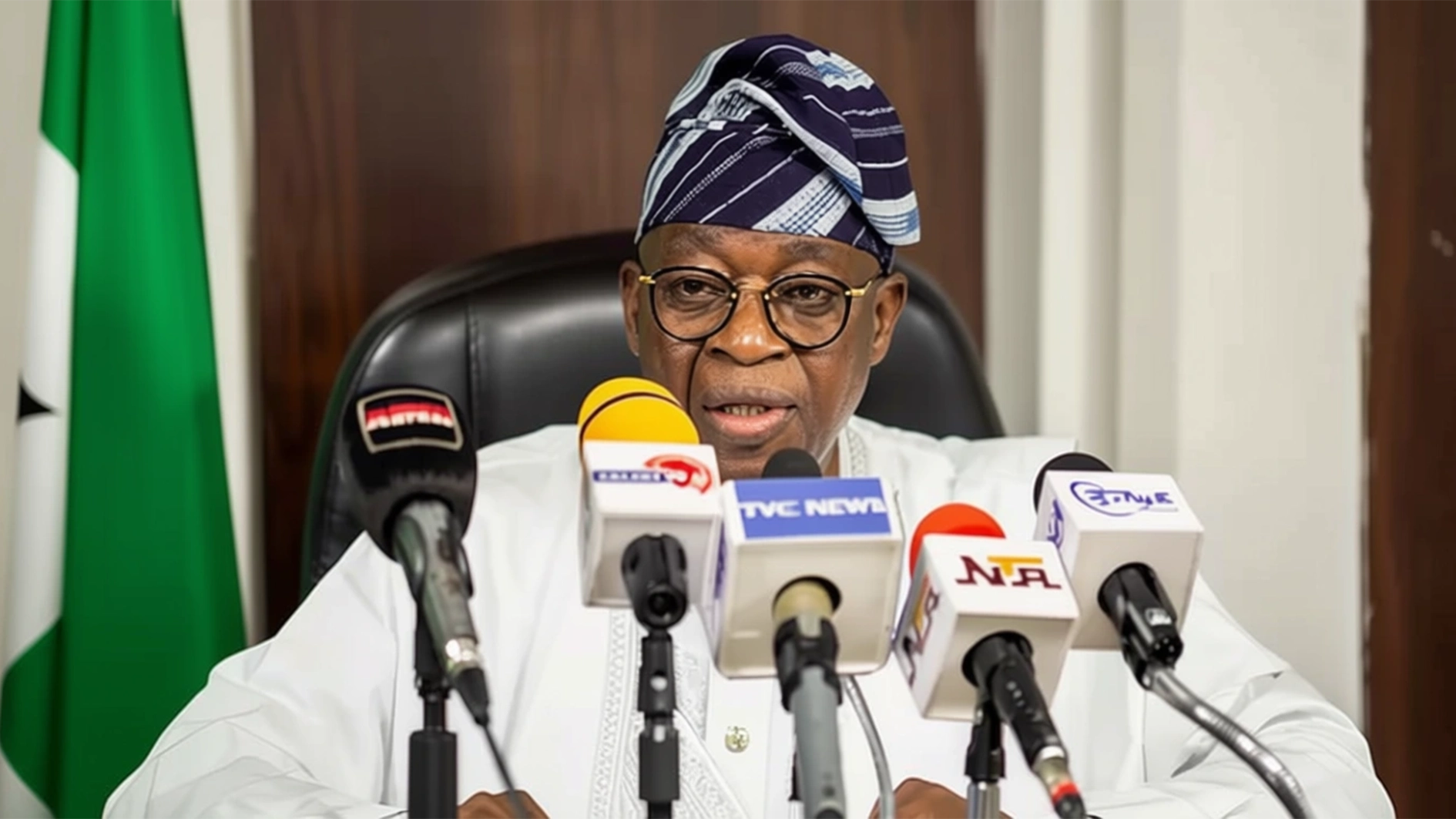
As part of efforts to deepen expertise in the maritime industry, the Minister of Marine and Blue Economy, Adegboyega Oyetola, has unveiled the Institute of Maritime Studies at the University of Lagos (UNILAG), emphasising knowledge-driven development as central to economic growth.
He noted that the event is a defining milestone in Nigeria’s collective resolve to strengthen institutional capacity, advance innovation, and deepen the human capital base required to boost the country’s maritime and blue economy as a cornerstone of national prosperity.
“This state-of-the-art facility, comprising well-equipped lecture rooms and functional administrative spaces, is a testament to the federal government’s commitment to knowledge-driven development.
“It reflects our belief that the future of the blue economy will be shaped not just by natural endowments but also by the quality of minds we nurture within institutions such as this,” he said.
The minister emphasised that the vision for the Nigerian marine and blue economy is anchored on sustainable exploitation of vast ocean resources, economic diversification, environmental stewardship, and inclusive growth.
The Director-General of NIMASA, Dayo Mobereola, disclosed that capacity building remains one of the core pillars of NIMASA’s mandate.

Mobereola noted that, as a testament to the agency’s commitment to capacity building, NIMASA, through the Nigerian Seafarers Development Programme (NSDP), has formalised a workforce development initiative to bridge the talent gap in the maritime industry by training 2,497 youths.
The vice-chancellor, Prof. Folasade Ogunsola, explained that the building, which represents the first phase of the Institute of Maritime Studies Complex, was donated by the Nigerian Maritime Administration and Safety Agency (NIMASA).
Ogunsola disclosed that the institute delivers quality and experiential learning to students drawn from a broad spectrum of maritime organisations and private shipping companies.
“We do this in collaboration with experts from the industry. The facility represents a major investment in human capital development. It features modern lecture rooms, state-of-the-art laboratories, and other equipment to support practical training, research, and innovation.
“These facilities will significantly enhance direct learning and equip our faculty, students and participants with the competencies required in today’s dynamic global maritime industry,” she noted.

