 Follow Us on Google News


 Follow Us on Google Discover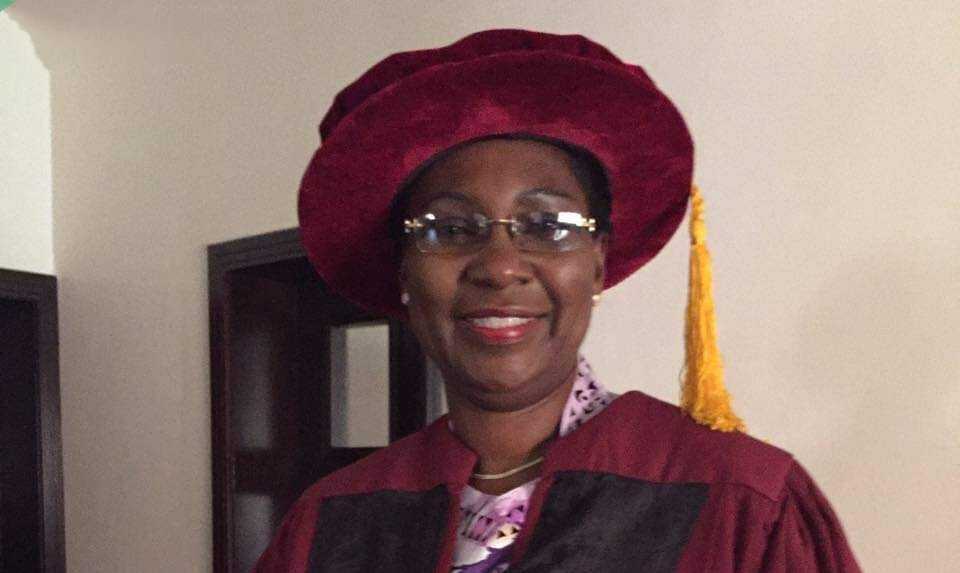
Public universities in Nigeria will have to significantly increase school fees and rethink their funding model to attain financial self-sustainability, the immediate past Vice-Chancellor of Lagos State University (LASU), Prof. Ibiyemi Olatunji-Bello, has said.
Olatunji-Bello, who ended her five-year tenure as the ninth vice-chancellor of LASU on September 19, stated this in an interview in which she spoke about her administration’s achievements, funding challenges, and vision for the university’s future.
The former vice-chancellor said although she raised the university’s internally generated revenue from N3 billion to N13 billion, the institution still cannot survive without government subvention.
She narrated how she was challenged to increase the university’s revenue when she went to defend its budget upon assuming office in 2021.
“When I came in, I was told that our dedicated revenue was N3 billion; I was baffled. The present deputy chief of staff then queried that with all the new programmes being introduced, I should be able to increase our dedicated revenue. And I said I would try. By the end of that year, we had over N7 billion,” she said.
The former vice-chancellor said the feat gave her encouragement to set a target of N10 billion the following year, adding that she had to tell her colleagues in the management that she had already committed to the figure.

According to her, the university brought in new programmes with the SPT digital innovations, challenged the ICT directorate to deepen digital processes, while ventures, consults from diploma programmes, partners, short-term courses and over 75 new postgraduate programmes also brought in more money.
“We explored all legal ways of bringing in money, and we made N10 billion easily. And then, the following year, it went from N10 billion to N12 billion, and I was so scared of maintaining the growth.”
Olatunji-Bello said that despite the growth in IGR, financial self-sustainability remains elusive for LASU and other public institutions.
“Universities can achieve financial self-sustainability if they can innovate and ensure improvements in the institution, and money will come in. But then, if the money comes in, how do you spend it? Right now, LASU does not have financial self-sustainability. We may have increased our dedicated revenue, but we cannot survive. Our payroll is currently over N1 billion per month. All the N13 billion IGR does not cover our salaries,” she said.
She said any public university that wants to sustain financial independence will have to increase school fees into the millions.
“Some secondary schools charge over a million per term, but in a university, you’re paying about N100,000 per year. You also have the universities maintaining the environment. You also have to pay bills: cleaning, electricity, security, diesel. We have an electricity bill of N140 million every month.
This is apart from over N1 billion on salary,” she said.
She added that the university still has to augment salary payments by about N240 million every month, apart from other day-to-day running costs, including inaugural lectures held twice a month.
“So, any public university that wants to maintain financial independence will have to charge school fees of at least N1m per student. You can’t have academic excellence without paying for it. I enjoin parents to ensure their children are well-educated by prioritising their fees. Good quality education needs money,” she said.
On admission pressure following LASU emerging as the most subscribed university by Unified Tertiary Matriculation Examination (UTME) candidates in 2025 and 2026, she said the university’s admission is merit-driven, with 70 per cent merit, 10 per cent catchment for Lagosians, 10 per cent at the discretion of the Vice-Chancellor and 10 per cent for direct entry, which she said, accounts for the high number of first-class and second-class upper students.

