 Follow Us on Google News
 Follow Us on Google Discover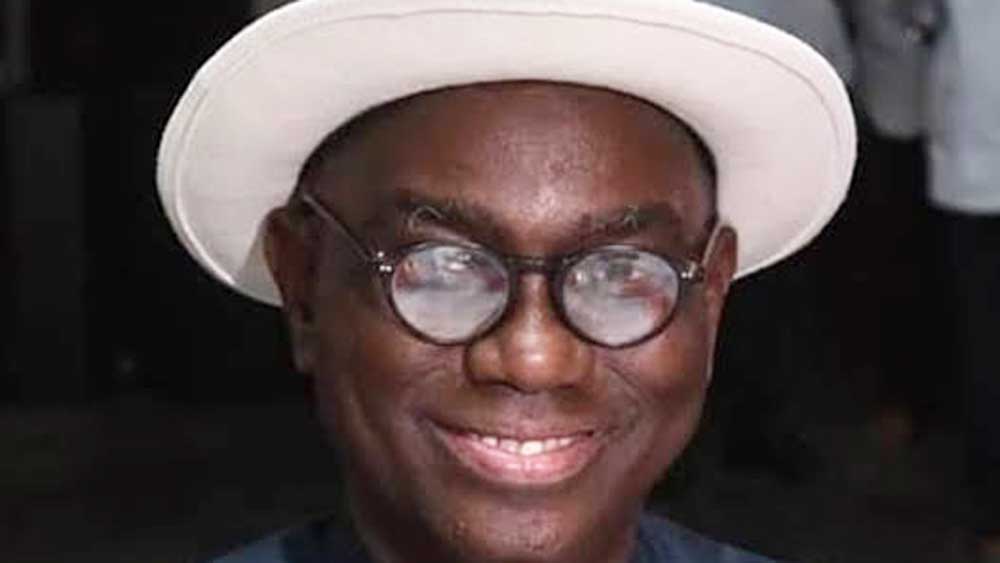

Prof. Anthony Adegbuluge is the Chairman of Green Energy International Limited (GEIL), an indigenous oil and gas producing company and operator of the Otakikpo Marginal Field in OML-11. In this interview with KINGSLEY JEREMIAH, Adegbulugbe discusses critical issues in the oil sector, especially crude oil production, theft, divestment and others.
What is your take on gas development in Nigeria and why is your organisation so keen on it?
The whole world is going through an energy transition, and one of the key elements of energy transition is that we are moving from crude oil to gas. We would be moving from heavily carbonated fuel to less carbonated fuel, then to no carbon at all. Gas is going to be the major energy carrier in the foreseeable future in the whole world. We have to prepare for that transition. We must not concentrate on oil and forget about the gas. We really have to start using the gas now.
[ad]
It’s part of our plans, which is to extract the heavy end of gas as natural gas has hydrocarbon chains with the heavy end being Liquefied Petroleum Gas (LPG). Beyond extracting the heavy end, we have what we call dry gas, which is used for power. We’re going to have a lot of dry gas, which will be used for two purposes. First, all our power for facilities would be generated with the dry gas. Secondly, as we grow up, there would be excess gas, so we’re looking at some gas-based industries that we could put a small methanol plant there.
We’re looking for a very suitable industry, we could also compress it into CNG for example and take it to industrial users around. Those are the exciting things that would happen. We are looking at extracting gas for home consumption, compressing it, then converting it for a gas based industry; all of these are the possibilities we’re looking at.
We are on track to commissioning the 12MMSCFD modular LPG extraction plant and 6MW power generating plants. This scale of modular LPG plant will be the first to be installed in the country; an achievement that demonstrates that we are undaunted by hitherto serial number one exploits.
What do you have to say about the gas pricing issue in Nigeria?
I am not sure we have a gas price problem. If you look at the LPG market, people import as they see it profitable at the market. Pricing really is not an issue, we’re hoping to produce LPG close to about 25,000 metric tonnes yearly. What you are referring to is probably a problem of the past, we’re beginning to do away with that. Pricing will not be a major issue in our view with the kind of plans that we have. In my view, the government has put in a very good framework, unlike in the past where there were so many uncertainties.
From your field, what is the level of flare currently?
What we have is very minimal. We’re using 80-85 per cent and by the time we commission our power plant, the whole idea is not to flare at all.
It has been difficult for most operators, especially the indigenous producers to increase crude oil production due to theft and other challenges but your production data seems encouraging. What are you doing differently?
We made a deliberate decision. The assets we had, we optimised it first and then developed capacity. We also developed some financial muscle before deciding to acquire more fields. We are already at the verge of a 25,000 per day output and we are hoping to get to 30,000 barrels by 2024. We will start a campaign next year in that regard. That’s our ambition.
[ad]
We had conceptualised the Otakikpo phase two campaign to increase the field’s production and provide a platform for future development by drilling two additional wells. The critical objectives for the campaign were to achieve incident-free operations, meet geological and production objectives and deliver reliable and fully functional wells. Our gutsy and world-class well delivery team exceeded the corporate’s expectations on all these objectives. The two wells were successfully executed without any HSE incident, the geological objectives were exceeded, and the field production was tripled. Delivering such superior production rates from two onshore wells is a most unusual accomplishment amongst indigenous Nigeria operators.
At some point, some operators were evaluating their crude through tankers due to crude loss. How did you manage crude oil theft?
When we started production in about 2017, we had this challenge. We had to sit around to address it by looking at various options before concluding on the one we use right now, which is the pipe option, the six kilometres option. We have a shuttle tanker that takes the oil and delivers it to a third party FPSO and that has worked for us. Unlike others, we’ve not had any loss.
Recently, we looked at increasing production to a certain level, but that will not be feasible economically. It would be cumbersome. We are partnering with a third party to put an onshore terminal next to our field that can handle up to 60,000 barrels a day. Our project team has moved to site to commence construction for the onshore terminal and export infrastructure. The team has worked extremely hard this year to complete the terminal project design in-house and negotiate more favourable terms with service providers to reduce the overall cost of the project considerably.
The development of the onshore terminal and export infrastructure is in line with our corporate strategy of developing and installing an efficient evacuation/export system at Otakikpo thus reducing overall operating experience per barrel. We also plan to make the Otakikpo field a crude processing and export hub by providing access to fit-for-purpose evacuation and export infrastructure for the several stranded fields in the Eastern Niger Delta area. There are over 20 stranded fields in close proximity to the terminal that will benefit from the enhanced access to a readily accessible and cost-effective route to the market.
The country’s production has been struggling owing to theft. Given the success you made, what will be your advice in addressing crude oil theft in Nigeria?
Up to about three months ago, the total exports was about a million barrels a day, far below our production capacity, and more recently we heard it has gone up to about 1.5 million. NNPC is doing a lot with the security agencies. We’re moving in the right direction as pipeline losses have reduced and, a lot of illegal refineries have been put out of business.
[ad]
Can anything happen from a community relations perspective?
It’s a product of a long deliberation, the jury is still out and I’m very confident that the PIA would solve a lot of community issues. Every company should also know that you cannot operate within a hostile community.
About 60 per cent of those on our fields are community people. Beyond the law and what the act says, you must integrate and be friendly as a partner in progress not as a foreign company.
What has been your experience with the indigenous offshore pipeline pigging?
The Otakikpo crude characteristics are very waxy with low pour point. As such, we have experienced a considerable reduction in our export pipeline pumping rates over the years with attendant diminished operational efficiency resulting from frequent tank top incidents. However, no indigenous oil company in Nigeria has ever pigged (clean) an offshore pipeline system before. They are rightfully concerned with the risk of stuck pig in pipelines requiring costly subsea intervention, besotted with a lack of expertise and are afraid of the potential significant disruption in production operations.
In another striking demonstration of its grit and determination, our team successfully planned and executed an offshore pigging operation in the Niger Delta region of Nigeria. A first for a Nigerian indigenous operator. This gutsy exploit is more commendable since the company relies on the export pipeline as a sole means of crude evacuation.
The successful removal of deposited wax and debris from pipeline has contributed remarkably to our stellar operational performance by increasing pump throughput, reducing evacuation time by up to 24hrs and minimising wear and tear of the export pumps.
Big companies like Shell and co. have money and technology. Pigging is not a big deal for them, but for a small company, it’s going to be a little bit more complicated.
[ad]
Looking at what you’re doing in the area of processing gas, do you have plans on building refineries so as to stop crude oil export?
Yes, we started in 2017 and the little thing we tried to do was to put a small refinery on our site of around 5,000 barrels per day. At that time, we were also producing about 5,000 barrels, that means everything would have been consumed locally but we still have plans of building that. We have a licence for that already, once we increase production to about 25,000 barrels, we would dedicate enough time. It’s not an immediate concern, it would probably be addressed in three years’ time from now.
With divestment happening in the industry and new oil producing countries emerging in Africa, do you think Nigeria has the Human Resources to carry on and also assist other African countries?
In all areas, not only the oil industry, there are lots of competent Nigerians. The problem really is how to marshal, mobilise and organise the people.
Every day you come to see young Nigerians doing creative things, when given the right incentives and opportunities. What we need is to be organised, and that’s why we joined this group. All my staff, particularly the younger ones have been the ones with the brightest of ideas.
With regards to other African countries, I know of two indigenous companies that have gone out and had assets in Sudan and Libya. That is the normal thing to do. I can see the indigenous companies gradually taking over, to a large extent, they gain more confidence in the country and have more money to be able to invest elsewhere. They take the next logical steps and make sure they invest in already successful Nigerian companies.
My guess is; IPPG in three years will be having a solid base at home, before exploring other countries. I see our company going in that same direction, but we will first have to improve what we are doing locally, strengthen our footprint and then consider continental expansion.
[ad]

