 Follow Us on Google News
 Follow Us on Google Discover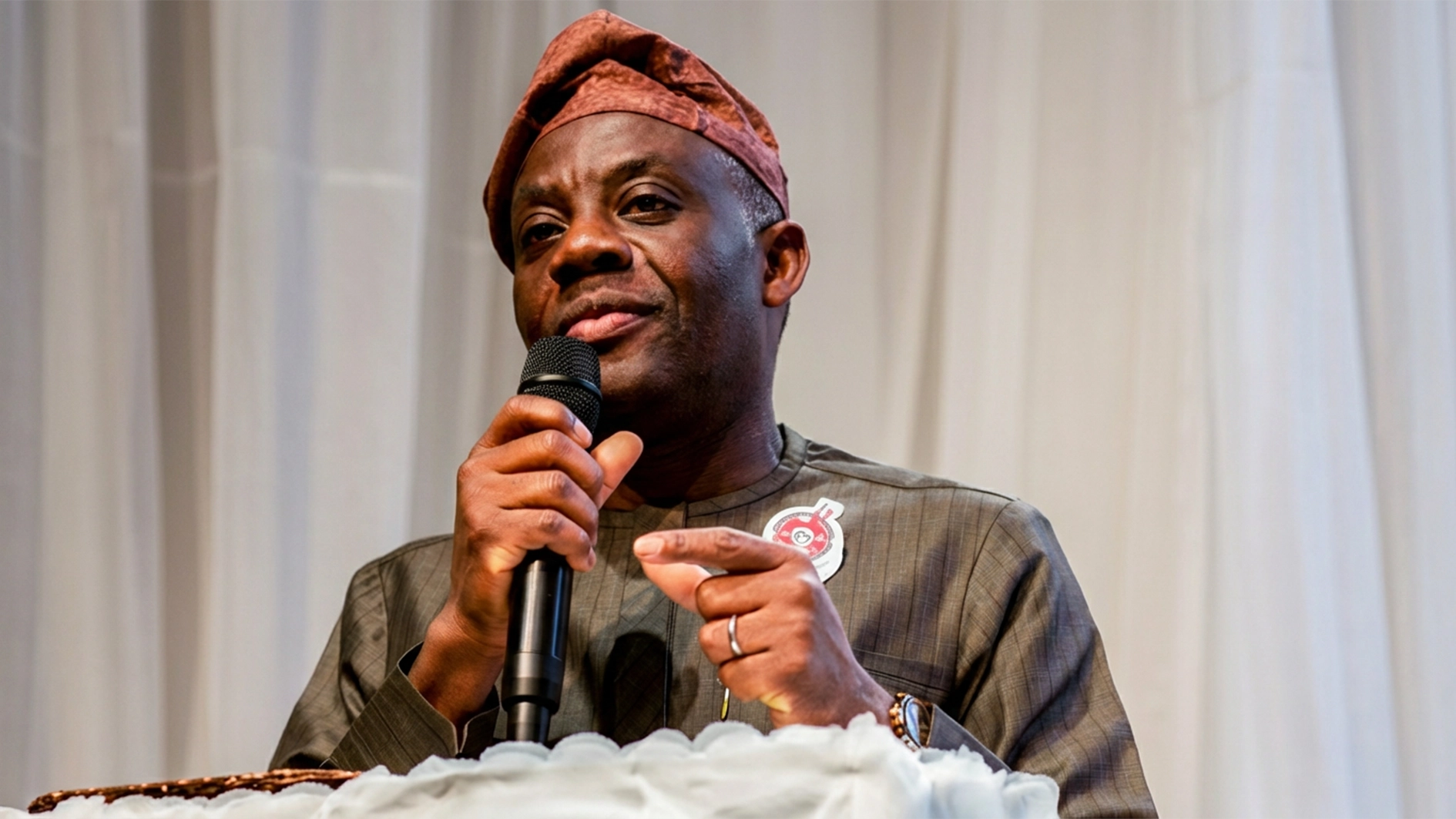
The Federal Government has launched the Digital National Education Management Information System (DNEMIS), describing it as a landmark initiative aimed at transforming education planning through the use of reliable, real-time data.
Unveiling the platform, the Minister of Education, Dr. Tunji Alausa, said the system would revolutionise how education data is collected, managed and utilised across Nigeria, providing policymakers with accurate and credible information to drive planning, policy formulation and decision-making.
Dr Alausa said the digital platform would eliminate many of the inefficiencies associated with manual data collection, improve transparency and accountability, and support evidence-based reforms capable of transforming the education sector. According to him, quality data is essential for expanding access to education, improving learning outcomes and ensuring the efficient deployment of resources across schools nationwide.
The Nigerian Government had recently disclosed that 32 million students have already been enrolled on the digital platform.
The minister urged state governments, Local Government Education Authorities (LGEAs) and private school proprietors to fully participate in the initiative, assuring private school owners that enrolment on the platform would not expose them to additional taxation.
Here are 10 key things to know about DNEMIS:

1. Nigeria’s central education database
It is a unified digital platform designed to collect, store, analyse and manage education data across Nigeria. It serves as a single national repository for information from basic, secondary and tertiary education institutions.
2. Records 58.4% school data submission nationwide
The latest figures presented by the Federal Ministry of Education show that only 24,548 schools have uploaded their data to the platform. This represents a 58.4 per cent reporting rate out of Nigeria’s 213,235 schools, underscoring the need for more schools across the country to join the initiative so the database can accurately reflect the state of education nationwide.
3. Captures data on 40 million learners, 1.19 million teachers
The platform has so far compiled data on 40,130,454 learners, 1,193,877 teachers, 730,447 classrooms, and 607,508 toilets across Nigeria. According to the minister, the growing database will help government identify infrastructure deficits, monitor school performance, improve resource allocation, and implement targeted interventions to enhance the quality and delivery of education.
4. Replaces fragmented data systems
For years, education data has been scattered across different agencies and institutions, often leading to conflicting statistics. DNEMIS seeks to harmonise these datasets into one integrated platform, making education information more reliable, consistent and easily accessible.
5. Supports evidence-based policymaking
One of the primary objectives of DNEMIS is to enable government to make decisions based on accurate data rather than estimates. Information generated through the platform will support policy formulation, planning, budgeting, teacher recruitment, school construction and curriculum reforms.
6. Captures real-time education statistics
The platform is designed to collect and update information on student enrolment, teachers, schools, infrastructure, learning facilities, examination records and other critical education indicators. Real-time updates will enable quicker responses to emerging challenges in the sector.
7. Promotes transparency and accountability
By creating a centralised digital database, DNEMIS will make it easier to monitor education programmes, evaluate government interventions and track the utilisation of public resources. This is expected to improve accountability among institutions and education administrators.
8. Improve education planning, funding
Reliable data is essential for identifying areas with teacher shortages, inadequate infrastructure or low enrolment. DNEMIS will provide government with the information needed to direct investments and interventions to the schools and communities where they are most needed.
9. Strengthens coordination across education sector
The platform is expected to improve coordination among the Federal Ministry of Education, state ministries, education agencies, regulatory bodies and institutions by providing a common source of verified data. This will reduce duplication of data collection exercises and improve policy coordination nationwide.
10. Its success will depend on effective implementation
While DNEMIS has the potential to transform education management in Nigeria, experts say its impact will depend on sustained funding, reliable digital infrastructure, continuous training of education personnel, strong institutional commitment and regular updating of data. Without these, the platform may struggle to achieve its full potential.
The Bottom Line
The launch of DNEMIS signals a major shift in the Federal Government’s approach to education management, from one driven by estimates and fragmented records to one anchored on credible, real-time data. If fully implemented, the platform could become the foundation for evidence-based policymaking, enabling governments at all levels to make more informed decisions on school infrastructure, teacher deployment, funding and student welfare.
Beyond improving planning, DNEMIS has the potential to strengthen transparency and accountability across the education sector. With a unified national database, policymakers, development partners and education managers will be better equipped to monitor the implementation of programmes, evaluate outcomes and ensure that scarce resources are directed to the areas of greatest need. This could significantly reduce inefficiencies that have long undermined education planning in Nigeria.
However, technology alone will not guarantee success. The effectiveness of DNEMIS will depend on sustained political commitment, adequate funding, reliable digital infrastructure, regular training of education personnel and the willingness of institutions to provide accurate and timely data. If these conditions are met, the platform could emerge as one of the most consequential digital reforms in Nigeria’s education sector, laying the foundation for smarter policies, better investments and improved learning outcomes for millions of learners.

