 Follow Us on Google News
 Follow Us on Google Discover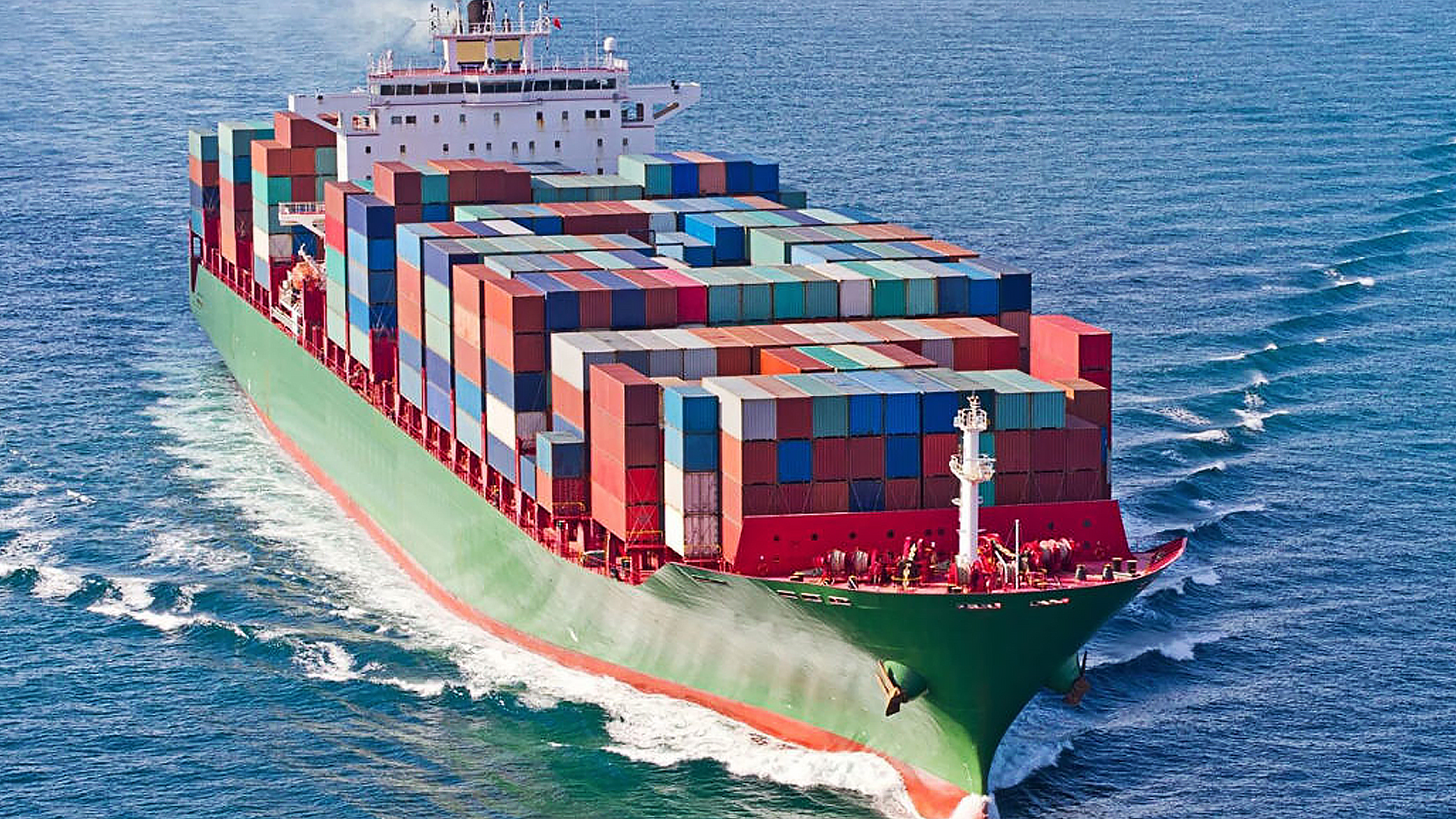
• U.S./Israel-Iran War Could Reverse Nigeria’s Inflation Gains – Experts
• Importers Decry Higher Freight Costs
• Budget Revenue Gets Boost As Oil Prices Soar
As military action escalates between the United States/Israel and Iran, the near closure of the Strait of Hormuz has sent shockwaves across nations with Nigeria also bearing the brunt.
Now, what began as a promising decline in Nigeria’s food inflation has been put at risk by the upheaval in the Middle East and a near standstill in shipping through the Strait of Hormuz. The crisis has driven global oil prices to multi-month high, boosting revenue prospects for Nigeria’s oil sector, but the effects on freight rates, fuel costs and agricultural input prices threaten to reverse the hard-won progress against domestic food price pressures.
This is because disruptions at one of the world’s most crucial maritime trade arteries have not only sent crude prices climbing but are also squeezing transportation and fertiliser supply chains, factors that could translate into renewed food price inflation for Nigerian consumers just as relief appeared in sight.
It would be recalled that the National Bureau of Statistics (NBS) recently revealed that in January 2026, Nigeria’s Consumer Price Index (CPI) data showed that inflation eased modestly to 15.10 per cent year on year, a slight drop from 15.15 per cent in December 2025, signalling early relief from prolonged price pressures on households.
The most striking development in the NBS’ report was the continued moderation of food inflation, which slowed sharply to 8.89 per cent on a year on year basis, marking the first single digit food inflation reading in more than a decade. This represented a steep improvement from much higher rates recorded in previous years and reflected broad declines in key staples such as yams, eggs, maize, beans, cassava, palm oil and groundnut oil across markets nationwide.

On a month on month basis, food prices saw a notable contraction of 6.02 per cent, underscoring that average food prices actually fell compared with December 2025.
However, analysts stated that the ongoing U.S., Iran and Israel crises might trigger fuel and food inflation, which might reverse the gains Nigeria has recorded in the past few months, especially food inflation.
The Strait of Hormuz, which sits to the south of Iran and connects the Persian Gulf with the Arabian Sea, is one of the most critical chokepoints for international trade.
Countries around the Strait of Hormuz are Saudi Arabia, Iraq, the United Arab Emirates, Iran, Kuwait and Qatar. On average, 17 million barrels of crude oil transited through the Strait of Hormuz in 2025.
Without firing a single missile, Nigeria is currently getting a double-edged effect of the international offensive action, as the citizens are bound to pay higher import rate as well as increase fuel price.
On the other hand, the nation will enjoy swelled revenue to the federation purse with the rising crude oil price at the international market. The 2026 budget, which was recently revised down to $60.00 per barrel (from $64.85), is suddenly looking more robust.
Following the closure of the Strait of Hormuz, Brent crude price has surged by over 10 per cent, currently trading near $85 per barrel. With the market already pricing in a ‘war premium,’ analysts suggest prices could reach the $100 mark if the blockade persists.
This will mean a positive revenue windfall for Nigeria, because for every dollar the oil price stays above the $60 benchmark, the nation would earn hundreds of millions in unplanned revenue.
While the government eyes a budget surplus, Nigerian importers are sounding the alarm of possible high shipping rates.
Already the major shipping lines including Maersk and MSC have implemented emergency surcharges. As of this week, a 20-foot container destined for Lagos now carries a freight bill of $4,600, while 40-foot containers have jumped to $5,600.
With the Strait of Hormuz blocked and the Red Sea corridor under extreme threat, some vessels are already stuck in the Middle East, while others are now being rerouted.This adds 10 to 14 days to delivery times to Nigerian ports.
Also, the ‘war-risk’ insurance has spiked by as much as 400 per cent. Importers of electronics, vehicle spares parts, and industrial chemicals, many of which transit through Middle Eastern hubs are passing these costs directly to consumers.
The Head of Research, Sea Empowerment and Research Center (SEREC), Eugene Nweke, said Nigeria’s resilience will depend not merely on crude revenue gains, but on disciplined fiscal management, domestic refining optimisation, trade diversification, and maritime competitiveness.
He said the crises might trigger fuel and food inflation, while shipping diversions may increase voyage duration and cost.
Nweke added that currency depreciation pressures might intensify, while maritime security demands will expand.
Looking into the fiscal gains, he said sustained disruption could push oil prices towards $110–$140 per barrel, while additional oil revenue could reach $18–22 billion yearly, and the Gross Domestic Product (GDP) growth may increase by 1–1.2 per cent in the short term.
Nweke advised that the oil windfall gains should be channeled into stabilisation and infrastructure investment, not recurrent expenditure.
He also stressed the need for government to guarantee steady crude allocation to domestic refineries to sustain supply stability; strengthen maritime security coordination across the Gulf of Guinea, and expand strategic petroleum and refined product reserves.
Nweke said marine war-risk insurance may surge between 200 to 400 per cent in high-risk corridors. He said the risks are substantial as inflation may rise between three to five per cent driven by logistics and imported input costs. Exchange rate volatility, he said, could intensify and food and transport prices may escalate sharply.
Nweke also added that the ripple effects include slower global growth, and renewed supply-chain stress.
On the implications for African maritime countries, Nweke stressed that within the African Union region, import-dependent economies face heightened fuel and food inflation, shipping diversions around Africa may increase voyage duration and cost, currency depreciation pressures may intensify and maritime security demands will expand.
On the positive side, he said at $120 per barrel, Nigeria could realise an additional $18 billion to $22 billion in oil revenue while the short-term GDP growth may rise by one to 1.2 per cent.
“With large-scale domestic refining capacity now operational, Nigeria can reduce exposure to global shipping disruptions, lower foreign exchange demand for refined fuel imports, and cushion domestic fuel price shocks relative to past crises.
“If fully optimised, domestic refining could reduce imported fuel inflation transmission by one to two percentage points, logistics cost pass-through into food prices may be moderated and pressure on the naira may reduce due to lower FX outflows for fuel imports.
“However, this depends on stable crude supply to the refinery, efficient distribution infrastructure and transparent pricing frameworks,” he said.
On the other side of the budget gains, the average citizen is feeling the ‘downstream’ pains through higher fuel prices at filling stations. Premium motor spirit, otherwise known as petrol, now sells for between N933 and N1,000 per litre.
Considering the uncertainty in the market, as the war escalates, some petroleum marketers have decided to ration their products to manage the existing stock.
The Guardian’s survey of Apapa depot showed a scanty loading situation whereby several petroleum depots were rationing products, fearing price fluctuation.
A senior source in one of the petroleum-marketing firms told The Guardian: “What we are doing now is cautionary sales. The prices are skyrocketing, so most depots are reserving their stocks. They are only discharging to their stations and few others, so that their filling stations will not run out of stocks. Because if you quickly sell off everything today, the prices might overshoot your budget tomorrow, so marketers are now adopting cautionary sales. The dealers have fuel, but they are worried about the replacement cost.”
The Major Energies Marketers Association of Nigeria (MEMAN) said that the market is currently in a state of “high uncertainty.”
MEMAN is an energy industry association comprising 11 Plc (formerly Mobil), Ardova Plc, Conoil Plc, MRS Oil Nigeria Plc, NNPC Retail Limited, and TotalEnergies Marketing Nigeria Plc.
In its latest Energy Bulletin, the group stated that the downstream sector is expected to continue grappling with heightened volatility as global crude prices remain on the rise.
MEMAN warned that sustained crude price increases towards the $90 per barrel threshold could exert further pressure on domestic petrol costs.
Under such a scenario, MEMAN projected that the pump prices may approach N1,100 per litre by April 2026 if current trends persist.
Also, major shipping lines such as MSC, Maersk, Hapag-Lloyd and CMA CGM have put a halt on shipments in the Middle East as vessels are trapped, while additional freight charges have been added for alternative routings and operational adjustments.
Rerouting of vessels are leading to delayed journey and deliveries, rising freight costs, war risk premium and insurance cost, as well as port congestion as vessels are dropping anchor in open Gulf waters, causing importers and exporters to pay more for shipments around the world.
Meanwhile, MSC has insisted that all discharge-related expenses, including but not limited to handling, storage, and any ancillary charges, will now be on the account of the cargo owner.
MSC applied a blanket surcharge of $800 per container for all affected shipments being discharged to cover “deviation costs.”
Similarly, Maersk has implemented an emergency surcharge on all cargo to cover alternative routings and operational adjustments, which include $1,800 per 20ft, $3,000 per teu and forty-five footer, and $3,800 for all refeer containers.
The Sea Empowerment and Research Centre (SEREC) stated that central to the risk matrix is the vulnerability of the Strait of Hormuz through which roughly 20 per cent of global crude supply passes.
The Director of International Trade at the Maritime Researchers and Authors Association of Nigeria (MARASSON), Sunday Ademuyiwa, said the situation is already sending shockwaves through the international shipping industry, particularly around the strategically important Strait of Hormuz.
Ademuyiwa explained that the narrow waterway, which serves as a major transit route for global oil shipments, has become the focal point of the escalating crisis following threats by Iran to shut down the channel in response to military actions involving the United States and Israel.
According to him, growing hostilities have already begun to affect maritime operations in the Gulf region.
Ademuyiwa noted that shipping companies operating in the region have begun reassessing their routes while insurers are reviewing their risk exposure amid heightened security concerns.
He cited reports which indicate that some oil tankers operating in the Gulf have already sustained damage as tensions intensify, further heightening fears among shipowners and maritime operators.
Ademuyiwa said beyond the immediate maritime implications, the crisis could have far-reaching economic consequences for Nigeria and the broader African region.
The MARASSON trade expert said Nigeria, Africa’s largest crude oil producer, may record increased revenue from higher global oil prices triggered by the conflict.
However, Ademuyiwa also warned that the potential benefits could be offset by rising inflation, disruptions to global trade flows and possible capital flight.
He further noted that several African countries that depend heavily on imported refined petroleum products could experience sharp increases in fuel prices, which may translate into wider inflationary pressures across their economies.
Ademuyiwa also cautioned that the conflict could worsen regional security challenges, particularly in the Sahel region, where economic instability and geopolitical tensions already pose significant threats.
He urged African governments and maritime stakeholders to closely monitor developments in the Gulf and strengthen contingency plans to mitigate possible disruptions to energy supply chains and maritime trade.

