 Follow Us on Google News


 Follow Us on Google Discover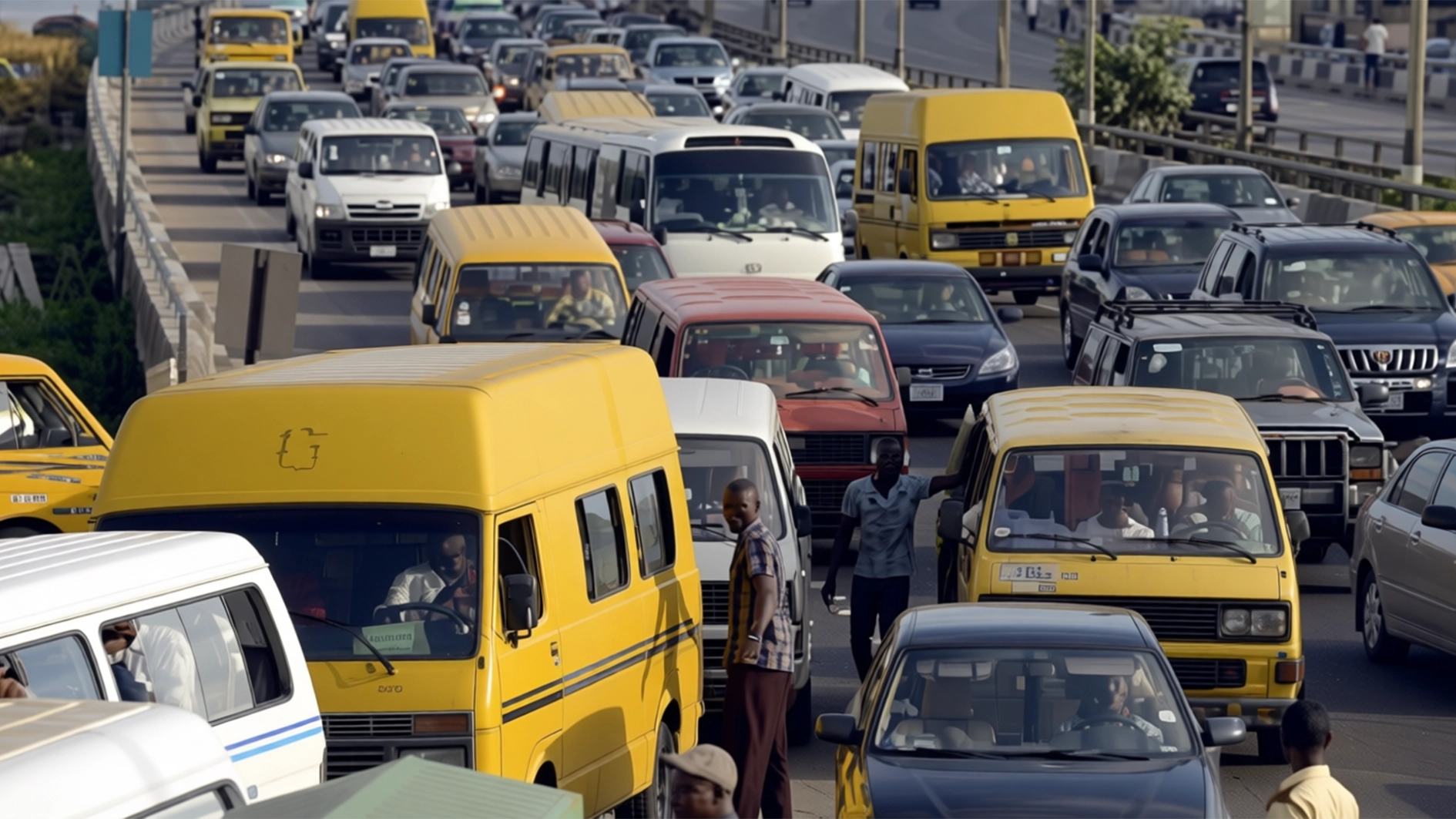
• Over 50,000 families evicted, pushed into homelessness
• Rents increase by over 300% in two years
• Experts call for social housing, workable safety net for Nigerians
With inflation at 16 per cent, spike in food prices, housing construction and transportation costs are forcing many families to make difficult survival choices, including abandoning decent accommodation and resorting to unhealthy living conditions.
The inflation report showed that restaurants and accommodation services contributed 2.06 percentage points to inflation, transport accounted for 1.70 percentage points, while housing, water, electricity, gas and other fuels contributed 1.34 percentage points.
The impact is increasingly visible among young professionals, civil servants and artisans, many of whom are reducing their physical presence with families as they relocate to cheaper areas or live in overcrowded tenement apartments to cut costs.
The national minimum wage of N70,000 approved in 2024 has provided little relief, as many workers said it is insufficient to cover basic needs, including transportation, housing, clothing, food, school fees and healthcare.
Nigeria’s poverty situation has also worsened. World Bank figures showed that the number of Nigerians living below the poverty line increased from 56 per cent in 2023 to 63 per cent by October 2025, translating to about 140 million people.

Despite government assurances of macroeconomic stability and declining inflation, experts argued that the impact has not translated into improved living conditions, as income levels continue to lag behind rising costs. A report by PwC shows that about 141 million Nigerians could be living in poverty by 2026.
Consequently, many Nigerians are adopting unconventional survival strategies. Workers who live far from their families are increasingly embracing long-distance arrangements, visiting loved ones only during weekends or occasionally once a month.
Findings by The Guardian revealed that major bridges, uncompleted buildings, abandoned structures, filling stations, shops and bus stops have increasingly become shelters for urban poor residents.
The housing crisis is growing beyond proportion as informal workers like mechanics now deploy customers’ cars parked for repairs in workshops to sleep at night due to the cost of commuting to locations where families live and the inability to afford rents in work locations.
Experts attribute the growing homelessness to high land costs, inefficient land administration, expensive property documentation and delays in obtaining planning approvals and Certificates of Occupancy.
Figures from World Population Review indicate that about 24 million Nigerians lack adequate shelter, placing the country among nations with the highest number of homeless people globally.
The housing crisis has also intensified migration to suburbs, where rents are relatively cheaper. In northern Nigeria, insecurity and poverty have contributed to large numbers of displaced persons, with many taking shelter in schools, churches and open spaces.
A survey by The Guardian revealed that rents in urban centres have increased by between 50 and over 300 per cent in the last two years, forcing many workers away from city centres and increasing transportation expenses.
The rising cost of accommodation has affected residents in Lagos, Abuja, Kano, Ogun and Port Harcourt, where low-income earners struggle to afford rents ranging from N650,000 to N1.5 million for studio and one-bedroom apartments and between N850,000 and N2.5 million for two-bedroom flats.
In some prime locations, purchasing even modest apartments has become impossible for average workers, with one-bedroom apartments selling for over N120 million and two-bedroom units reaching about N150 million. Reports indicate that millions of Nigerians live in slums amid rapid rural-urban migration, which has pushed Lagos’ population beyond 20 million.
Government officials have also linked over 50,000 people becoming homeless between 2016 and 2025 to demolitions arising from building violations and urban renewal exercises in Lagos, Abuja, Anambra, Kano and other locations. According to the Federal Mortgage Bank of Nigeria (FMBN), over 68 million Nigerians are either homeless or improperly housed.
Housing affordability has become a major concern, with many households spending more than 30 per cent of their income on shelter. Recent financial market data by Intelpoint indicates that only about 10 per cent of Nigerians earn above N100,000 monthly, while fewer than three per cent earn above N200,000.
The pressure is particularly severe in locations around Lagos, Abuja and Ogun, including Ojodu-Berger, Mile 12, Sango-Ota, Arepo, Obalende, Mushin, Ajegunle, Ijora and Iddo, where many workers relocate in search of cheaper accommodation.
Transportation costs have also worsened the situation. Data from the National Bureau of Statistics showed that average city bus fares rose to N1,397.27 in April 2026, representing a 39.83 per cent increase from N999.27 recorded in April 2025.
The removal of fuel subsidy in May 2023 further increased transportation costs, with petrol prices rising from about N175 per litre to between N1,300 and N1,400, putting additional pressure on workers who commute long distances, while the United States- Iran war has heightened the situation.
A recent visit to the Lagos International Airport area around 5:00 a.m. showed some ride-hailing drivers waking up from their vehicles. Items such as toothpaste, toothbrushes, towels, slippers and clothes were kept inside car boots, suggesting the vehicles had become temporary homes.
The Guardian investigation revealed that some drivers rely on relationships with hotel security personnel to access toilets and other basic facilities. Some of those who spoke anonymously blamed the situation on economic hardship, saying they could afford neither the cost of renting apartments in central locations nor the rising cost of daily commuting.
A source said, “Even the young northerners who migrated to city centres live in kiosks on the streets. Their families are in the North, but they work for three to 10 months, then go home, rest for a month and return.”
A Lagos-based worker, Miss Abeni Ade, who lives in Akute, Ogun State, and works on Lagos Island, told The Guardian that despite earning about N200,000 monthly, she spends about N5,000 daily on transportation on the three days she physically goes to the office.
She lamented that rent increases have far outpaced wage growth, noting that a two-bedroom apartment that cost about N650,000 two years ago now goes for as much as N2.5 million annually. The housing crisis has also created a new form of urban survival, where some workers and artisans now live in their workplaces or makeshift shelters.
Narrating his experience on X, formerly Twitter, a resident identified as Lola Okunrin, said some mechanics’ apprentices in Ikeja now sleep inside vehicles because they cannot afford accommodation close to their workplaces.
Okunrin said the apprentices have developed survival methods, including storing personal items inside vehicles and relying on nearby facilities for basic needs, because returning home daily is financially impossible.
Another Nigerian, Dele Stephens (not his real name), said, “Before my dad retired, he only came home on weekends. He was working at Opebi, Lagos, and his home was at Sango-Ota. A sacrifice people don’t really speak about.”
The magnitude of the crisis is also affecting the formal workers in the ivory tower and students. Director of the Centre for Housing and Sustainable Development, University of Lagos, Prof. Timothy Nubi, recently expressed concerns that Nigerian university lecturers are threatened by homelessness as lecturers now sleep in their offices due to a severe housing crisis and inflated transportation costs.
Nubi said that the exorbitant cost of living has forced academics to bathe in faculties and live in their offices.
With Nigeria’s annual housing investment gap estimated at $6.25 billion, experts warn that continued inflation and rising housing costs could worsen homelessness. They argued that improved access to housing would strengthen living standards, encourage productivity, support infrastructure development and promote economic stability.
Past Chairman of the Nigerian Institution of Estate Surveyors and Valuers (NIESV), Faculty of Estate Agency and Marketing, Mr Sam Eboigbe, said the housing crisis has pushed many Nigerians into desperate living conditions.
“Several people are sleeping under bridges; some of them are sleeping in construction sites and abandoned places. If you go to this coastal road, you will see several people sleeping in those shanties. When they were constructing those coastal roads, they destroyed many of the shanties these people were using,” he said.
He lamented that the government has not given sufficient attention to social housing despite the impact of inflation and rising rents.
Eboigbe said many Nigerians can no longer renew their tenancies, while others cannot secure alternative accommodation because of rising rental costs. He argued that the government must address structural challenges affecting housing delivery, including land costs, title registration and access to affordable housing finance.
Executive Director of Spaces for Change (S4C), Victoria Ibezim-Ohaeri, said the increasing number of homeless people reflects worsening economic realities. “There is nobody there who desires to be there. They are there for several reasons. Rent is no longer within the reach of the common man. If you see anybody living in a three-bedroom flat now, that is a middle-class family; the former middle class,” she said.
She said Nigeria needs structured social housing and subsidised housing support similar to systems in other countries where the government assists households whose incomes cannot cover market rents.
Professor of Urban Planning at the University of Lagos, Leke Oduwaye, said rapid migration into cities without corresponding housing planning has worsened the crisis.
“Many people cannot afford to pay rent. They sleep in uncompleted buildings and, one way or another; they are still forced out of where they are living. They have to sleep somewhere,” he said.
Oduwaye called for government-led social housing programmes and urged local governments to develop smaller housing clusters based on local needs. He added that the government could leverage its control over land to support affordable housing delivery.
“When the United Nations mentioned the 20 million housing deficit, they assumed those were low-quality houses. The state can facilitate access to housing because the land is under government control. Government should allocate land to local governments and make them compete in delivering low-cost housing,” he said.

